Top Rated Documentary Movies on Kanopy - Page 121
All Services
Free Services
 Netflix
 Amazon Prime Video
 Apple iTunes
 Apple TV Plus
 Disney Plus
 Google Play Movies
 Paramount Plus
 Hulu
Hulu
 HBO Max
 YouTube
 fuboTV
 Peacock
 Peacock Premium
 Amazon Video
 The Roku Channel
 AMC+
AMC on Demand
AMC+
AMC on Demand
 Kocowa
 Hoopla
 The CW
 Vudu
Vudu
 Starz
Starz
 Showtime
 PBS
PBS
 Pantaflix
 FXNow
FXNow
 Tubi TV
 Kanopy
 Comedy Central
 Crunchyroll
 Microsoft Store
 Redbox
 Sun Nxt
 ABC
ABC
 DIRECTV
 Crackle
 Fandor
 Plex
Plex
Netflix
Amazon Prime Video
Apple iTunes
Apple TV Plus
Disney Plus
Google Play Movies
Paramount Plus
Hulu
HBO Max
YouTube
fuboTV
Peacock
Peacock Premium
Amazon Video
The Roku Channel
AMC+
AMC on Demand
Kocowa
Hoopla
The CW
Vudu
Starz
Showtime
PBS
Pantaflix
FXNow
Tubi TV
Kanopy
Comedy Central
Crunchyroll
Microsoft Store
Redbox
Sun Nxt
ABC
DIRECTV
Crackle
Fandor
Plex

Kink Crusaders
2011
Kink Crusaders
2011
star 3The world's oldest Kink/Fetish contest - International Mr. Leather - isn't just for 'white, gay males' anymore. Now, straights, the disabled and transgender men come together to compete for this honor of masculinity. And it was all started 30 years earlier by a man who took the risk of opening Chicago's first Leather bar in the 1950's. This sexy, smart, surprisingly upbeat doc dares to ask: Is there a bit of Kink Crusader in us all?Hey! Is Dee Dee Home?
2003
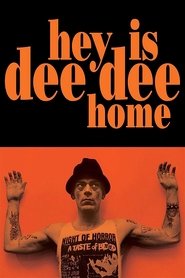
star 5.6Punk rock devotees will welcome director Lech Kowalski's reflective video portrait of late bassist Dee Dee Ramone and his life as a music industry icon -- including his self-destructive bouts with heroin. The centerpiece of the hourlong documentary -- which is peppered with vintage performance clips -- is a 1991 interview with a clean Dee Dee, who talks at length about his storied career and penchant for living on the edge.Nuclear Nation
2012
Nuclear Nation
2012
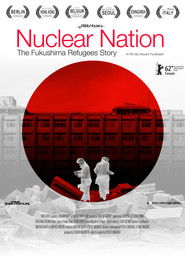
star 6.5After the 11 March 2011 tsunami and nuclear disaster, residents of Futaba, a town in Fukushima Prefecture, are relocated to an abandoned high school in a suburb of Tokyo, 150 miles south. With a clear and compassionate eye, filmmaker Atsushi Funahashi follows the displaced people as they struggle to adapt to their new environment. Among the vivid personalities who emerge are the town mayor, a Moses without a Promised Land; and a farmer who would rather defy the government than abandon his cows to certain starvation.Chemerical
2009
Chemerical
2009
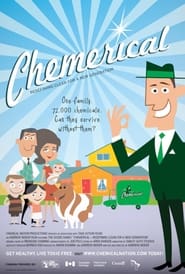
star 6.8'Chemerical' explores the life cycle of everyday household cleaners and hygiene products to prove that, thanks to our clean obsession, we are drowning in a sea of toxicity. An average North American family try to turn a new leaf by creating and living in a toxic free home. Chemerical tackles the 'toxic debate' in a truly informative and entertaining way, not only by raising awareness, but more importantly, by providing simple solutions. Sparking awareness through an interesting and inspiring dialogue of an issue that affects the lives of everyone, Chemerical will seek to catalyze a change in behavior. Focusing on the lives and foibles of a family that subsists on a chemical dependent lifestyle, and bit-by-bit revealing its impact and scope on their own well-being and that of their fellow humans, the film will relate and share their story as a basis for connecting the dots between our consumer choices and community concerns.The Beat Hotel
2012
The Beat Hotel
2012
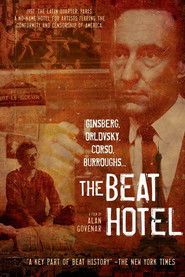
star 4.5The Beat Hotel, a new film by Alan Govenar, goes deep into the legacy of the American Beats in Paris during the heady years between 1957 and 1963, when Allen Ginsberg, Peter Orlovsky and Gregory Corso fled the obscenity trials in the United States surrounding the publication of Ginsberg’s poem Howl. They took refuge in a cheap no-name hotel they had heard about at 9, Rue Git le Coeur and were soon joined by William Burroughs, Ian Somerville, Brion Gysin, and others from England and elsewhere in Europe, seeking out the “freedom” that the Latin Quarter of Paris might provide.Where Are You Taking Me?
2012
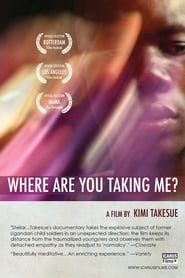
star 6.2A high society wedding, bustling city streets, a center for former child soldiers, a nightclub full of music and laughter: these are the many faces of today's Uganda, as wonderfully captured by filmmaker Kimi Takesue. Whether exploring the pulsating energy of the city or contemplating quiet moments in the country, her artful camera compositions and the lyrical pacing of the film allow us to truly engage and process the foreign land on our own terms. Documenting Uganda while it deals with day-to-day realities and the aftermath of its civil wars, Takesue, well aware of her perspective as an outsider, strives for simple, unadorned honesty. Employing a largely observational style, Takesue allows the sight and sounds-and the people-of Uganda to speak for themselves. Usually the people she records simply ignore the camera, but when someone does engage-whether it's a group of school children...Art Is... The Permanent Revolution
2012
star 5.5The anger and outrage captured by graphic artists have defined revolutions through the centuries. Printmakers have depicted the human condition in all its glories and struggles so powerfully that perceptions, attitudes and politics have been dramatically influenced. And the value and impact of this art is even more important today. In the new documentary, ART IS... THE PERMANENT REVOLUTION, three contemporary American artists and a master printer help explain the dynamic sequences of social reality and protest. Among the wide range of 60 artists on display are Rembrandt, Goya, Daumier, Kollwitz, Dix, Masereel, Grosz, Gropper, and Picasso. While their stirring graphics sweep by, the making of an etching, a woodcut and a lithograph unfolds before our eyes, as the contemporary artists join their illustrious predecessors in creating art of social engagement.Girls Rock!
2007
Girls Rock!
2007
star 4.8A documentary about four girls who transform their lives at the Rock 'n' Roll Camp for Girls.Passion & Power: The Technology of Orgasm
2007
star 4.5This is the story of one simple invention, the vibrator, and its relationship to one complex human behavior, the female orgasm.Theater of War
2008
Theater of War
2008
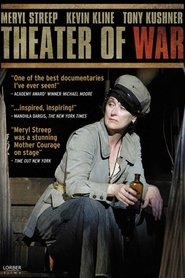
star 6.2A behind-the-scenes look at The Public Theater's production of Bertolt Brecht's "Mother Courage" that examines the playwright's life and ideas.Kid Icarus
2008
Kid Icarus
2008
star 6.518-year-old Leigh lives in a trailer park on the outskirts of Los Angeles, attends community college, has no real friends and works part time at Home Depot. With an obsession for Steven Spielberg and enrolled in a film production class, he sets out to make his cinematic debut. He hopes the film will be his ticket out of his mundane life and into a world of popularity, women and success. And he just may be on his way, if he doesn't self-destruct first.Henri Langlois: The Phantom of the Cinémathèque
2005
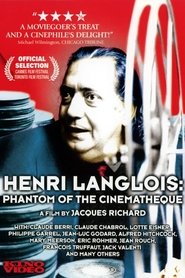
star 6.8Life and work of the founder of the Cinémathèque Française.Margaret Thatcher: The Iron Lady
2012
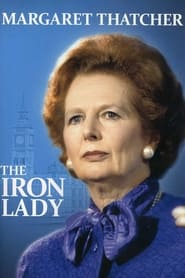
star 7.2Margaret Thatcher - The Iron Lady is the first major documentary to look back on the development and impact of this remarkable woman, whom commentators of both the political left and right agree changed the face of 20th Century politics forever. Featuring many excerpts from her powerful speeches and insightful contributions from her political supporters and detractors, a portrait emerges of a woman whose strength of conviction eventually becomes the weakness of intransigence.When China Met Africa
2011
star 5.4A cinematic feature documentary about China's foray into Africa told through the lives of Chinese adventurers & Zambian power brokers as they negotiate the tricky waters of this rapidly expanding and vital relationship.Deep Blues
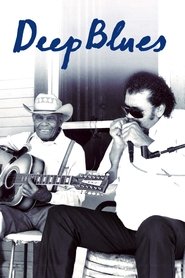
1992
Deep Blues
1992
star 8.5This warm 90 minutes documentary shows us unknown blues musicians from Mississippi. They play everywhere : on the streets, in dirty little bars, in a barber shop, in big clubs. The film really captures the true faces of blues and shows us that this music had nothing to do with nostalgia or record company hypes. Documentary on the Delta blues.Convento
2010
Convento
2010
star 6.2A Dutch family left Holland to transform a 400 year old monastery into a home, artist's workshop, and nature preserve. Filmed entirely in remote village in Portugal, Convento bends the rigid structure of documentary filmmaking, blurring the lines of information and surrealism Featuring the renowned kinetic artist Christiaan Zwanikken and his family.Payback
2012
Payback
2012
star 5.8An adaptation of Margaret Atwood's book examining the metaphor of indebtedness.China Heavyweight
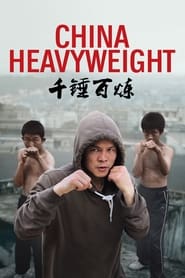
2012
China Heavyweight
2012
star 6In southwestern China, state athletic coaches scour the countryside to recruit poor, rural teenagers who demonstrate a natural ability to throw a good punch. Moved into boxing training centers, these boys and girls undergo a rigorous regimen that grooms them to be China’s next Olympic heroes but also prepares them for life outside the ring. As these young boxers develop, the allure of turning professional for personal gain and glory competes with the main philosophy behind their training – to represent their country. Interconnected with their story is that of their charismatic coach, Qi Moxiang, who – now in his late thirties and determined to win back lost honor – trains for a significant fight.Ingredients
2009
Ingredients
2009
star 5.9At the focal point of this movement, and of this film, are the farmers and chefs who are creating a truly sustainable food system. Their collaborative work has resulted in great tasting food and an explosion of consumer awareness about the benefits of eating local. Attention being paid to the local food movement comes at a time when the failings of our current industrialized food system are becoming all too clear. For the first time in history, our children's generation is expected to have a shorter lifespan than our own. The quality, taste and nutritional value of the food we eat has dropped sharply over the last fifty years. Shipped from ever-greater distances, we have literally lost sight of where our food comes from and in the process, we've lost a vital connection to our local community and to our health.