Top Rated Documentary Movies on Kanopy - Page 156
All Services
Free Services
 Netflix
 Amazon Prime Video
 Apple iTunes
 Apple TV Plus
 Disney Plus
 Google Play Movies
 Paramount Plus
 Hulu
Hulu
 HBO Max
 YouTube
 fuboTV
 Peacock
 Peacock Premium
 Amazon Video
 The Roku Channel
 AMC+
AMC on Demand
AMC+
AMC on Demand
 Kocowa
 Hoopla
 The CW
 Vudu
Vudu
 Starz
Starz
 Showtime
 PBS
PBS
 Pantaflix
 FXNow
FXNow
 Tubi TV
 Kanopy
 Comedy Central
 Crunchyroll
 Microsoft Store
 Redbox
 Sun Nxt
 ABC
ABC
 DIRECTV
 Crackle
 Fandor
 Plex
Plex
Netflix
Amazon Prime Video
Apple iTunes
Apple TV Plus
Disney Plus
Google Play Movies
Paramount Plus
Hulu
HBO Max
YouTube
fuboTV
Peacock
Peacock Premium
Amazon Video
The Roku Channel
AMC+
AMC on Demand
Kocowa
Hoopla
The CW
Vudu
Starz
Showtime
PBS
Pantaflix
FXNow
Tubi TV
Kanopy
Comedy Central
Crunchyroll
Microsoft Store
Redbox
Sun Nxt
ABC
DIRECTV
Crackle
Fandor
Plex

Queens At Heart
1967
Queens At Heart
1967
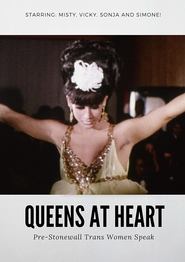
star 1A rare archival short, Queens at Heart follows four shockingly courageous pre-Stonewall trans women, Misty, Vicky, Sonja, and Simone. They go out as women at night, but live as men during the day, take hormones, and dream of “going for a change.” Subjected to a six-month psychological project, and cross-examined by dubious “experts” all four women are incredibly captivating subjects—whether being interrogated or partying at the ball.Alexandria: The Greatest City
2010
star 8Bettany Hughes goes in search of this lost civilisation, revealing the story of a city founded out of the desert by Alexander the Great in 331 BC to become the world's first global centre of culture. The documentary also looks at the role of astronomer and philosopher Hypatia, and incorporates stunning footage from the feature film 'Agora'.Legacy of the Hollywood Blacklist
1987
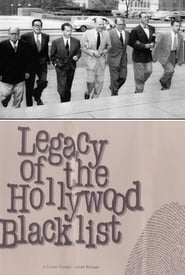
star 6.5This one-hour film, narrated by Actor BURT LANCASTER, explores the lingering effects of The Hollywood Blacklist, which occurred in the late forties and early fifties as part of the Anti-Communist witch-hunts that terrorized the nation. This film is seen through the eyes of the wives and children of the now deceased Hollywood figures whose careers were destroyed when studio bosses, along with guild and union officials capitulated to the demands of the House Un-American Activities Committee.Putin's Way
2015
Putin's Way
2015
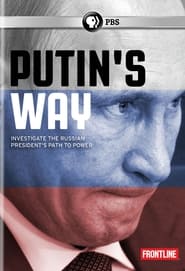
star 9FRONTLINE investigates the accusations of criminality and corruption that have surrounded Vladimir Putin’s reign in Russia.Robert Mitchum: The Reluctant Star
1991
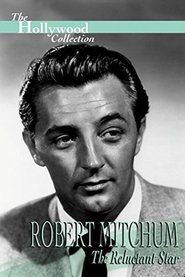
star 7.5A retrospective on the career of Robert Mitchum through interviews with friends and co-workers, scenes from his films and the actor himself.The Rise of ISIS
2014
At the Fork
2016
At the Fork
2016
star 8Filmmaker and omnivore John Papola, together with his vegetarian wife Lisa, offer up a timely and refreshingly unbiased look at how farm animals are raised for our consumption. With unprecedented access to large-scale conventional farms, Papola asks the tough questions behind every hamburger, glass of milk and baby-back rib. What he discovers are not heartless industrialists, but America's farmers - real people who, along with him, are grappling with the moral dimensions of farming animals for food.Being and Becoming
2014
Being and Becoming
2014
star 8.5Being and Becoming explore the choice not to school ones children, to trust them and to let them learn freely what they are passionate about. Through four countries, the US, Germany (where it's illegal not to go to school), France and the UK, the film is a truth quest about the natural desire to learn.Dear President Obama
2016
Dear President Obama
2016
star 7.5During President Obama's terms extreme energy extraction grew faster than anyone could have predicted, putting the 17 million people in America who live within one mile of a new gas or oil rig in harm's way.It Came From Connemara!
2014
star 4.5The incongruous tale of when legendary Hollywood B-movie producer Roger Corman created a studio in Connemara, Ireland in the mid-1990s.Okinawa: The Afterburn
2015
star 1On April 1, 1945, the United States military launched its invasion of the main island of Okinawa, the start of a battle that was to last 12 weeks and claim the lives of some 240,000 people. This film depicts the Battle through the eyes of Japanese and American soldiers who fought each other on the same battlefield, along with Okinawa civilians who were swept up in the fighting. The film also depicts the history of discrimination and oppression forced upon Okinawa by the American and Japanese governments. Carrying up to the current controversy over the construction of a new base at Henoko, the film explores the root causes of the widespread disillusionment and anger expressed by many Okinawans. This ambitious documentary was directed by the American John Junkerman, long-term resident of Japan and Oscar-nominated documentary filmmaker. Okinawa: The Afterburn is a heartfelt plea for peace and an expression of deep respect for the unyielding spirit of the Okinawa people.Night School
2016
Night School
2016
star 7Indianapolis has one of the lowest high school graduation rates in the country. Night School follows three adult students living in the city’s more impoverished neighborhoods as they attempt to earn their diplomas while juggling other difficult responsibilities and realities. Through their stories, the filmmakers explore many issues that low-income Americans deal with, including unjust minimum wage and working conditions, arbitrary legal hindrances, and race and gender inequality.Puccini
1984
Puccini
1984
star 1In Torre del Lago, by Lake Massaciuccoli, Puccini is writing "The Girl of the Golden West" when his wife Elvira accuses him of a dalliance with their maid, Doria Manfredi, a young women from town. Although the maestro is frequently unfaithful, he denies the affair; Elvira insists she's right and publicly hounds Doria. Between scenes in this domestic drama that turns tragic, we watch a Scottish company rehearse and stage "Turandot," Puccini's last opera. The film finds parallels between the two stories and suggests that in the opera, Puccini expresses love for his wife and guilt in Doria's fate. Three local gentlemen provide a spoken chorus as Puccini's score plays throughout.City of Trees
2015
City of Trees
2015
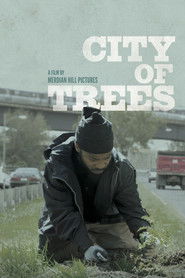
star 8During the Great Recession, joblessness exceeds 20 percent east of the Anacostia River in Washington, DC. City of Trees follows the intimate stories of Charles, Michael and James, three long-term unemployed residents struggling to gain employment through 'shovel ready' green projects. When stimulus dollars run out, short term idealism clashes with day-to-day survival in the struggle to find a sense of purpose and place in a recovering economy.Straightlaced: How Gender's Got Us All Tied Up
2009
star 1A powerful documentary about the lives of teens and young adults as seen through the gender lens. Approaching society's ideas and ideals of gender through clothes, sexuality, sports, dance, safety, consumerism and emotion, the film addresses the complexities of conceptions of masculinity and femininity for Generation Z.Pyongyang Diaries
1998
Pyongyang Diaries
1998
star 1This documentary records Hoaas' personal encounter with the closed society of North Korea. As with her earlier work, Hoaas approaches her film as a cumulation of fragments encompassing different perspectives that together offer a point of entry into a complex society. Her diary-style narration signals her limited personal perspective into this culture, especially given the brief filming period and her difficulty in breaking through the facade of the showcase version of Korea insisted upon by her official guides. Hoaas' restricted visual access, and her reluctance to present over-familiar images of the hardship and depravation informed her decision to use this narrative device to frame her film within the context of the famine crisis that began in 1997 following the failure of crops caused by two consecutive years of heavy flooding.Starving the Beast: The Battle to Disrupt and Reform America’s Public Universities
2016
star 5This documentary examines the on-going power struggle on college campuses across the nation as political and market-oriented forces push to disrupt and reform America’s public universities. The film documents a philosophical shift that seeks to reframe public higher education as a ‘value proposition’ to be borne by the beneficiary of a college degree rather than as a ‘public good’ for society. Financial winners and losers emerge in a struggle poised to profoundly change public higher education. The film focuses on dramas playing out at the University of Wisconsin, University of Virginia, University of North Carolina, Louisiana State University, University of Texas and Texas A&M.UnSlut: A Documentary Film
2015
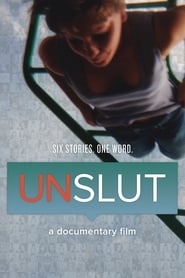
star 10In 2013, seventeen-year-old Rehtaeh Parsons took her own life. The Halifax teenager had been gang-raped a year and a half earlier by her classmates and labeled a "slut" as a result. Despite transferring schools many times, she could not escape constant cyber harassment and in-person bullying. Rehtaeh's is not the only story like this to make headlines in recent years. Why is the sexual shaming of girls and women, including sexual assault victims, still so prevalent in the United States and Canada?Boatlift
2011
Boatlift
2011
star 8From the midst of 9/11, one of the darkest moments in American history, comes this inspiring and relatively unknown story. When the twin towers fell, hundreds of thousands of people ran to the water's edge. They soon realized that Manhattan is, indeed, an island. And that they were trapped. Within moments, an armada of every vessel that could get to the city's seawall spontaneously organized. Dashing into the teeth of danger, hundreds of boats pulled together and, without any formal planning, military or otherwise, they pulled off an ad-hoc sea evacuation that became the largest in history. Their story of courage and resolve reminds us of the powerful spirit that rose among us, on that fateful day. Narrated by Tom Hanks. Directed by Eddie Rosenstein.Nuclear Nation II
2014