Top Rated Documentary Movies on Kanopy - Page 179
All Services
Free Services
 Netflix
 Amazon Prime Video
 Apple iTunes
 Apple TV Plus
 Disney Plus
 Google Play Movies
 Paramount Plus
 Hulu
Hulu
 HBO Max
 YouTube
 fuboTV
 Peacock
 Peacock Premium
 Amazon Video
 The Roku Channel
 AMC+
AMC on Demand
AMC+
AMC on Demand
 Kocowa
 Hoopla
 The CW
 Vudu
Vudu
 Starz
Starz
 Showtime
 PBS
PBS
 Pantaflix
 FXNow
FXNow
 Tubi TV
 Kanopy
 Comedy Central
 Crunchyroll
 Microsoft Store
 Redbox
 Sun Nxt
 ABC
ABC
 DIRECTV
 Crackle
 Fandor
 Plex
Plex
Netflix
Amazon Prime Video
Apple iTunes
Apple TV Plus
Disney Plus
Google Play Movies
Paramount Plus
Hulu
HBO Max
YouTube
fuboTV
Peacock
Peacock Premium
Amazon Video
The Roku Channel
AMC+
AMC on Demand
Kocowa
Hoopla
The CW
Vudu
Starz
Showtime
PBS
Pantaflix
FXNow
Tubi TV
Kanopy
Comedy Central
Crunchyroll
Microsoft Store
Redbox
Sun Nxt
ABC
DIRECTV
Crackle
Fandor
Plex

Secrets of Stonehenge
2010
star 8Dated to the late Stone Age, Stonehenge may be the best-known and most mysterious relic of prehistory. Every year, a million visitors are drawn to England to gaze upon the famous circle of stones, but the monument's meaning has continued to elude us. Now investigations inside and around Stonehenge have kicked off a dramatic new era of discovery and debate over who built Stonehenge and for what purpose. How did prehistoric people quarry, transport, sculpt, and erect these giant stones? Granted exclusive access to the dig site at Bluestonehenge, a prehistoric stone-circle monument recently discovered about a mile from Stonehenge, NOVA cameras join a new generation of researchers finding important clues to this enduring mystery.Conrad Veidt: My Life
2019
star 1German actor Conrad Veidt is best remembered for playing Nazi Major Strasser in Casablanca. In reality, he was an ardent anti-fascist who left Nazi Germany for Britain, falsely claiming to be Jewish in solidarity with his Jewish wife. Using clips from Veidt’s films, acclaimed director Mark Rappaport imagines the actor narrating his life and career from the silent era—including his leading roles in The Cabinet of Dr. Caligari and The Man Who Laughs through to his Hollywood years where he often played a Nazi.KPFA On the Air
2000
KPFA On the Air
2000
star 4.5Novelist Alice Walker narrates a documentary about the oldest independent radio station in the world, KPFA radio.Occupation: Native
2017
Occupation: Native
2017
star 9The Aboriginal story has been buried deep beneath the 247-year-old accepted Australian narrative. In OCCUPATION: NATIVE, Aboriginal filmmaker Trisha Morton-Thomas, bites back at Australian history.Meet the Mennonites
2020
Meet the Mennonites
2020
star 8Like the Amish, the ultra-conservative Christian community of the Mennonites reject modern society and live a life frozen in the 19th century. Nearly all Mennonites live in self-sufficient colonies, embracing isolation, which helps protect them from the temptations of the modern world. Now, for the first time, one of these communities has agreed to open their doors to our cameras.The Girl on the Bridge
2020
star 6In the increasing public discourse on mental health, Leanne Pooley’s inspiring and fearless documentary tracks an extraordinary young woman’s journey from suicide survivor to advocate for those struggling. The fact it leaves you hopeful and with tangible advice makes it vital viewing.The Johnstown Flood
2003
The Johnstown Flood
2003
star 6On a stormy day in May of 1889, the South Fork Dam impounding Conemaugh Lake exploded, unleashing a 40-foot wall of water. The bustling industrial city of Johnstown, PA, in the valley below was reduced to a wasteland, killing more than 2,200. This heavily dramatized documentary reviews the factors that led to the dam's collapse, while dramatic reenactments and survivors' personal testimonies detail the horror.Part Three: Born Under the Red Flag 1976–1997
1997
star 6What happened next could never have been anticipated and forms the story line for the final film of the trilogy; Born Under The Red Flag examines China’s remarkable transformation after Mao’s death. In just 15 years, under Deng Xiaoping’s leadership, China raced forward at an astonishing pace to become a never-before-seen hybrid of communism and capitalism. The world’s most populous nation has reinvented itself, changing from a relatively undeveloped and isolated nation into an economic giant and a major international power. For many Chinese, this transformation has brought unprecedented prosperity, but it has also raised troubling questions of national identity and social inequality.Part Two: The Mao Years 1949–1976
1994
star 7The trilogy continues with The Mao Years, a look at the next period of modern China’s history: Mao Zedong’s rule, from 1949 to his death in 1976. The film begins with the celebrations marking the establishment of the People’s Republic of China, a moment of great hope for millions of Chinese. But the quarter-century of Mao’s rule was as turbulent as the decades which preceded it. Interludes of relative calm and increased prosperity were interrupted repeatedly by violent campaigns, purges, and a famine in which killed more than 30 million people. It culminated in Mao’s colossal and tragic experiment, the Great Proletarian Cultural Revolution. When Mao died in 1976, people were exhausted by the turmoil and longed for stability.Slow News
2020
Slow News
2020
star 6“Slow News” is a contemporary story, a look on reality. It is an analytical documentary film, with a “destruens part” and a “construens part”: arises from the awareness that digital is one of the concauses of the crisis of journalism. But at the same time, it is in the digital world that there are chances to get out of this crisis, because the web is an ecosystem and, like all ecosystems, contains prey and predators, problems and solutions. Because the digital world is real. Digital is part of reality and as we shouldn’t demonize it. Digital is a medium. Men and women acts. “Slow News” is a journey around the world, looking for all those journalistic realities that have chosen to slow down or be “viral responsibly”.USA: Life in a High Security Prison
2019
star 6In the United States, there are more than 2 million people behind bars. That's more than anywhere else in the world. The Anamosa State Penitentiary, granted us exceptional, round-the-clock access. Here, three quarters of the prisoners have been convicted of violent crimes and serve an average of 27 years. How is the prison managed?Stateless
2020
Stateless
2020
star 5Director Michèle Stephenson’s new documentary follows families of those affected by the 2013 legislation stripping citizenship from Dominicans of Haitian descent, uncovering the complex history and present-day politics of Haiti and the Dominican Republic through the grassroots electoral campaign of a young attorney named Rosa Iris.Mr. Tornado
2020
Mr. Tornado
2020
star 7Meteorologist Tetsuya Theodore "Ted" Fujita spent ten months studying The Super Outbreak of 1974, which was the most intense tornado outbreak on record. Mr. Tornado is the remarkable story of the man whose groundbreaking work in research and applied science saved thousands of lives and helped Americans prepare for and respond to dangerous weather phenomena.LA Woman Rising
2019
LA Woman Rising
2019
star 10Executive produced by Rosario Dawson, LA WOMAN RISING presents 50 Los Angeles women revealing their truth, what motivates them to wake up each morning. Director Nana Ghana gracefully captures the morning rituals and untold stories of uncertainty, struggle and success. Considered a love letter to the real and diverse women of Los Angeles, Ghana's documentary is a distinct celebration of the female voice.Weltreise mit Buddha
2020
Weltreise mit Buddha
2020
star 5The Odd Monk is a personal journey through modern day Buddhism. German first time Filmmaker Jesco Puluj travels around the world, meeting a variety of monks and nuns to discover the essence of Buddhism.Moser: Dare to Win
2018
Ohero:kon - Under the Husk
2017
star 6This documentary follows two Mohawk girls on their journey to become Mohawk women. Friends since childhood, Kaienkwinehtha and Kasennakohe are members of the traditional community of Akwesasne on the U.S./Canada border. Together, they undertake a four-year rite of passage for adolescents, called Oheró:kon, or "under the husk." The ceremony had been nearly extinct, a casualty of colonialism and intergenerational trauma; revived in the past decade by two traditional leaders, it has since flourished. Filmmaker Katsitsionni Fox has served as a mentor, or "auntie," to many youth going through the passage rites.Off the Road
2020
Off the Road
2020
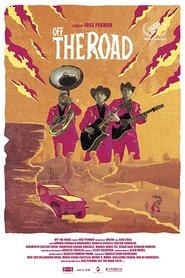
star 8The Baja 1000, the biggest off-road motorsport race in the world, crosses Mexico's largest desert region. In this Western, which is surprisingly reminiscent of a musical, Jose Permar followed Rigo, Davis and Paco, three fans of this mechanical saga with a beat set by the “corridos” (epic lyrics) sung by a trio of flamboyant musicians.The Calm After the Storm
2021
star 6After studying abroad, Mercedes returns to Colombia to work on the next film by her father, the famous Víctor Gaviria. Fluctuating between admiration and reproach, Mercedes constructs a private diary that goes beyond familial conflicts to question the place of women in the film world, which is still strongly ingrained with a patriarchal mindset.Another Child
2021
Another Child
2021
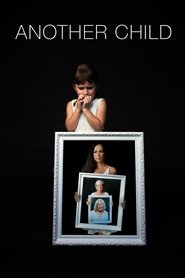
star 10In a tale of twisted sex, religion and family, a mother and daughter team up — first to overcome their severe differences, and then to take steps to end a curse that has plagued their family for generations.