Top Rated Documentary Movies on Kanopy - Page 186
All Services
Free Services
 Netflix
 Amazon Prime Video
 Apple iTunes
 Apple TV Plus
 Disney Plus
 Google Play Movies
 Paramount Plus
 Hulu
Hulu
 HBO Max
 YouTube
 fuboTV
 Peacock
 Peacock Premium
 Amazon Video
 The Roku Channel
 AMC+
AMC on Demand
AMC+
AMC on Demand
 Kocowa
 Hoopla
 The CW
 Vudu
Vudu
 Starz
Starz
 Showtime
 PBS
PBS
 Pantaflix
 FXNow
FXNow
 Tubi TV
 Kanopy
 Comedy Central
 Crunchyroll
 Microsoft Store
 Redbox
 Sun Nxt
 ABC
ABC
 DIRECTV
 Crackle
 Fandor
 Plex
Plex
Netflix
Amazon Prime Video
Apple iTunes
Apple TV Plus
Disney Plus
Google Play Movies
Paramount Plus
Hulu
HBO Max
YouTube
fuboTV
Peacock
Peacock Premium
Amazon Video
The Roku Channel
AMC+
AMC on Demand
Kocowa
Hoopla
The CW
Vudu
Starz
Showtime
PBS
Pantaflix
FXNow
Tubi TV
Kanopy
Comedy Central
Crunchyroll
Microsoft Store
Redbox
Sun Nxt
ABC
DIRECTV
Crackle
Fandor
Plex

Little Stones
2017
Little Stones
2017
star 5From a graffiti artist speaking out against domestic violence in the favelas of Brazil to a dancer rehabilitating sex-trafficking survivors in India, Little Stones profiles four women, each of whom are contributing a stone to the mosaic of the women’s movement through their art. The film and accompanying education initiative have been designed to raise awareness about global women’s rights issues, and to celebrate creative, entrepreneurial, and arts-therapy based solutions to the most pressing challenges facing women globally.Anne Braden: Southern Patriot
2012
star 10Anne Braden: Southern Patriot is a first person documentary about the extraordinary life of this American civil rights leader. Braden was hailed by Dr. Martin Luther King Jr. in his 1963 Letter from Birmingham Jail as a white southerner whose rejection of her segregationist upbringing was eloquent and prophetic. Ostracized as a red in the 1950s, she fought for an inclusive movement community and mentored three generations of social justice advocates. Braden’s story explores not only the dangers of racism and political repression but also the power of a woman’s life spent in commitment to social justice.Fire Music
2021
Fire Music
2021
star 7Although the free jazz movement of the 1960s and '70s was much maligned in some jazz circles, its pioneers - brilliant talents like Ornette Coleman, Cecil Taylor, Sun Ra, Albert Ayler, and John Coltrane - are today acknowledged as central to the evolution of jazz as America's most innovative art form. FIRE MUSIC showcases the architects of a movement whose radical brand of improvisation pushed harmonic and rhythmic boundaries, and produced landmark albums like Coleman's Free Jazz: A Collective Inspiration and Coltrane's Ascension. A rich trove of archival footage conjures the 1960s jazz scene along with incisive reflections by critic Gary Giddins and a number of the movement's key players.The Porn Factor
2016
The Porn Factor
2016
star 8The Porn Factor takes viewers on a journey of discovery, from regional and urban Australia to the centre of the international porn industry in Los Angeles and back. Through candid interviews with young people, experts and porn industry professionals, The Porn Factor explores how pornography is shaping young people's sexual expectations and experiences. It brings into compelling focus the 21st century challenges faced by parents, schools and others as they seek to equip young people for a sexuality that is safe, respectful and fully consenting.Womanhouse
1974
Womanhouse
1974
star 7Held in 1972 at 533 N. Mariposa Street, Los Angeles was one of the most important cultural events in the United States: "Womanhouse," a feminist art installation and performance space organized by Judy Chicago and Miriam Schapiro.Custer's Last Stand
2012
Custer's Last Stand
2012
star 7Follow General George Armstrong Custer from his memorable, wild charge at Gettysburg to his lonely, untimely death on the windswept Plains of the West. On June 26, 1876, Custer, a reputation for fearless and often reckless courage ordered his soldiers to drive back a large army of Lakota and Cheyenne warriors. By day's end, Custer and nearly a third of his army were dead.Love Express. The Disappearance of Walerian Borowczyk
2018
star 4A documentary celebrating the work of Walerian Borowczyk, a director of unparalleled sensitivity, revered in the 1970s, who was later labeled as a maker of erotic movies.Where Should the Birds Fly?
2013
star 7The film tells the compelling and moving stories of two remarkable young women living in Gaza and the struggle of Gazans trying to maintain their humanity and humor while hoping to find some sense of normality in a world that is anything but normal.My So-Called Enemy
2010
My So-Called Enemy
2010
star 5In July 2002, 22 Palestinian and Israeli teenage girls came to the U.S. to participate in a women's leadership program called Building Bridges for Peace. "My So Called Enemy" is a coming of age story about 6 of the program participants and how they reconcile their transformative experience in the program with the realities of life back home in the Middle East over the next 7 years. What unfolds is an emotionally-charged film about the human consequences of all conflicts--as seen through the eyes of 6 young women who are thoughtful, intelligent and articulate beyond their years.The Drawings of Yves Saint Laurent
2017
star 6The sketches and drawings of iconic designer Yves Saint Laurent come to life in this documentary. Past colleagues and friends discuss his life and work while poring over some of the thousands of sketches the designer created in his lifetime.The Truth Shall Not Be Killed
2018
star 8After being kidnapped in Syria and witnessing the execution of a colleague, war correspondent Témoris Grecko returns to a Mexico submerged in violence and starts a chronicle of the 3 most dangerous years for mexican journalists, from 2015 to 2017.The Food Cure: Hope or Hype?
2018
star 10THE FOOD CURE presents an intimate portrait of six cancer patients who make the radical decision to turn their backs on conventional medicine and put their faith in a controversial alternative cancer treatment based on food.Blacks and Jews
1997
Blacks and Jews
1997
star 6This documentary attempts to go beyond the sensationalized media coverage and the stereotypes to examine several key conflicts from the point of view of both Black and Jewish activists.War/Peace
2018
War/Peace
2018
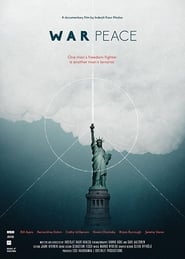
star 6Propaganda film for peace. Feature length documentary about radical political protest in the 60s and its relevance to today.Heading Home: The Tale of Team Israel
2018
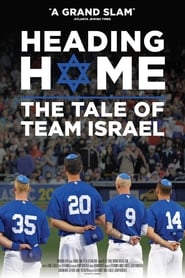
star 8A team of nice Jewish baseball players takes on the world.A Late Style of Fire
2016
A Late Style of Fire
2016
star 5The brilliant writing and troubled life of Californian Larry Levis came to an abrupt halt when he died at age 49. Is self-destruction required for a serious life of art? Featuring an original score by Iron and Wine and film excerpts by award-winning Spanish filmmaker Lois Patiño, this innovative documentary explores his childhood working alongside Mexican-American field hands, three marriages, friendships with America’s greatest poets, and his own words for answers.Design Canada
2018
Design Canada
2018
star 7Through the lens of graphic design, “Design Canada” follows the transformation of a nation from a colonial outpost to a vibrant and multicultural society. What defines a national identity, is it an anthem? A flag? Is it a logo or icon? How do these elements shape who we are? In the 1960s and 1970s, these questions were answered by an innovative group of Canadian designers, who used design to unify the nation.Food As Medicine
2016
Food As Medicine
2016
star 5From personal healing, inspiration grew to create a positive film about people addressing disease with food. There are a lot of negative messages about the state of our nation's health and diet, and we were inspired by the community of people we found who are fighting back against this downward trend. Food As Medicine is a documentary film that follows the growing movement of using food to heal chronic illness and disease.The Thick Dark Fog
2011
The Thick Dark Fog
2011
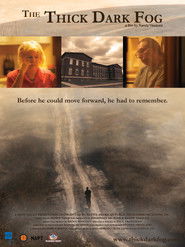
star 8Walter Littlemoon attended a federal Indian boarding school in South Dakota sixty years ago. The mission of many of these schools in 1950, was still to “kill the Indian and save the man.” The children were beaten, humiliated or abused if they spoke their language or expressed their culture or native identity in any way. The trauma led many to alcoholism and violence in adulthood. At age 58, Walter began writing his memoirs as a way to explain his own abusive behaviors to his estranged children, but he could not complete the project without confronting the “thick dark fog” of his past so he could heal.The Rest I Make Up
2018
The Rest I Make Up
2018
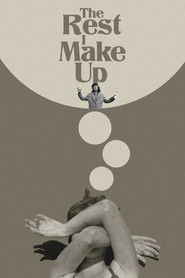
star 10Maria Irene Fornes is “America's Great Unknown Playwright.” When she stops writing due to dementia, a friendship with a young writer reignites her visionary creative spirit, triggering a film collaboration that picks up where the pen left off.