Top Rated Documentary Movies on Kanopy - Page 198
All Services
Free Services
 Netflix
 Amazon Prime Video
 Apple iTunes
 Apple TV Plus
 Disney Plus
 Google Play Movies
 Paramount Plus
 Hulu
Hulu
 HBO Max
 YouTube
 fuboTV
 Peacock
 Peacock Premium
 Amazon Video
 The Roku Channel
 AMC+
AMC on Demand
AMC+
AMC on Demand
 Kocowa
 Hoopla
 The CW
 Vudu
Vudu
 Starz
Starz
 Showtime
 PBS
PBS
 Pantaflix
 FXNow
FXNow
 Tubi TV
 Kanopy
 Comedy Central
 Crunchyroll
 Microsoft Store
 Redbox
 Sun Nxt
 ABC
ABC
 DIRECTV
 Crackle
 Fandor
 Plex
Plex
Netflix
Amazon Prime Video
Apple iTunes
Apple TV Plus
Disney Plus
Google Play Movies
Paramount Plus
Hulu
HBO Max
YouTube
fuboTV
Peacock
Peacock Premium
Amazon Video
The Roku Channel
AMC+
AMC on Demand
Kocowa
Hoopla
The CW
Vudu
Starz
Showtime
PBS
Pantaflix
FXNow
Tubi TV
Kanopy
Comedy Central
Crunchyroll
Microsoft Store
Redbox
Sun Nxt
ABC
DIRECTV
Crackle
Fandor
Plex

Seeds of Time
2013
Seeds of Time
2013
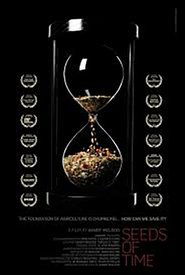
star 10Seeds of Time follows agriculture pioneer Cary Fowler's global journey to save the eroding foundation of our food supply in a new era of climate change.The Sturgeon Queens
2014
The Sturgeon Queens
2014
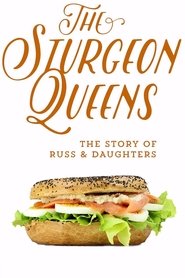
star 6Four generations of a Jewish immigrant family create Russ and Daughters, a Lower East Side lox and herring emporium that survives and thrives. Produced to coincide with the 100th anniversary of the store, this documentary features an extensive interview with two of the original daughters for whom the store was named, now 100 and 92 years old, and interviews with prominent enthusiasts of the store including Supreme Court Justice Ruth Bader Ginsburg, actress Maggie Gyllenhaal, chef Mario Batali, New Yorker writer Calvin Trillin, and 60 Minutes correspondent Morley Safer. Rather than a conventional narrator, the filmmakers bring together six colorful longtime fans of the store, in their 80s and 90s, who sit around a table of fish reading the script in the style of a passover Seder. - Written by Julie CohenJohn Garfield
2002
Daughters of Wisdom
2007
Daughters of Wisdom
2007
star 7An intimate portrait of the nuns of Kala Rongo, a rare and exceptional Buddhist Monastery exclusively for women situated in Nangchen, in remote and rural northeastern Tibet. These nuns are receiving religious and educational training previously unavailable to women, and playing an unprecedented role in preserving their rich cultural heritage even as they slowly reshape it. They graciously allow the camera a never-before-seen glimpse into their vibrant spiritual community and insight into their extraordinary lives. Some shy, some outspoken, all are committed to the often difficult life they have chosen, away from the yak farms and herding families of their birth. It is the story of their spiritual community, one that couldn't have existed 20 years ago but is thriving today.I Can Be President: A Kid's-Eye View
2011
star 6What do our future leaders think? Find out in this enlightening documentary that brings kids' ideas about the presidency to life via animation. Sweet and charming, yet with observations as sharp as tacks, these elementary-school youngsters opine on such issues as: the rules about becoming president; whether they could handle the job, now or in the future; and more.Autism Is a World
2004
Autism Is a World
2004
star 10A documentary on an autistic woman's inner world, her writing, and the friends she made while in college.The Worm Hunters
2011
The Worm Hunters
2011
star 5An epic adventure into an underground science and an unstoppable passion. Earthworm scientists concoct a plan to find and name their ultimate discovery...the world's first Super Worm. Nothing will stop them as they travel to all corners of the world with spades, GPS worm locators and secret worm outing fluids to unearth their prize.Charleen or How Long Has This Been Going On?
1977
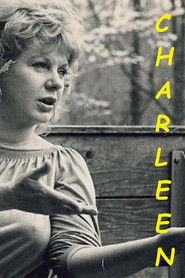
star 8In Charleen, documentarian Ross McElwee looks at the life of a North Carolina poet and teacher who acts as a muse to a motley crew of artists and musicians.Shored Up
2013
Shored Up
2013
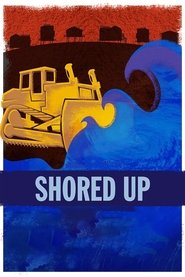
star 7Shored Up is the story of our coasts where life on the edge of a rising sea has placed our towns and cities on the front lines of climate change. Following frustrated scientists, confused politicians and level-headed surfers, Shored Up follows the conflicts that are erupting from New Jersey to North Carolina as the ocean rises and we challenge nature to an unwinnable duel.Mur 19
1967
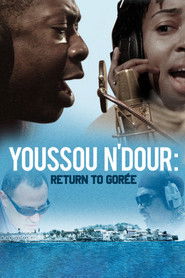
Return to Gorée
2007
Return to Gorée
2007
star 9Because jazz is the miraculous product of the horror of slavery, Youssou N'Dour returned to the slave route and the music they created, in search of new inspiration. Accompanied by the blind Swiss pianist Moncef Genoud and the Director of the Gorée House of Slaves Museum, Joseph N'Diaye, the Senegalese singer wrote new songs during this initiatory voyage which took him to the USA then to Europe. At Gorée, an island just off the Senegalese coast and symbol of the slave trade, his memorable concert marked the end of this quest and the start of a new challenge: making today's generation aware of the tragedy of slavery, the importance of not forgetting and the need for reconciliation.The Peacekeepers
2005
The Peacekeepers
2005
star 10With unprecedented access to the UN Department of Peacekeeping, The Peacekeepers provides an intimate and dramatic portrait of the struggle to save "a failed state" The film follows the determined and often desperate maneuvers to avert another Rwandan disaster, this time in the Democratic Republic of Congo (the DRC). Focusing on the UN mission, the film cuts back and forth between the UN headquarters in New York and events on the ground in the DRC. We are with the peacekeepers in the "Crisis Room" as they balance the risk of loss of life on the ground with the enormous sums of money required from uncertain donor countries. We are with UN troops as the northeast Congo erupts and the future of the DRC, if not all of central Africa, hangs in the balance. In the background, but often impinging on peacekeeping decisions, are the painful memory of Rwanda, the worsening crisis in Iraq, global terrorism, and American hegemony in world affairs.Liahona
2013
Liahona
2013
star 5Liahona is an experimental documentary examining the culture, history, and lived experience of the Church of Jesus Christ of Latter-Day Saints, often referred to as the Mormon faith. The film creates a portrait of Mormonism through documentation of LDS cultural dominance in Utah, the suppressed history of folk magic in the early church, landmark Mormon life experiences, and my personal history and connection to the church. Found media with the voices of outsiders and insiders illuminate a religion that intrigues many, but is seen as mysterious or inaccessible. Liahona shifts through perspectives on the faith – from reverence to questioning, presenting the complexities of the vast institution of Mormonism contrasted with the tenuity of individual faith.Plaster Caster
2003
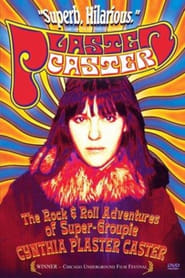
Plaster Caster
2003
star 6Portrait of legendary artist and groupie Cynthia Plaster Caster famous for plaster casting the penises of rock stars.I Am Secretly An Important Man
2010
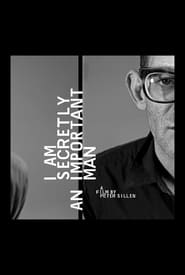
star 8A portrait of the writer and poet Steven J. Bernstein (aka Jesse Bernstein), one of Seattle's most celebrated and troubled voices. His angry, surprisingly fresh, lyrical writings are about sensitive souls, drifters and drug addicts, people alienated by a society that refuses to understand them. Bernstein was an integral part of the legendary Seattle rock scene of the late 80's and early 90s, and in 1991 was dubbed the 'Godfather of Grunge.'Forbidden City, U.S.A.
1989
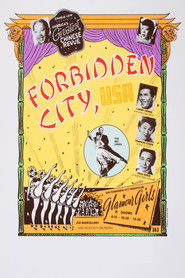
star 6A documentary about Forbidden City, a San Francisco Chinese-American nightclub open from the 1930s to the 1960s.The Matter of Angels & Demons
2009
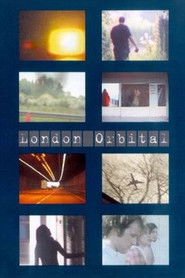
star 8This probing analysis of the popular Dan Brown novel Angels and Demons explores the many contentious issues raised by the book - like the politics of the Catholic church, and the perceived conflict between science and religion.London Orbital
2002
London Orbital
2002
star 6A filmmaker sets out to make a voyage of discovery on London's orbital motorway, the M25. He enlists the help of several others to film the motorway from several points, drive endlessly around it and dig up stories and potential beauty behind the motorway.Something to Do with the Wall
1991
star 7In 1986, Ross McElwee (Sherman's March) and Marilyn Levine were making a film about the 25th anniversary of the Berlin Wall, when the imposing structure was still very much intact as the world’s most visible symbol of hardline Communism and Cold War lore. They thought they were making a documentary on the community of tourists, soldiers, and West Berliners who lived in the seemingly eternal presence of the graffiti emblazoned eyesore. But in 1989, as the original film neared completion, the Wall came down, and McElwee and Levine returned to Berlin, this time to capture the radically different atmosphere of the reunified city.