Top Rated Documentary Movies on Kanopy - Page 218
All Services
Free Services
 Netflix
 Amazon Prime Video
 Apple iTunes
 Apple TV Plus
 Disney Plus
 Google Play Movies
 Paramount Plus
 Hulu
Hulu
 HBO Max
 YouTube
 fuboTV
 Peacock
 Peacock Premium
 Amazon Video
 The Roku Channel
 AMC+
AMC on Demand
AMC+
AMC on Demand
 Kocowa
 Hoopla
 The CW
 Vudu
Vudu
 Starz
Starz
 Showtime
 PBS
PBS
 Pantaflix
 FXNow
FXNow
 Tubi TV
 Kanopy
 Comedy Central
 Crunchyroll
 Microsoft Store
 Redbox
 Sun Nxt
 ABC
ABC
 DIRECTV
 Crackle
 Fandor
 Plex
Plex
Netflix
Amazon Prime Video
Apple iTunes
Apple TV Plus
Disney Plus
Google Play Movies
Paramount Plus
Hulu
HBO Max
YouTube
fuboTV
Peacock
Peacock Premium
Amazon Video
The Roku Channel
AMC+
AMC on Demand
Kocowa
Hoopla
The CW
Vudu
Starz
Showtime
PBS
Pantaflix
FXNow
Tubi TV
Kanopy
Comedy Central
Crunchyroll
Microsoft Store
Redbox
Sun Nxt
ABC
DIRECTV
Crackle
Fandor
Plex

Mr Neal Is Entitled to Be an Agitator
1991
In the last four years of his life, Lionel Murphy was at the centre of an historic battle to retain his position on the High Court in Australia. While the film concentrates on this period and the events leading up to it, in a wider sense, it uses the dramatic story of Murphy as a vehicle to consider some more fundamental issues about law. The film tackles the problem of police and security surveillance of the individual in Australian society and in particular, of prominent political and legal figures.Com as Próprias Mãos
2023
Com as Próprias Mãos
2023
Police reporter Luarlindo Ernesto is the only eyewitness to the creation of the death squad, the first Brazilian extermination group. 60 years later, young journalist Yasmin Santos researches the origins of the militia in Rio de Janeiro and, upon discovering that Luarlindo is alive, decides to track him down to try and convince him to tell her everything he saw.Lands End
2023
Lands End
2023
A journey of ups and downs, following Barney Page as he rides the length of the British Isles on his skateboard in memory of his friend Ben Raemers. Lands End seeks to shine a light on the darkness of suicide and discusses how we can turn the corner on Mental Health.Our Friend Jon
2020
Our Friend Jon
2020
Before Jon Hernandez passed away due to complications stemming from Sickle Cell Anemia, he was writing a horror film he wanted to make with his friends. Upon his untimely death his friends (all whom have their own disabilities) decide to make the film in Jon's honor, even though they have no clue where to start. This is that story.N-Men: The Untold Story
2023
In 1975, in Northern California, a diverse crew of skateboarders met at a paved embankment under the freeway. They had no idea their underground movement would have a global impact on the world of skateboarding. Their story has never been told. Until now. In 2011, the N-Men’s founder, John O’Shei, finally gave permission to filmmaker James Sweigert to tell their story. Sweigert spent 11 years digging through attics, basements and garages unearthing 86 minutes of never before seen footage and photos of the undocumented Northern California skate scene.American Santa
2023
American Santa
2023
Black Santas are local heroes, spreading joy and love to children and families at a bustling mall during the Christmas season. But even during this special time, the ugly shadow of bigotry falls on the season's true spirit.Wassily Kandinksky
1986
Wassily Kandinksky
1986
Colour, form, area – this is the formula of the greatest pioneer of abstract painting. Kandinsky came to art late in life, but his impact through Der Blaue Reiter (The Blue Rider) and Bauhaus paved the way for modern art. In 1913, he created one of the first abstract pictures, the theoretical basis of which was inspired by his essay Über das Geistige in der Kunst (On the Spiritual in Art). Accompanied by Mussorgsky’s Pictures From An Exhibition Labarthe goes on a sensual journey which makes the soul resound with colours and forms. "A picture has to resound and must be bathed in an inner glow." KandinskyDown in Dallas Town
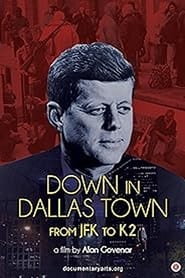
2023
Down in Dallas Town
2023
Through interviews with people on the street and songs recorded to memorialize JFK in the mid-1960s, the film explores the impact of the November 22, 1963 assassination on issues in today’s world, from lingering conspiracy theories to the proliferation of gun violence, homelessness, and the scourge of K-2.Depero: Rovereto, New York and Other Stories
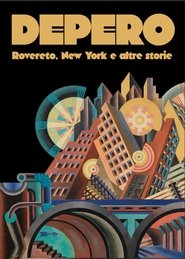
2015
Depero: Rovereto, New York and Other Stories is the first documentary film focused on the artist from Trentino, Fortunato Depero. The film investigates the figure of a man who was able to go beyond the codified circuits of the art world: his work ranges from painting to theater, from set design to photography, the applied arts to opera on radio, publishing and advertising design. Fortunato Depero was rediscovered in the late seventies and re-evaluated in the nineties thanks to the attention dedicated to him by some scholars and the keen interest of his works by French and American audiences who saw in him the most significant artist of the Futurist movement.Cat City
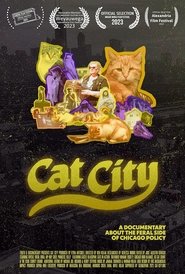
2024
Cat City
2024
Chicago's love/hate relationship with feral cats, and the communities who look after them.The Cowboy and the Queen
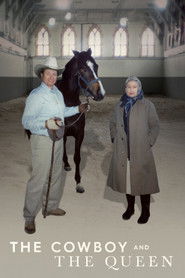
2023
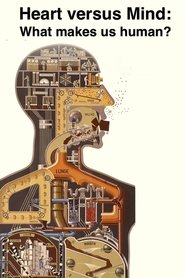
Monty Roberts, a California horse trainer nearing 90 and showing no signs of slowing down, recounts his life with horses, starting from his earliest days working in Hollywood westerns of the 1940s. Repelled by the accepted style of “breaking a horse’s spirit,” Roberts developed his own gentle approach to human interaction with horses in the hopes of someday transforming horse training standards worldwide. When his technique comes to the attention of Queen Elizabeth II, a friendship is sparked between the cowboy and the Queen that lasts until the end of her life, a friendship that inspires horse trainers around the world.Heart vs Mind: What Makes Us Human?
2012
David Malone asks if we are right to see the heart as merely a brilliant pump or whether it should be allowed to reclaim something of its old place at the centre of our humanity. The heart is the most symbolic organ of the human body.Edward Said On Orientalism: "The Orient" Represented in Mass Media
1998
Edward Said's book Orientalism has been profoundly influential in a diverse range of disciplines since its publication in 1978. In this engaging and lavishly illustrated interview he talks about the context within which the book was conceived, its main themes, and how its original thesis relates to the contemporary understanding of "the Orient" as represented in the mass media. "That's the power of the discourse of Orientalism. If you're thinking about people and Islam, and about that part of the world, those are the words you constantly have to use. To think past it, to go beyond it, not to use it, is virtually impossible, because there is no knowledge that isn't codified in this way about that part of the world." -Edward SaidBeyond the Straight and Narrow
2023
How did the rise of LGBTQ visibility, political progress, and digital technologies in the 2000s come together to offer the abundance of complex queer and transgender representations we see today? Media scholar Katherine Sender shows how LGBTQ visibility and political progress have combined with new digital media technologies and television platforms to produce an increasingly complex range of queer and transgender representations.To Be Destroyed
2024
To Be Destroyed
2024
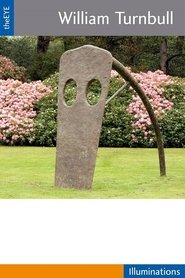
A 30-minute documentary on book banning and censorship that follows author Dave Eggers as he investigates why a Rapid City, SD school board wanted to ban his book.theEYE: William Turnbull
2005
William Turnbull is one of Britain’s most distinguished sculptors and painters. In the late 1940s he studied art in London and then spent time in Paris, and ever since he has rigorously explored a limited number of archetypal forms as well as the fundamentals of art’s languages. Over more than fifty years William Turnbull has returned again and again to the head and the mask, to the standing figure and the horse, as well as to possibilities of pared-down, often monochromatic painting. His simple objects, which draw on both primitive and classical ideas, often combine presence and poetry in unique ways.theEYE: Vong Phaophanit
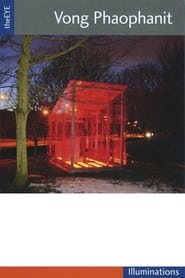
2006
Vong Phaophanit showed his strikingly seductive Neon Rice Field when he was nominated for the Turner Prize in 1993. Like much of his rich and complex work since then, this installation exhibits a strong interest in language and light, in the painterly qualities of ephemeral materials and in ideas of cultural displacement. He was born in Laos, educated in France and has worked mostly in Britain since the early 1990s. Much of his work now is commissioned for architectural and environmental settings, including Outhouse in Liverpool. Created like many of his large-scale sculptures with fellow artist Claire Oboussier, this is a transparent glass house (with opaque windows) which serves as a flexible social space for the people who live in the surrounding tower blocks.theEYE: Stuart Brisley
2006
Stuart Brisley is perhaps best-known for his disturbing physical performances which pushed his body to extremes. But his work as an artist over four decades has embraced sculpture and installation, films and fictions, large-scale participatory projects and, most recently, the Web. Illustrated with archive footage and photographs, this profile of the artist explores his understandings of collaboration and community, of politics and the market, of humour and failure. At the centre of his diverse work are the essential qualities of what it means to be human.Cold Refuge
2023
Cold Refuge
2023
Cold Refuge is about the physical, psychological, and spiritual aspects of full immersion in the natural world: how, though it may seem counter-intuitive, swimming in cold water helps mitigate some of life’s most serious challenges. The film’s diverse film subjects include a wheelchair-bound, paralyzed swimmer who faces fear by diving off a high pier; a Black man who was told by whites when he was 13 that “Black people don’t swim” (it took him 30 years to try); a blind man who tethers himself to a sighted swimmer; a woman with aggressive breast cancer who “swims to chemo;” a lawyer who reduces courtroom stress in the open water; and a young woman who communes with her late mother in San Francisco Bay, where they both swam together. Along with swimmers’ stories of adversity and resilience, the film’s marine mammals, birds, artwork, and a variety of open-water locations create a visual meditation on what it means to escape our abstract digital world in favor of wh