Top Rated Documentary Movies on Kanopy - Page 219
All Services
Free Services
 Netflix
 Amazon Prime Video
 Apple iTunes
 Apple TV Plus
 Disney Plus
 Google Play Movies
 Paramount Plus
 Hulu
Hulu
 HBO Max
 YouTube
 fuboTV
 Peacock
 Peacock Premium
 Amazon Video
 The Roku Channel
 AMC+
AMC on Demand
AMC+
AMC on Demand
 Kocowa
 Hoopla
 The CW
 Vudu
Vudu
 Starz
Starz
 Showtime
 PBS
PBS
 Pantaflix
 FXNow
FXNow
 Tubi TV
 Kanopy
 Comedy Central
 Crunchyroll
 Microsoft Store
 Redbox
 Sun Nxt
 ABC
ABC
 DIRECTV
 Crackle
 Fandor
 Plex
Plex
Netflix
Amazon Prime Video
Apple iTunes
Apple TV Plus
Disney Plus
Google Play Movies
Paramount Plus
Hulu
HBO Max
YouTube
fuboTV
Peacock
Peacock Premium
Amazon Video
The Roku Channel
AMC+
AMC on Demand
Kocowa
Hoopla
The CW
Vudu
Starz
Showtime
PBS
Pantaflix
FXNow
Tubi TV
Kanopy
Comedy Central
Crunchyroll
Microsoft Store
Redbox
Sun Nxt
ABC
DIRECTV
Crackle
Fandor
Plex

theEYE: Karl Weschke
2006
theEYE: Karl Weschke
2006
Karl Weschke‘s impressive, complex paintings picture the human figure and the landscape, the everyday and the mythical. His subjects include dogs and drowned bodies, creatures from legends and, increasingly in recent years, the monumental ruins of ancient Egypt. For more than fifty years, he has explored the possibilities of painting and its relevance to an uncertain world. Produced alongside a retrospective at Tate St Ives, with additional paintings from British collections, this film profiles the artist in the Cornwall that has been his home since 1955. Filmed in and around his studio and in the coastal landscape that informs all of his work, Weschke speaks engagingly about his rich, remarkable life and about many of his most significant canvases. Like his work, the painter is serious, intense, spare – and yet also with an appealing streak of mischief.theEYE: Liliane Lijn
2005
theEYE: Liliane Lijn
2005
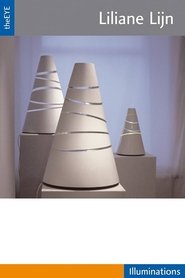
Science and Surrealism, ancient myths, Buddhism and feminism are among the frameworks of ideas important to Liliane Lijn’s art. In Paris at the end of the 1950s, in Greece and New York, and in England since 1966, she has worked with light, energy and movement, with archetypal shapes and unconventional materials to produce an art that is clear, complex and strikingly beautiful. Many of Liliane Lijn’s key drawings and sculptures are featured in this profile, which was filmed alongside an important reassessment of her work at the Mead Gallery. The Poem Machines and Koans of the 1960s and 1970s are considered as well as the ambitious “goddess” figures of more recent years.theEYE: Lisa Milroy
2006
theEYE: Lisa Milroy
2006
Lisa Milroy’s paintings are pleasurable and provocative, clear but complex, immediate and yet richly subtle. In 2001 many of her major works were brought together for an important exhibition at Tate Liverpool; this film, the first about her work, was made alongside that show. Her earliest works are depictions of everyday objects: shoes in serried ranks, collections of lightbulbs and household hardware. Later canvases explore the process of depicting images of people, blank facades of buildings, clichés of photographic landscapes. More recent work is looser and less apparently realist.theEYE: Joe Tilson
2006
theEYE: Joe Tilson
2006
Since the 1960s, when he was associated with British Pop Art, Joe Tilson has enjoyed international acclaim for the individuality and originality of his paintings, constructions, prints and multiples. All of his playful, engaging work is informed with ideas from literature, philosophy, ethnography and alchemy. Tilson’s early work focussed on mass-market consumerism and politics. But he was soon disenchanted with mechanical methods of production and his art in the 1970s and 1980s employed hand-worked wood and metal in intriguing ways. Shot in and around the artist’s studio in Cortona, Italy, this film was produced alongside Joe Tilson’s first British retrospective at London’s Royal Academy of Arts.theEYE: Gereon Krebber
2006
Gereon Krebber’s proposal for a monumental and expensive aluminium object called Tin won the 2003 Jerwood Sculpture Prize. Shot over more than a year, this film follows the creation, casting and placing of the final sculpture. Sitting in the elegant country house garden at Ragley Hall, Tin suggests a kitchen container or a hamburger and yet is at the same time defiantly abstract. Krebber is a young sculptor from Germany who studied at the Royal College of Art and now works in London. The surprising range of his work, and the processes which create it, are revealed here as he talks engagingly about how to create “seriously flippant” objects. His art, made with diverse materials including balloons and Cling Film as well as traditional media, has a unique deadpan humour. Its effect, the artist hopes, is to make you ”smile and shiver at the same time”.theEYE: Ian Hamilton Finlay
2005
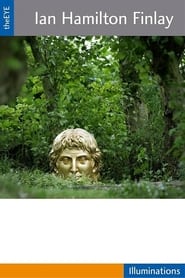
From previously barren moorland in the Pentland Hills near Edinburgh, Ian Hamilton Finlay has created a unique garden as an encompassing work of art. Little Sparta is a magical combination of culture and horticulture, poetry and planting, philosophy and myth. Ian Hamilton Finlay began his work at Little Sparta in the mid-1960s. With friends and collaborators, around a group of old farm buildings he has fashioned landscapes, streams, bridges, glades, lanes, bowers and more. Everywhere there are inscriptions and sculptures reflecting the artist’s preoccupations: the Enlightenment and the French Revolution, pre-Socratic philosophy, garden history, World War Two, the sea and fishing fleets, time and mortality.theEYE: Dalziel + Scullion
2006
Artists Dalziel + Scullion have worked together since 1993, based in the remote north east of Scotland. Using photography, video, sculpture, sound and installation, they have created a collection of work that is recognised for its distinctive vision and sensitivity to its context and the environment. They are well known for their site-specific works, which include important public commissions, such as Horn, the giant stainless steel sculpture sited on the M8 motorway, which intermittently broadcasts poetry, music and voices at passing cars. They reflect on how these works illustrate the contradiction between the strange hybrid of wilderness and the high-tech, man-made industrial installations found in the remote landscapes of Scotland. The point at which nature and culture intersect is a continuing theme throughout their work, despite a more recent shift in geographical focus.theEYE: Conrad Shawcross
2008
Regularly using subjects which lie on the border of science and philosophy, Conrad Shawcross‘s structural and often mechanical sculptures question empirical, ontological and philosophical systems ubiquitous within our lives. While at first appearing rational and functional, his complex mechanised systems in the end deny all rational function and so the viewer is forced down philosophical and metaphysical avenues to deduce a ‘rasion d’etre’. From early works such as The Nervous System, 2002 – a monumental spinning machine that endlessly weaves a length of coloured rope into the form of a double helix, the shape of DNA – to his recent giant spiral work Continuum, 2004, the artist has attempted to visualize, among other things, the incomprehensible of human concerns, time.theEYE: Anthony Caro
2005
theEYE: Anthony Caro
2005
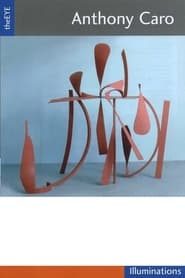
In the early 1960s Anthony Caro led a revolution in sculpture in Britain. His abstract steel constructions, often painted in bold colours, forged a new and internationally influential sculptural language. In the years since his fertile and diverse practice has consistently challenged and extended what sculpture is, and what it might be. At the age of 80, Anthony Caro remains intensely active, working each day in his studio and overseeing every detail of an extensive retrospective at Tate. Preparations for the show are featured in this profile, along with many of his major works, filmed in Britain, Germany and the United States.Landless
2023
Landless
2023
An essay film exploring the relationship between humans and propaganda, spanning from the enslaved individuals of 16th-century Saint-Domingue to the digital 'Sisyphus' role embodied by NPCs (Non-Player Characters) in the popular video game, Assassin's Creed.Modernism, Inc.: The Eliot Noyes Design Story
2024
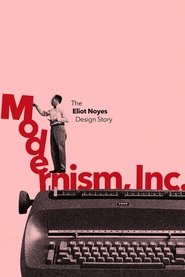
The life and work of influential mid-century architect and designer Eliot Noyes, who is best remembered as the man behind IBM's landmark design program in the 1950s and 1960s.Mozart's Sister
2024
Mozart's Sister
2024
For the first 18 years of her life, Mozart’s sister shared equal billing with her brother. Musical partners and collaborators, Wolfgang Mozart and Maria-Anna Mozart played together before Kings and Queens, and were the talk of Europe. What happened to her? Forced into retirement by age 16 because she was a woman, a stunning new investigation explores why she was retired against her will and the explosive theory: did Maria-Anna Mozart continue to compose in secret?theEYE: Sandra Blow
2007
theEYE: Sandra Blow
2007
Three spectacular canvases by Sandra Blow were one of the highlights of the 2006 Royal Academy Summer Exhibition. Sadly, this was her last show, as she died in August that year. This film was made in her studio in St. Ives as she was preparing to submit her works, and it captures her remarkable character and her fascinating reflections on a lifetime creating beautiful, rigorous, distinctive and joyous paintings. Sandra Blow spent a formative year as a student in Italy in the late 1940s, and she returned to London to begin a distinguished career dedicated to developing her vigorous abstract art. In addition to paint, she worked with a diverse range of materials, including sacking, plaster and coloured paper collages, and while her work often referred to landscape and to architecture, it was always exploring ideas of pure form and colour, balance and chance, light and movement. theEYE is an excellent introduction to contemporary artists and their worktheEYE: Howard Hodgkin
2006
Howard Hodgkin was one of the world’s leading painters, whose art is admired both by critics and by a wide public. Beginning with a remembered experience, Hodgkin works on his seductive and complex paintings for long periods, characteristically producing richly coloured, sweeping compositions, which continue into the picture-frame itself. These paintings uniquely straddle representation and abstraction, at the same time as they demonstrate both an awareness of history and an understanding of art’s potential today. Most recently, his interest in working in different scales, evident particularly in significantly larger paintings such as Americana and After Vuillard, demonstrates his concern to engage the viewer in new and challenging ways.theEYE: Hamish Fulton
2006
Hamish Fulton describes himself as a “walking artist”. For more than thirty years he has undertaken demanding walks in many parts of the world, and drawn on his experiences to create distinctive artworks using text, graphics and photographs. He aims to “leave no trace” in the landscape, and he acknowledges that his art cannot represent the experience of a walk. “What I’m interested in,” he explains, “is presenting a sort of skeleton of something, and then the viewer fills in what’s missing, maybe from your own experience.” Although they exhibit a striking consistency in their concerns, Hamish Fulton’s artworks can exist as large-scale wall paintings and as modest publications, as graphics to compete with advertising hoardings and as online animations. They are informed both by spiritual ideas and by political questions prompted by our uses of the environment and by specific issues such as land rights.The Astros Edge
2023
The Astros Edge
2023
FRONTLINE examines the Houston Astros cheating scandal and what it says about baseball today. With reporter Ben Reiter, the documentary traces the making of one of the best teams and worst scandals in modern Major League Baseball history, the limited accountability and how the Astros’ approach to baseball changed the sport.I’m the Girl - The Story of a Photograph
2023
The identity of the little girl in a famous photograph from 1951 has remained a mystery for over seventy years. I'M THE GIRL investigates the power of a single image and the women who claim to be her.theEYE: Gillian Ayres
2008
Gillian Ayres studied at Camberwell School of Art from 1946-50, before running the AIA Gallery with painter Henry Mundy whom she married. As a young artist in the 1950’s, Ayres was closely involved with leading British abstract artists including Roger Hilton. Ayres was quick to respond to European tachism and American abstract expressionism, creating a body of work that placed her in the forefront of her generation. In the sixties she was the only woman artist to be represented in the important ‘Situation’ exhibitions, showing large paintings combining oil and paint that aimed for the sublime using very radial drip and pour techniques of action painting.We Start With the Things We Find
2023
Many people may see shipping containers as simple components in a vast global economic and supply chain system, but LOT-EK, a renowned architectural studio, has reimagined these industrial bins to have many purposes. Over the past three decades, LOT-EK has envisioned alternative uses for containers and other discarded materials from our industrialized economy, transforming them into unique architectural and artistic spaces.Sometime, Somewhere
2024
Sometime, Somewhere
2024
Sometime, Somewhere sheds light on the challenges faced by Latino communities in Charlottesville, Virginia against the backdrop of immigration driven by factors like climate change, poverty, and drug-related violence.