Top Rated Documentary Movies on Kanopy - Page 227
All Services
Free Services
 Netflix
 Amazon Prime Video
 Apple iTunes
 Apple TV Plus
 Disney Plus
 Google Play Movies
 Paramount Plus
 Hulu
Hulu
 HBO Max
 YouTube
 fuboTV
 Peacock
 Peacock Premium
 Amazon Video
 The Roku Channel
 AMC+
AMC on Demand
AMC+
AMC on Demand
 Kocowa
 Hoopla
 The CW
 Vudu
Vudu
 Starz
Starz
 Showtime
 PBS
PBS
 Pantaflix
 FXNow
FXNow
 Tubi TV
 Kanopy
 Comedy Central
 Crunchyroll
 Microsoft Store
 Redbox
 Sun Nxt
 ABC
ABC
 DIRECTV
 Crackle
 Fandor
 Plex
Plex
Netflix
Amazon Prime Video
Apple iTunes
Apple TV Plus
Disney Plus
Google Play Movies
Paramount Plus
Hulu
HBO Max
YouTube
fuboTV
Peacock
Peacock Premium
Amazon Video
The Roku Channel
AMC+
AMC on Demand
Kocowa
Hoopla
The CW
Vudu
Starz
Showtime
PBS
Pantaflix
FXNow
Tubi TV
Kanopy
Comedy Central
Crunchyroll
Microsoft Store
Redbox
Sun Nxt
ABC
DIRECTV
Crackle
Fandor
Plex

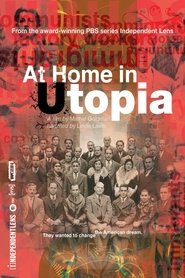
At Home in Utopia
2008
At Home in Utopia
2008
During the economic boom of the 1920s, thousands of immigrant Jewish factory workers managed to build the house of their dreams, a cooperative apartment complex at the edge of Bronx Park. Then they were hit by the Great Depression. At Home in Utopia bears witness to an epic social experiment across two generations in the Coops - a place known as "little Moscow" - where people tried to change the American dream into one that included racial justice and workers' rights.No Loitering
2002
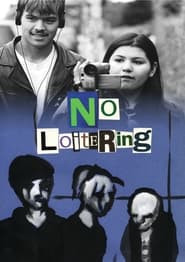
No Loitering
2002
An intimate portrait of teenagers trying to understand their world and their possibilities. The film weaves together video shot by teens and by the filmmaker, as they work together to make a film and create expressive outlets for youth in the community. They organize dances and community events and paint a mural. At the same time, with humor and pathos, these young people raise issues around violence, feeling misunderstood by adults and lacking respect in their community. Set in the small town of Sitka, Alaska, home to a large Alaska Native population, the video chronicles their creativity, concerns and dreams.Intervention: Stories From the Inside
2009
On June 21 2007, the Howard Federal Government launched an intervention into Aboriginal communities in the Northern Territory. It was one of the most dramatic policy shifts in the history of Aboriginal affairs. Relentless media attention focuses on ideological arguments for and against the Intervention, while the voices of those affected by the policy are rarely heard. For this film more than 40 Alice Springs town camp residents were interviewed in depth over the course of eight months to find out the answer to the question - is it working?Who Will Burry The Dead?
2016
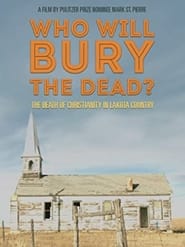
This documentary offers a deep, candid, and historical look at the Christian experience of America's largest and best-known tribes: the Dakota and Lakota. Its exploration into Native American history also takes a hard and detailed look at President Ulysses S. Grant's Peace Policy of 1873, which was, in effect, a "convert to Episcopalianism or starve" edict put forth by the American government in direct violation of its Constitution. The devastation it had on the values of the people affected were dramatic and extremely long-lasting. Grant's policy was finally ended over 100 years later by the Freedom of American Indian Religions Act in 1978. Interlaced with extraordinarily candid interviews, this documentary presents an insider's perspective of how the Dakota and Lakota were estranged from their religious beliefs and their long-standing traditions.Animating Aeroplane Jelly
2020
A documentary about Australian animation pioneer Eric Porter’s work on the iconic Aeroplane Jelly animated promos of the 1940s and 1950s.Hockney at the Tate
1988
Hockney at the Tate
1988
To mark his fiftieth birthday in 1988, London's Tate Gallery staged a major retrospective of his work. Melvyn Bragg joined David Hockney for an exclusive private view of the exhibition and they were filmed discussing pictures from all stages of Hockney's remarkable career.When Liberty Burns
2020
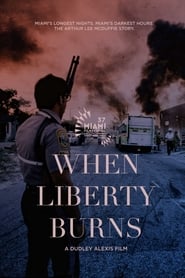
When Liberty Burns
2020
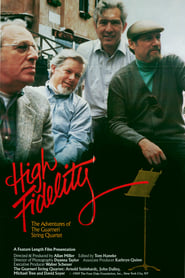
An in-depth analysis on the 40th Anniversary of the life and untimely death of Arthur Lee McDuffie at the hands of Miami Dade police officers.High Fidelity: The Adventures of the Guarneri String Quartet
1989
Relationships, rehearsals, performances, hobbies, and family life of the members of the Guarneri String Quartet.Shirin Ebadi: Until We Are Free
2022
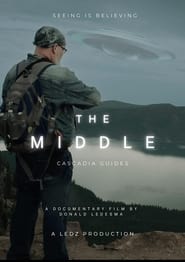
The first Muslim woman to ever receive the Nobel Peace Prize, Shirin Ebadi has inspired millions around the globe through her work as a human rights lawyer defending women and children against a brutal regime in Iran. Now the film, Until We Are Free, tells her story of courage and defiance in the face of a government out to destroy her, her family, and her mission: to bring justice to the people and the country she loves. The Iranian government would end up taking everything from Shirin Ebadi – her marriage, her home, even her Nobel Prize medallion – but the one thing it could never steal was her spirit to fight for justice and a better future for the women of Iran.The Middle: Cascadia Guides
2022
Story of a Oregon Ufologist by the name Terry Linch who had a close encounter sighting of a large UFO craft in 2018. And now putting the story together of numerous sightings in the area. Connections with geology and geoglyphs found on top of a mountain.Abundance on a Dry Land
2015
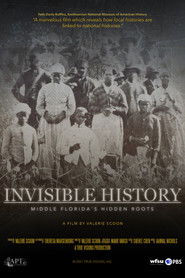
In the news, California often grabs the headlines. In this state, the agriculture is suffering from a lack of water and farms are being abandoned at an alarming rate. But some people seem to have found a solution. Here, and in many other dry regions around the world, land restoration is helping water infiltrate into the soil to help increase crop yields.Invisible History: Middle Florida's Hidden Roots
2021
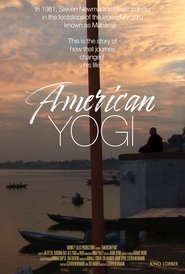
This film sheds light on the little-known history of plantations and the enslaved in North Florida. It seeks to advance a sense of place and identity for thousands of African-Americans by exploring the invisible history of slavery in Leon County.American Yogi
2014
American Yogi
2014
When an ex-hippie-turned-businessman hears about a miracle-making saint, he goes to India to find him to keep from living an empty life. A world music soundtrack by Grammy nominee Jai Uttal, exclusive interviews with Ram Dass and Krishna Das, rare footage of Neem Karoli Baba, and a new perspective on Eastern philosophy make this documentary unique.In Hollywood's Backyard: Topanga in the 1970s
2017
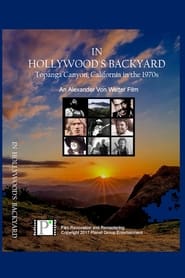
Filmmakers (and canyon residents) Alexander and Anne Christine Von Wetter filmed this documentary for German Television in the early 1970s as a revealing close-up of an extraordinary period in America. The camera masters and 16mm negative were consequently lost to a devastating fire. Luckily, a lone VHS copy had been made, which spent the next 30 years on the studio shelf. The VHS was found heavily damaged, but a restoration team managed to salvage a fair grade of quality, which has since been remastered.Black Is the Color: African-American Artists and Segregation
2016
Black Is the Color highlights key moments in the history of Black visual art, from Edmonds Lewis’s 1867 sculpture Forever Free, to the work of contemporary artists such as Whitfield Lovell, Kerry James Marshall, Ellen Gallagher, and Jean-Michel Basquiat. Art historians and gallery owners place the works in context, setting them against the larger social contexts of Jim Crow, WWI, the civil rights movement and the racism of the Reagan era, while contemporary artists discuss individual works by their forerunners and their ongoing influence.Tipping the Pain Scale
2021
A feature documentary film following individuals grappling with the current systemic failures of how we have dealt with addiction and their journey to develop and employ new, innovative, and often controversial solutions to the problem.The War After
2015
The War After
2015
A powerful, 70-minute documentary featuring nine U.S. veterans transitioning from active duty to the unexpected challenges of civilian lifeMangalyaan: India's Mission to Mars
2023
In this special, watch the 650 million km journey of ISRO's Mangalyaan, India's first interplanetary mission to Mars.