Top Rated Documentary Movies on Kanopy - Page 268
All Services
Free Services
 Netflix
 Amazon Prime Video
 Apple iTunes
 Apple TV Plus
 Disney Plus
 Google Play Movies
 Paramount Plus
 Hulu
Hulu
 HBO Max
 YouTube
 fuboTV
 Peacock
 Peacock Premium
 Amazon Video
 The Roku Channel
 AMC+
AMC on Demand
AMC+
AMC on Demand
 Kocowa
 Hoopla
 The CW
 Vudu
Vudu
 Starz
Starz
 Showtime
 PBS
PBS
 Pantaflix
 FXNow
FXNow
 Tubi TV
 Kanopy
 Comedy Central
 Crunchyroll
 Microsoft Store
 Redbox
 Sun Nxt
 ABC
ABC
 DIRECTV
 Crackle
 Fandor
 Plex
Plex
Netflix
Amazon Prime Video
Apple iTunes
Apple TV Plus
Disney Plus
Google Play Movies
Paramount Plus
Hulu
HBO Max
YouTube
fuboTV
Peacock
Peacock Premium
Amazon Video
The Roku Channel
AMC+
AMC on Demand
Kocowa
Hoopla
The CW
Vudu
Starz
Showtime
PBS
Pantaflix
FXNow
Tubi TV
Kanopy
Comedy Central
Crunchyroll
Microsoft Store
Redbox
Sun Nxt
ABC
DIRECTV
Crackle
Fandor
Plex

The Invisible Patients
2016
The Invisible Patients tells the story of Jessica Macleod, a nurse practitioner, and four homebound patients she cares for in Evansville, Indiana.The Life Equation: Big Data and Global Health
2017
Big Data is being used to analyze and determine healthcare options and billions of people are affected. But what, and who, is lost in the number crunching? THE LIFE EQUATION introduces us to Jose, a new kind of health worker. When he meets Crecencia Buch, a mother of seven with cervical cancer, he faces a daunting question. The price for her treatment is $10,000 and, at best, it will buy only a few years of life. That money could fund thousands of pap smears -- a cost-effective way of catching cancer early. Should Jose take Crecencia's case on? Across the globe an underfunded hospital in remote Nepal needs a doctor to perform Caesareans. Dr. Shree Ram Tiwari is willing but his expertise does not come cheap. Should the hospital hire him?Rudy Burckhardt: Man in the Woods
2003
A detailed look at a remarkable artist who died in 1999 at age 85. Aspects of Burckhardt's work in photography, film, and painting are examined in interviews with Rudy Burckhardt, painter Yvonne Jacquette, and curators Robert Storr (former Senior Curator of Painting and Sculpture, Museum of Modern Art, New York) and Brian Wallis (Chief Curator, International Center of Photography, New York). In his studio in New York, Burckhardt discusses his photography and its significance within its historical framework. In the woods near his summer home in Maine, the viewer sees Burckhardt's easel and painting in front of the scene he is depicting. Whether in city or country, Burckhardt appreciated and transformed the chaos he discovered.For Walter and Josiah
2020
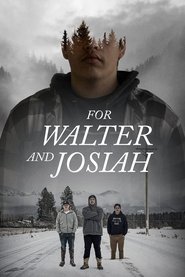
The Flathead Indian Reservation in Montana is shaken to its core by a teen suicide epidemic that claims 22 Native lives in a single year - including two high school basketball team members. 'For Walter And Josiah' follows the team during their season as the surviving members play to honor their fallen brothers and uplift their community.Big Brother of Christmas Island
1999
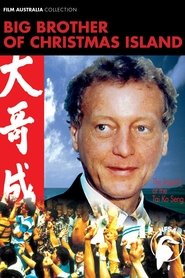
Twenty years ago, a hard-drinking, fiery British immigrant called Gordon Bennett, came to the remote Australian territory of Christmas Island to become General Secretary of the Union of Christmas Island Workers. By the time he died in 1991, he was known as 'Tai Ko Seng' which, roughly translated, means "big brother who delivers". Every year since his death, people gather on 30 July at the Island's Chinese cemetery, to pay tribute to Bennett as they would to their honoured ancestors. Big Brother of Christmas Island tells the moving story of how the legend of the "Tai Ko Seng" was born.Jamesie, King of Scratch
2007
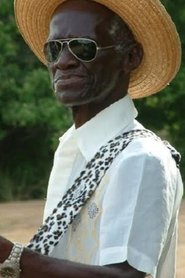
An engaging and spirited musical journey to the Caribbean, this documentary focuses on Scratch band music, an indigenous, grass-roots form of folk music from the Virgin Islands. 79-year old James Brewster was an uncompromising, humorous, and provocative musician known for his playful compositions and lively performances and is the legendary 'King of Scratch'.Right Out of History: The Making of Judy Chicago's Dinner Party
1980
For five years, feminist artist Judy Chicago worked with a community of four hundred other artists, craftspeople and researchers to create The Dinner Party, a monumental tribute to women of spirit and accomplishment throughout the ages -- women whose names have been banished "right out of history". For over four of those five years, filmmaker Johanna Demetrakas followed the progress of The Dinner Party, recording for posterity the alternately painstaking and exhilarating process of creating this work of unprecedented scale and beauty.Separated: Children at the Border
2018
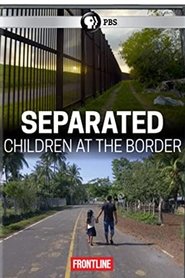
The inside story of what happened to immigrant children separated from their parents at the border. The film explores the impact of the Trump administration’s “zero tolerance” policy, and how both Trump and Obama dealt with minors at the border.Left Behind America
2018
Left Behind America
2018
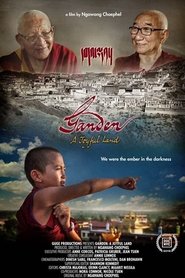
Intimate stories of one Rust Belt city's struggle to recover in the post-recession economy. FRONTLINE and ProPublica report on the economic and social forces shaping Dayton, OH, a once-booming city where nearly 35 percent now live in poverty.Ganden: A Joyful Land
2019
Tibetan monks from an over 500 year old Buddhist group initiate us in their story about banishment and quiet resistance.Birth on the border
2018
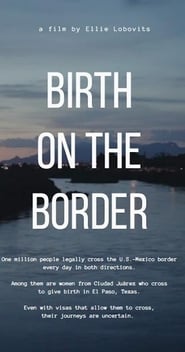
Birth on the border
2018
One million people legally cross the U.S.-Mexico border every day in both directions. Among them are women from Ciudad Juárez who cross to give birth in El Paso, Texas. Even with visas that allow them to cross, their journeys are uncertain. Gaby and Luisa, two women from Ciudad Juárez, cross legally into El Paso, Texas, in order to give birth. Two Chicana midwives in El Paso, Lina and Sandra, support the women who cross. After living through the extreme violence that engulfed Ciudad Juárez from 2008-2012 and with the looming threat of obstetrical violence in Mexican hospitals, Gaby and Luisa choose to cross, seeking a safer future for their children and the opportunity for natural childbirth with midwives. They risk losing their visas, getting turned back, and harassment at the hands of U.S. Border Patrol. Against the backdrop of oppressive U.S. border policy, these women's stories of risk and resilience reveal the complexities of life on the U.S.-Mexico border.Ayouni
2020
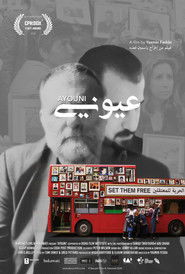
Ayouni
2020
Ayouni follows two high profile figures of the Syrian revolution and asks how do you rebuild country when its civil society has been disappeared, killed and scattered across continents?A Long Way from Home: The Untold Story of Baseball's Desegregation
2018
Jackie Robinson broke baseball’s color line in 1947, but it took another generation of Black and Latino players to make the sport truly open to all. Playing in remote minor-league towns, these were the men who, before they could live their big-league dreams, first had to beat Jim Crow.Bleeding Audio
2020
Bleeding Audio
2020
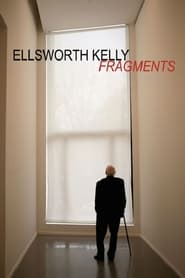
An intimate portrait detailing The Matches' promising career, defeating break up, and inspiring reunion as they reflect on what success truly means for musicians in today's digital industry. The Matches' story overlaps with the drastic changes the music industry has undergone in the past several years. From declining record sales, to excessive touring, to illegal downloading and streaming.Ellsworth Kelly: Fragments
2007
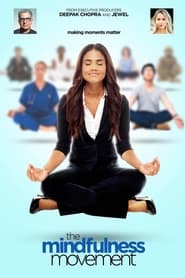
Cameras record artist Ellsworth Kelly as he creates sculptures for the US Embassy in Beijing. With all his equipment around him, Ellsworth undertakes a big task as his creates he next masterpieces.The Mindfulness Movement
2020
From Executive Producers Jewel and Deepak Chopra, comes "The Mindfulness Movement," a feature documentary that examines the growing number of people throughout society who are working to create a healthier, happier world by spreading mindfulness - a peaceful quality of attention anyone can develop by simply focusing on the present moment in a non-judgmental way.Nat Bates For Mayor
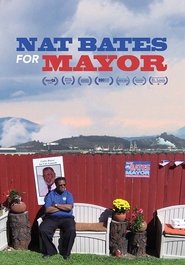
2017
Nat Bates For Mayor
2017
Nat Bates For Mayor tells the story of the outrageous 2014 mayor's race in Richmond, home to the second largest refinery in California. In a brazen move, Chevron spent more than $3 million to back 83-year-old African American stalwart Nat Bates. Bates makes a Faustian bargain with the city's corporate behemoth in a cagey attempt to preserve the long-standing but waning power of Richmond's African-American working class community, whose rich history dates back to the formation of the Kaiser shipyards during World War Two.Speak So I Can See You
2019
Conjuring reality and wonder, "Speak so I Can See You" takes us to a seemingly different era, by exploring the world of Radio Belgrade. One of Europe's oldest radio stations and a true institution of the city, the station still broadcasts original programming and helps keep history, culture and critical thought, as well as everrelevant questions about ourselves and the world, from slipping out of memory and mind. Set at the intersection of an observational documentary and a unique sensory experience, the film conjures everyday scenes at the station and immersing interludes exploring the relationship between sound and the space it inhabits. Through a synesthetic blend of sounds, words, notes, echoes and light, we are taken into a unique cinematic soundscape that doubles as a love letter to radiophonic art and its disarming insight into what makes us remember, understand, think, discover, and feel.Echoes of the Invisible
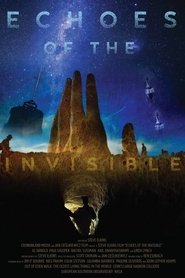
2021
Echoes of the Invisible interweaves a mosaic of profound quests: a blind man running alone from the lowest point in the western hemisphere to the highest mountain peak in the U.S.; artist Rachel Sussman’s struggles to photograph the oldest continuously living things on Earth; journalist Paul Salopek’s 21,000-mile walk retracing the migration route through which our ancestors first discovered the planet; astronomers and physicists attempting to see into the furthest depths of time; and monks probing the most extreme environment of all - the human heart. They discover, in their own way, something that transcends all that divides us in a world lost in the speed and noise of the digital age.