Top Rated Documentary Movies on Kanopy - Page 271
All Services
Free Services
 Netflix
 Amazon Prime Video
 Apple iTunes
 Apple TV Plus
 Disney Plus
 Google Play Movies
 Paramount Plus
 Hulu
Hulu
 HBO Max
 YouTube
 fuboTV
 Peacock
 Peacock Premium
 Amazon Video
 The Roku Channel
 AMC+
AMC on Demand
AMC+
AMC on Demand
 Kocowa
 Hoopla
 The CW
 Vudu
Vudu
 Starz
Starz
 Showtime
 PBS
PBS
 Pantaflix
 FXNow
FXNow
 Tubi TV
 Kanopy
 Comedy Central
 Crunchyroll
 Microsoft Store
 Redbox
 Sun Nxt
 ABC
ABC
 DIRECTV
 Crackle
 Fandor
 Plex
Plex
Netflix
Amazon Prime Video
Apple iTunes
Apple TV Plus
Disney Plus
Google Play Movies
Paramount Plus
Hulu
HBO Max
YouTube
fuboTV
Peacock
Peacock Premium
Amazon Video
The Roku Channel
AMC+
AMC on Demand
Kocowa
Hoopla
The CW
Vudu
Starz
Showtime
PBS
Pantaflix
FXNow
Tubi TV
Kanopy
Comedy Central
Crunchyroll
Microsoft Store
Redbox
Sun Nxt
ABC
DIRECTV
Crackle
Fandor
Plex

Afterimages
2018
Afterimages
2018
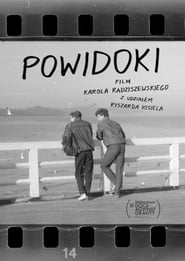
"Afterimages" is a short story about one plate from the archive of Ryszard Kisiel, the creator of "Filo" - one of the first gay zines in Central and Eastern Europe. The evoked negative from the end of the ‘80s is the starting point for both Kisiel's personal history and the portrait of the gay scene of the late PRL.Undiscovered Haiti with José Andrés
2015
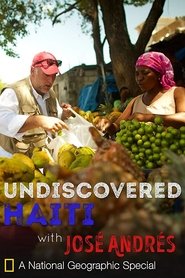
Undiscovered Haiti follows José Andrés into the heart of this mysterious country; through its unique cuisine we discover the history and culture - and see into the future - of a proud and rarely understood people.Dark Matter
2019
Dark Matter
2019
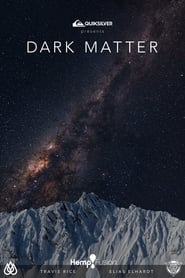
World-renowned snowboarders Travis Rice and Elias Elhardt team up with legendary director Curt Morgan for a celebration of space and time filmed in the deep backcountry of Alaska, exclusively on location at Tordrillo Mountain Lodge.Vojta Lavička: Ups and Downs
2013
Longitudinal documentary film was shot for past 16 years and the main protagonist is Roman musician and activist Vojta Lavička. Vojta is a master in violin play, who focuses not only on music but also deals with problems of his origin Roman nationality. Vojta is very active in media - he worked in the national radio and television, he worked in the NGO that organize street work for Roman ghettos around the Czech republic, Vojta worked also as a social worker. All together we can watch him struggling with the main topic of his life - his national minority and problems that are caused by living next to Czech majority. Aside this topic films discovers Vojta's private life and his fight for being a good musician and a good man.Blue Orchids
2017
Blue Orchids
2017
In Blue Orchids, Johan Grimonprez creates a double portrait of two experts situated on opposite ends of the same issue—the global arms trade. The stories of Chris Hedges, a former New York Times war correspondent, and Riccardo Privitera, arms and equipment dealer for the now-defunct Talisman Europe Ltd, provide an unusual and disturbing context for shocking revelations about the industry of war. While interviewing Privitera and Hedges for Grimonprez’s recently released feature Shadow World (2016), it became clear that the two men were describing the same anguish and trauma, but from paradoxical perspectives. One has dedicated his life to unmasking lies, while the other has built his life on them. Both their personal and political histories gradually reveal the depths of suffering and duplicity, showing that the arms trade is a symptom of a profound illness: greed.All That Perishes at the Edge of Land
2019
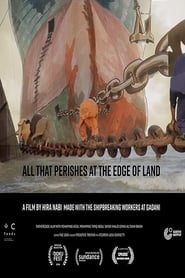
A ship berthed at Gadani and the ship-breakers coming from all over Pakistan to break it discover that they might have more in common than otherwise imagined, when they enter into a conversation.The Deal
2015
The Deal
2015
Stop-motion animation on the arranging of marriages in 1950/60s set in the Eastern-Polish borderland. The script is based on a part of Mikołaj Smyk's diary, the director's grandfather. The biographical objects used in the animation, such as an authentic headscarf, Polish and Russian books, the copy of Mikołaj Smyk's diary and photographs help situate the story in its original environment.The Longest Wave
2019
The Longest Wave
2019
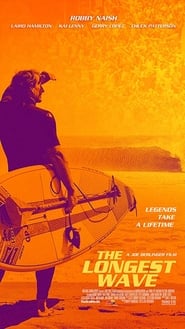
Oscar-nominated filmmaker Joe Berlinger travels the globe with legendary windsurfer and pioneering waterman Robby Naish, a 24-time world champion whose quest to master the world's longest waves unexpectedly reveals his vulnerabilities as a competitor, mentor and father. THE LONGEST WAVE transcends the action sports genre by capturing obstacles outside of the legendary athlete's professional life in an intimate, cinéma-vérité style, revealing Naish balancing the pursuit of excellence at sea with the demands of life's complications on land.Nightingale, Not the Only Voice
2000
Nightingale, Not the Only Voice follows the lives of three artists, including the film’s director, on their shared journey through real and psychological oppression to self-discovery. Tang Danhong examines her past—particularly her relationship with her parents—and looks at the painful, formative moments that inform her current psychological state, her life, and her art.Driving the Dream
1997
Driving the Dream
1997
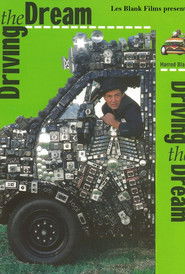
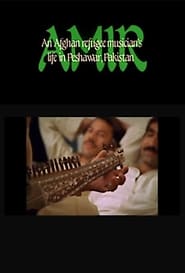
Harrod Blank, who took us into the world of art cars with his epic first film, Wild Wheels, now focuses more in-depth on a few select art vehicles, the Grass Bus, the Hamburger Harley, and the Camera Van. As with his previous film, and the following one (Automorphosis) Blank takes a dauntless look at American car culture.Amir: An Afghan Refugee Musician's Life in Peshawar, Pakistan
1985
Amir, shot during the height of the Afghan civil war in the 1980s, investigates and portrays the life of Afghan refugees living in and around the city of Peshawar in northern Pakistan through the experiences of the musician Amir. The aspirations of Afghan refugees are expressed through their political songs dealing with the civil war in Afghanistan, with exile, with Afghan nationalism and with the Islamic revolution. In highly charged and tragic circumstances, music can be used in very direct ways, both to promote solidarity and as an agent of catharsis.Seven Second Love Affair
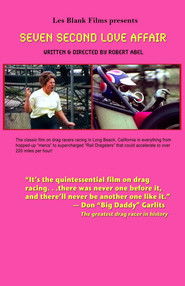
1965
Les Blank's first documentary cinematography job shooting Drag Racers in Long Beach, CA, driving everything from hopped up "Mercs" to Supercharged "Rail Dragsters". These cars could accelerate to over 220 miles/hour in a mile. The film follows the life of Rick "The Iceman" Stewart as he attempts to grab the world's record. Original score by Canned Heat Blues Band.The Poetry of Exactitude
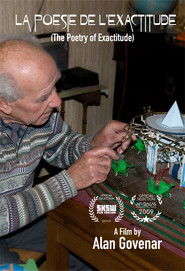
2009
Since 1946, Lucien Mouchet has been making small-scale reproductions of carousels and fairground scenes that existed in the past or are still in operation today. A machinist by trade, Mouchet retired nearly two decades ago, but his obsession with precision and detail has continued. To date, he has created 48 carousels; each is a functioning masterpiece that is constructed to be exactly 1/20 scale of the original. Mouchet works from photographs and measurements he has taken over the years of carousels that have toured France and across Europe. Mouchet tediously prepares shop drawings and hand-tooled parts, analyzing the different modes of assembly and the varying principles of movement. He combines an expertise in engineering with whimsical recreations of the carnival atmosphere, replete with electrical motors, lights, signage, transport trucks and miniature people, made by him and hand-painted by his wife, Georgette.The Art of Francis Bacon
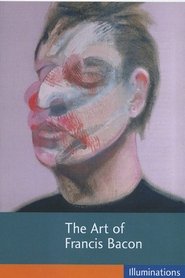
2007
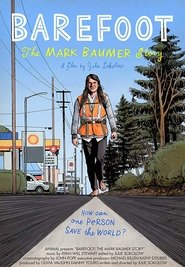
This film explores many of his key canvases which have been newly filmed in HDTV. The works are complemented solely with Bacon’s own words, recorded by Derek Jacobi. The artist’s biography is outlined, but the focus is on his ideas: his thoughts about his work, his reflections about how and why he paints. The result is a rigorous and revealing portrait of one of the few artists who has truly changed the way we see and understand ourselves.Barefoot: The Mark Baumer Story
2019
BAREFOOT is a portrait of Mark Baumer, a writer and activist who walked barefoot for over 100 days to protest climate change. In a voice The New Yorker praised as "reminiscent of Andy Kaufman", Baumer narrates his walk in self-recorded videos, sharing his offbeat take on life and how we all can make a difference.Good-bye Old Man
1977
Good-bye Old Man
1977
At the request of a dying Tiwi man and his family on Melville Island, this film was made of the pukumani (bereavement) ceremony to follow his death. The film observes the family through the long period of preparation for the ceremony, following age-old traditions. Dancing and face-painting are rehearsed, to the family’s satisfaction, and because “things should be right for this film”. For the two days of ceremony, the community moves to Carslake Beach where a smoking ritual is held to protect the participants from spirits. The cemetery poles are erected, traditional dances are performed along with personal dances by family members. Facial and body decoration is elaborate and spectacular. After saying a final farewell to the old man, the community and the family leave the Beach and return to the village where routine life resumes.Witness Theater
2019
Witness Theater
2019
Aron is 88 years old, Eazek is 94 and Claudine is 89. Over seventy years ago, although they lost their entire families, they survived the holocaust and resettled in New York City. Now they are sharing their stories in a unique program led by a drama therapist with high-school students in Brooklyn. The hope is that this sharing will sensitize the students and give some closure to the adult survivors after all these years. The Witness Theater workshop they participate in culminates in the performance of a play based on Survivor stories.Bruno Sammartino
2019
Bruno Sammartino
2019
A documentary about World Wrestling Federation Hall of Famer Bruno Sammartino.Sold
2019
Gaysians
2016
Gaysians
2016
Five queer and trans Asian-Americans from the New York City area explore their relationships with their family and culture in this illuminating patchwork documentary.