Top Rated Documentary Movies on Kanopy - Page 289
All Services
Free Services
 Netflix
 Amazon Prime Video
 Apple iTunes
 Apple TV Plus
 Disney Plus
 Google Play Movies
 Paramount Plus
 Hulu
Hulu
 HBO Max
 YouTube
 fuboTV
 Peacock
 Peacock Premium
 Amazon Video
 The Roku Channel
 AMC+
AMC on Demand
AMC+
AMC on Demand
 Kocowa
 Hoopla
 The CW
 Vudu
Vudu
 Starz
Starz
 Showtime
 PBS
PBS
 Pantaflix
 FXNow
FXNow
 Tubi TV
 Kanopy
 Comedy Central
 Crunchyroll
 Microsoft Store
 Redbox
 Sun Nxt
 ABC
ABC
 DIRECTV
 Crackle
 Fandor
 Plex
Plex
Netflix
Amazon Prime Video
Apple iTunes
Apple TV Plus
Disney Plus
Google Play Movies
Paramount Plus
Hulu
HBO Max
YouTube
fuboTV
Peacock
Peacock Premium
Amazon Video
The Roku Channel
AMC+
AMC on Demand
Kocowa
Hoopla
The CW
Vudu
Starz
Showtime
PBS
Pantaflix
FXNow
Tubi TV
Kanopy
Comedy Central
Crunchyroll
Microsoft Store
Redbox
Sun Nxt
ABC
DIRECTV
Crackle
Fandor
Plex

A Gesar Bard's Tale
2013
A Gesar Bard's Tale
2013
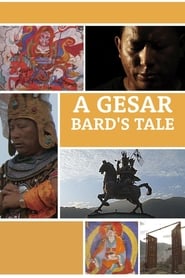
As a boy, Dawa was an illiterate Tibetan nomad whose life revolved around herding yaks. At 13, his life changed: through a series of visions, Dawa acquired the gift of telling the epic story of Tibet’s King Gesar. Now, at 35, Dawa receives a salary from the government as a guardian of national cultural heritage and is regarded as a holy man by his community. When an earthquake reduces his hometown to rubble, redevelopment of the region takes a giant leap forward. In the midst of such seismic shifts, Dawa seeks healing from King Gesar and other divine protectors of the land.Shirley Temple: America's Little Darling
1993
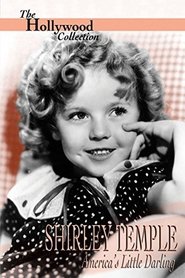
There never was a star quite like her. Adored by adults and children alike, at four she already led at the box office — ahead of Gable and Cooper. Her films saved a movie studio from bankruptcy, and a President credited her with raising the morale of Depression-weary Americans. Her earliest movies gave a foretaste of her talents and soon would become the songs and dances that helped make those movies immortal.I Know a Man…Ashley Bryan
2017
A film about a 93-year-old creative wonder who skips and jumps in his heart like a child. He served in a World War II all-Black battalion and experienced the racism of a separatist Army and the carnage of D-Day. As a result he dedicated his life to creating beauty and joy, spreading love and awe through his art. He's a poet/illustrator of over 50 children's books, makes magical puppets and sea glass windows from found objects inspired by his African heritage.Agents of Change
2017
Agents of Change
2017
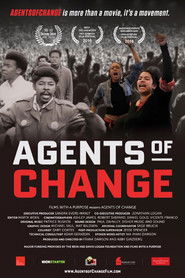
From the well-publicized events at San Francisco State in 1968 to the image of black students with guns emerging from the takeover of the student union at Cornell University in April, 1969, the struggle for a more relevant and meaningful education, including demands for black and ethnic studies programs, became a clarion call across the country in the late 1960's. Through the stories of these young men and women who were at the forefront of these efforts, Agents of Change examines the untold story of the racial conditions on college campuses and in the country that led to these protests. Agents of Change links the past to the present and the present to the past--making it not just a movie but a movement.Max Gimblett: Original Mind
2017
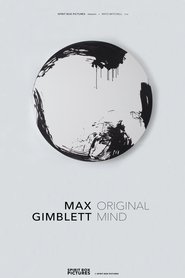
Max Gimblett: Original Mind documents the life and process of eccentric, creative genius Max Gimblett. One of New Zealand’s most successful and internationally prominent living painters, Gimblett has been working in America since 1962. The filmmakers spent a week in Gimblett’s Soho loft where he and his devoted studio assistants generously revealed the techniques and philosophy behind his beautiful art.Dogs of Democracy
2017
Dogs of Democracy
2017
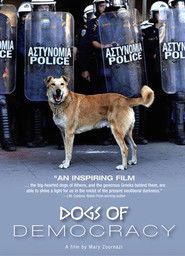
Dogs of Democracy is an essay-style documentary about the stray dogs of Athens and the people who take care of them. Author and first-time filmmaker Mary Zournazi explores life on the streets through the eyes of the dogs and peoples' experience. Shot in location in Athens, the birthplace of democracy, the documentary is about how Greece has become the 'stray dogs of Europe', and how the dogs have become a symbol of hope for the people and for the anti- austerity movement. A universal story about love and loyalty and what we might learn from animals and peoples' timeless quest for democracy.Defiant Lives
2017
Defiant Lives
2017
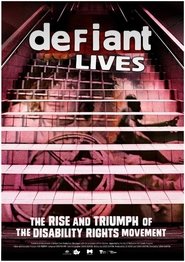
A triumphant film that traces the origins of the world-wide disability rights movement. It tells the stories of the individuals who bravely put their lives on the line to create a better world where everyone is valued and can participate. Featuring interviews and rarely seen archival footage, the film reveals how these activists fought to live outside of institutions, challenged the stigmas and negative image of disability portrayed by the media, demanded access to public transportation, and battled to reframe disability rights as a social responsibility relevant to us all. This film is an excellent tool to encourage discussions about diversity and disability for students, audiences and community groups.Hope Road
2017
Hope Road
2017
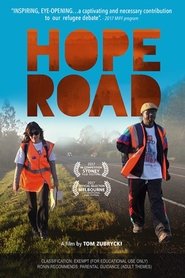
A refugee from the Sudanese civil war, Zacharia (one of the ‘Lost Boys' of Sudan) lives in Sydney with his wife and daughter. He desperately wants to do something for his former village, now in the newly created nation of South Sudan. His dream is to build a much-needed school, enlisting the backing of numerous Australians. Janet, a dedicated supporter, joins him on a 40-day fundraising walk from Tweed Heads to Sydney along with filmmaker Tom Zubrycki. But will this strategy raise the funds they need? Thwarted by escalating conflict back in South Sudan, and shocked by a broken relationship, Zac must decide what's important in his life.El canto del Colibrí
2015
El canto del Colibrí
2015
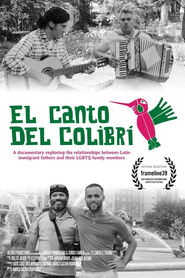
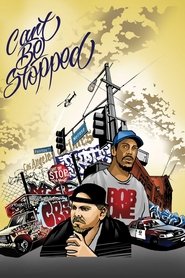
'El Canto del Colibrí' is a story of Latino fathers dealing with issues of immigration, faith, marriage equality, machismo, culture, and the process of their LGBTQ+ children coming out.Can't Be Stopped
2022
Can't Be Stopped
2022
Hollywood's own "Can't Be Stopped" crew is one of the most influential and recognizable graffiti crews to emerge out of the U.S. is Since its inception in the early 1980's, the initials C.B.S. have been at the forefront of evolving graffiti art into a true, authentic art form.The Gateway Arch: A Reflection of America
2006
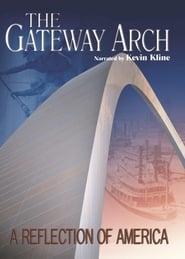
The Gateway Arch: A Reflection of America chronicles for the first time the complete story of this great American symbol… from Thomas Jefferson, Lewis & Clark, and St. Louis’ role in westward expansion; to the eventual construction of the largest stainless steel structure in history.Home Truth
2017
Home Truth
2017
In 1999, Colorado mother Jessica Gonzales experienced every parent’s worst nightmare when her three young daughters were killed after being abducted by their father in violation of a domestic violence restraining order. Devastated, Jessica sued her local police department for failing to adequately enforce her domestic violence restraining order despite her repeated calls for help that night. Determined to make sure her daughters did not die in vain, Jessica pursues her case to the US Supreme Court and an international human rights tribunal, seeking to strengthen legal rights for domestic violence victims. Meanwhile, her relationship with her one surviving child, her son Jessie, suffers, as he struggles with the tragedy in his own way. Shot over the course of nine years, Home Truth chronicles one family’s incredible pursuit of justice, shedding light on how our society responds to domestic violence and how the trauma from domestic violence can linger through generations.Brave New York
2004
Brave New York
2004
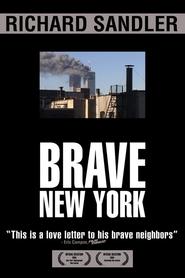
BRAVE NEW YORK is a free-form documentary that loosely chronicles the last twelve years of intense change in the East Village "hood." From the reopening of a newly curfewed Tompkins Square Park and Wigstock in '92 to the destruction of the cherished Loisaida Community Gardens, beyond the yuppie invasions of the "dot com" years to the present era, indelibly stamped with post 9/11 grief, this durable, lusty neighborhood survives in spite of a real estate gold rush that has excluded all but the well-to-do. The movie's main voices are those of the artists and street people whose wisdom and commentaries upon the dominant culture give us pause amidst the speedy approach of a "Brave New World." This Overview was taken from Fandor, where this film is available. 2004.Peter Eisenman: Building Germany's Holocaust Memorial
2009
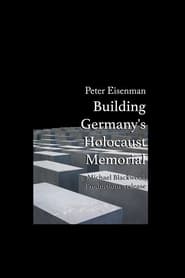
This documentary explores the creation of the Holocaust Memorial in Berlin as designed by architect Peter Eisenman. Reaction of the German public to the completed memorial is also shown.Adele and Everything After
2017
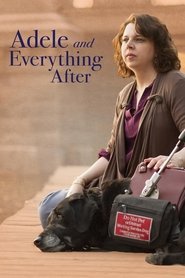
The moving story of a lonely, isolated woman with a heart condition whose life is transformed by a service dog, and what happens when she has to let go of the loyal companion who changed her life.Richard Wright: Native Son, Author and Activist
2009
RICHARD WRIGHT was an African-American author of novels, short stories and non-fiction that dealt with powerful themes and controversial topics. Much of his works concerned racial themes that helped redefine discussions of race relations in America in the mid-20th century. Born on a plantation in Mississippi, Wright was a descendent of the first slaves who arrived in Jamestown Massachusetts. This program follows his arduous path from sharecropper to literary giant. Through authors like H.L. Menken, Sinclair Lewis, Theodore Dreiser, he discovered that literature could be used as a catalyst for social change. In 1937 Wright moved to New York and his work began to garner national attention for it's political and social commentary. Much of Wright's writing focused on the African American community and experience; his novel Native Son won him a Guggenheim Fellowship and was adapted to the Broadway stage with Orson Welles directing in 1941.Wild Women Don't Have the Blues
1989
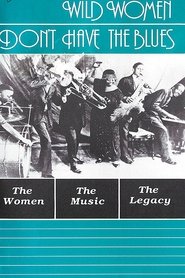
Recaptures the lives and times of Ma Rainey, Bessie Smith, Ida Cox, Alberta Hunter, Ethel Waters, and the other legendary women who made blues music a vital part of American culture. The film brings together for the first time dozens of rare, classic renditions of the early blues.Will Work for Views: The Lo-Fi Life of Weird Paul
2017
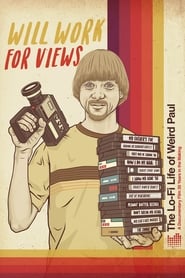
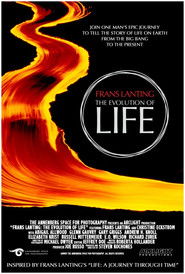
A film exploring the life of “Weird Paul.” After 30 years, 2000 videos, 800 songs, & 42 albums, he’s still not giving up on his dream.Frans Lanting: The Evolution of LIFE
2015
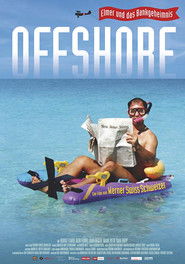
A dazzling journey through time via the remarkable images of National Geographic photographer Frans Lanting and his epic "LIFE" project, which presents a stunning interpretation of life on Earth, from the Big Bang through the present.Offshore: Elmer and the Swiss Bank Secrecy
2016
While managers of Swiss banks in the USA ruefully apologize for their tax evasions practices and customer data is disclosed to the American authorities, Rudolf Elmer, former auditor at bank Julius Bär, is indicted for violating the Swiss banking secrecy law on the Cayman Islands. Rudolf Elmer: from insider to critic.