Top Rated Documentary Movies on Kanopy - Page 285
All Services
Free Services
 Netflix
 Amazon Prime Video
 Apple iTunes
 Apple TV Plus
 Disney Plus
 Google Play Movies
 Paramount Plus
 Hulu
Hulu
 HBO Max
 YouTube
 fuboTV
 Peacock
 Peacock Premium
 Amazon Video
 The Roku Channel
 AMC+
AMC on Demand
AMC+
AMC on Demand
 Kocowa
 Hoopla
 The CW
 Vudu
Vudu
 Starz
Starz
 Showtime
 PBS
PBS
 Pantaflix
 FXNow
FXNow
 Tubi TV
 Kanopy
 Comedy Central
 Crunchyroll
 Microsoft Store
 Redbox
 Sun Nxt
 ABC
ABC
 DIRECTV
 Crackle
 Fandor
 Plex
Plex
Netflix
Amazon Prime Video
Apple iTunes
Apple TV Plus
Disney Plus
Google Play Movies
Paramount Plus
Hulu
HBO Max
YouTube
fuboTV
Peacock
Peacock Premium
Amazon Video
The Roku Channel
AMC+
AMC on Demand
Kocowa
Hoopla
The CW
Vudu
Starz
Showtime
PBS
Pantaflix
FXNow
Tubi TV
Kanopy
Comedy Central
Crunchyroll
Microsoft Store
Redbox
Sun Nxt
ABC
DIRECTV
Crackle
Fandor
Plex

The Harvest
2017
The Harvest
2017
Gurwinder comes from Punjab, he’s been working for years as a farm hand in Agro Pontino, not far from Rome. Since he first came in Italy, he’s been living with the rest of the Sikh community in Latina province. Hardeep is also Indian, but her stress is Roman, and she works as a cultural mediator. She, born and raised in Italy, is trying to free herself from the memories of a family that emigrated in another age, while he is forced, against his faith, to take methamphetamine and doping to bear the heavy work pace, to be able to send money in India.To The Land of Bliss
2002
To The Land of Bliss
2002
To the Land of Bliss is an intimate portrayal of the Chinese Pure Land Buddhist way of dying and living. In 1998, the filmmaker/anthropologist Wen-jie Qin returned to her home region in Sichuan Province in southwest China to research the post-Mao revival of Buddhism. During her fieldwork on the sacred mountain Emei, an eminent monk named Jue Chang passed away. People in the community laughed and cried at the departure of their beloved teacher. They gathered to escort his body through a rite of fire and to observe his consciousness rise to a paradise known as the Land of Bliss of Amita Buddha. The filmmaker captured some of the wonders and mystery from her search with these Chinese Pure Land Buddhists for the door to Amita Buddha, the Buddha of Infinite Light and Infinite Life.Full Circle
2002
Full Circle
2002
In the summer of 2001, under the Native American Graves Protection and Repatriation Act, a totem pole in the Peabody Museum at Harvard University was returned to its original owners' ancestors, a Tlingit community in Southeast Alaska. The journey of the pole began a hundred years ago when it was removed by the Harriman Expedition from the deserted village of Gash at Cape Fox. The totem pole makes its way from Cambridge, Massachusetts to Ketchikan, Alaska, where the Cape Fox community holds a ceremony to welcome home artifacts taken by the Expedition.Leon Trotsky: A Personality in the 20th Century
2013
Leon Trotsky is considered one of the most controversial revolutionary figures of his time. Was he a practical revolutionary or a naive idealist? On the practical side, he was the mastermind behind the Bolshevik seizure of power in 1917, and was totally ruthless during the ensuing Civil War. As an idealist, he was committed to the pursuit of international revolution, but created many political enemies. After Lenin's death, Trotsky lost in a power struggle with Stalin, and later was expelled from the Communist Party. Trotsky was exiled from the Soviet Union, eventually finding refuge in Mexico. In 1940, Stalin ordered his assassination, and Trotsky died after being struck in the head with an ice-pick. History records that Trotsky was a master theoretician, a skillful propagandist and a brilliant orator.Art With a Message: Protest, Propaganda, Satire and Social Comment
1988
This program investigates the ways various art forms are used to sway minds and to argue political causes. Examples include Napoleon and Hitler; artist such as Daumier, Hogarth and Shann; writers Dickens, Swift and Orwell; and pop artists who mock popular ideals.Odd People Out
2004
Odd People Out
2004
"Odd People Out" tracks the process of marginalization and the repression of homosexuals during the first two decades of the Cuban revolution through the biography of the writer Reinaldo Arenas—as told by himself and other intellectuals and artists who shared his life and suffered the repression of a regime that named them “extravagant.” For many years none of them existed; they were considered non-people. Filmed clandestinely in Cuba in 2003, "Odd People Out" was never exhibited on the island.Dying Green
2012
Dying Green
2012
A doctor's efforts to live a green life near the Appalachian Mountains lead to the development of a radical idea to use green burials to conserve one million acres of land and to create wildlife reserves.249. La noche en que una becaria encontró a Emiliano Revilla
2016
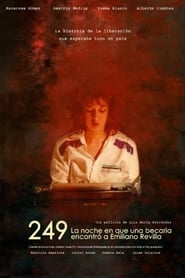
On October 30, 1988, the businessman Emiliano Revilla had been kidnapped by ETA for 249 days. After more than eight months of captivity, hopes of liberation were increasingly scarce and very few journalists were still standing guard at the employer's house. María José Sáez, a young editor, formerly of the EFE Agency, was the only one who was close to the house on the night of October 30th.Cricket & Park-Ex: a love story
2016
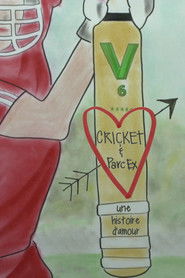
This film takes us inside the world of cricket and the daily life of Montreal's Parc Extension - one of Canada's poorest yet most vibrant immigrant neighbourhoods.In the Wake of the Flood
2010
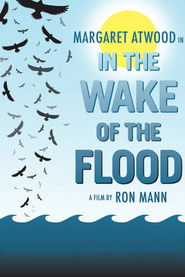
On the eve of her 70th birthday, Canadian writer Margaret Atwood set out on an international tour criss-crossing the British Isles and North America to celebrate the publication of her new dystopian novel, The Year of the Flood. Rather than mount a traditional tour to promote a book's publication, Atwood conceived and executed something far more ambitious and revelatory--a theatrical version of her novel. Along the way she reinvented what a book tour could (and maybe should) be. But Atwood wasn't selling books as much as advocating an idea: how humanity must respond to the consequences of an environmentally compromised planet before her work of speculative fiction transforms into prophesy.TV Family
2015
TV Family
2015
A Texas family reflects on the forgotten television documentary produced about them in 1960, describing how the program both mirrored and distorted the reality of their lives. Combining rare footage with new interviews, TV FAMILY opens a window onto the limitations of television and representations of family in midcentury America.Knox: The Life and Legacy of Scotland's Controversial Reformer
2015
Presented by Scottish actor Phillip Todd, "Knox" takes another look at the life and legacy of one of the church's great reformers. Follow in the footsteps of John Knox as he makes his epic journey from Catholic priest to a passionate Protestant preacher facing down the most famous Scottish queen of all time.Usedom: A Clear View of the Sea
2018
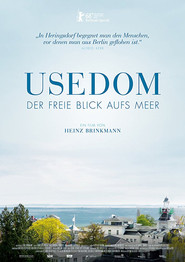
For Berliners, the Baltic island of Usedom was once the most luxurious destination for excursions within striking distance of the city. This is where imperial Germany’s grand health resorts of Bansin, Heringsdorf and Ahlbeck were built. Heinz Brinkmann, who was born in Heringsdorf, traces the eventful history of his island.A Life for Ballet
2012
A Life for Ballet
2012
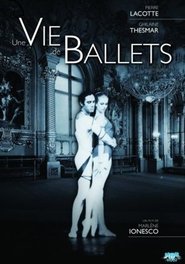
A documentary on the life of the legendary ballet reconstructionist, Pierre Lacotte and his wife and longtime dance partner Ghislaine Thesmar.Brooklyn Farmer
2013
Brooklyn Farmer
2013
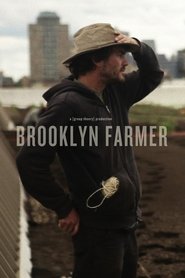
BROOKLYN FARMER explores the unique challenges facing Brooklyn Grange, a group of urban farmers who endeavor to run a commercially viable farm across the rooftops of New York City. As their growing operation expands to a second roof, the team confronts the realities inherent in operating the world’s largest rooftop farm in one of the world's biggest cities.Elvis: Return To Tupelo
2008
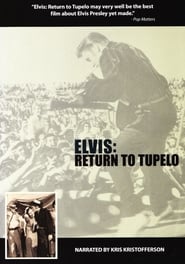
The Elvis phenomenon has its roots in his birthplace where Presley began a musical journey that would take him from the wrong side of the tracks in Tupelo through Memphis to worldwide iconic status. Using interviews, recordings, photographs and rare home movies, Elvis: Return to Tupelo is the rock n roll adventure story of one of the greatest cultural forces of the twentieth century.The 13th Step
2016
The 13th Step
2016
A documentary film that exposes the criminal and sexually predatory behavior that occurs systematically within Alcoholics Anonymous.Back to the Fatherland
2018
A documentary that looks at the problems for young modern Israelis returning to the Germanic countries of central Europe, and in particular how this impacts upon older generations of their families, who had to leave countries like Austria and Germany.Jeepney
2013
Jeepney
2013
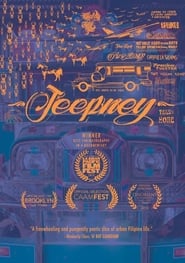
JEEPNEY visualizes the richly diverse cultural and social climate of the Philippines through its most popular form of mass transportation: vividly decorated ex-WWII military jeeps. The film follows jeepney artists, drivers, and passengers, whose stories take place amidst nationwide protest against oil price hikes that pressure drivers to work overseas to earn a living, far from their homes for years at a time. Lavishly shot and cut to the rhythm of the streets, JEEPNEY provides an enticing vehicle through which the rippling effects of globalization can be felt.Lee & Grant
2011
Lee & Grant
2011
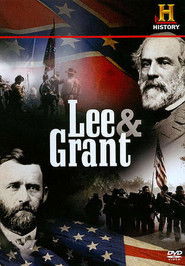
Produced with the cooperation of leading Civil War historian Winston Groom, author of Forrest Gump, Lee & Grant is a personal look at two iconic leaders of the Civil War. Surprising details reveal the bold choices and almost godlike power Ulysses S. Grant and Robert E. Lee summoned on decisive battlefields like Vicksburg and Gettysburg that, within days of each other, turned the tide of the war.