Top Rated Documentary Movies on Kanopy - Page 294
All Services
Free Services
 Netflix
 Amazon Prime Video
 Apple iTunes
 Apple TV Plus
 Disney Plus
 Google Play Movies
 Paramount Plus
 Hulu
Hulu
 HBO Max
 YouTube
 fuboTV
 Peacock
 Peacock Premium
 Amazon Video
 The Roku Channel
 AMC+
AMC on Demand
AMC+
AMC on Demand
 Kocowa
 Hoopla
 The CW
 Vudu
Vudu
 Starz
Starz
 Showtime
 PBS
PBS
 Pantaflix
 FXNow
FXNow
 Tubi TV
 Kanopy
 Comedy Central
 Crunchyroll
 Microsoft Store
 Redbox
 Sun Nxt
 ABC
ABC
 DIRECTV
 Crackle
 Fandor
 Plex
Plex
Netflix
Amazon Prime Video
Apple iTunes
Apple TV Plus
Disney Plus
Google Play Movies
Paramount Plus
Hulu
HBO Max
YouTube
fuboTV
Peacock
Peacock Premium
Amazon Video
The Roku Channel
AMC+
AMC on Demand
Kocowa
Hoopla
The CW
Vudu
Starz
Showtime
PBS
Pantaflix
FXNow
Tubi TV
Kanopy
Comedy Central
Crunchyroll
Microsoft Store
Redbox
Sun Nxt
ABC
DIRECTV
Crackle
Fandor
Plex

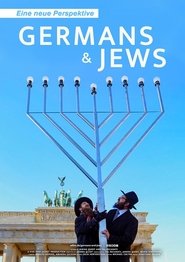
Germans & Jews - Eine neue Perspektive
2016
Following Germany's transformation as a society from the Holocaust to becoming the moral leader of Europe as the country embraces hundreds of thousands of refugees.Summer in the City
1970
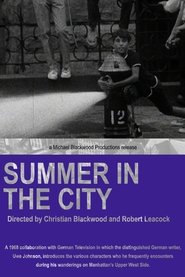
Summer in the City
1970
German writer Uwe Johnson lived for several years in the 1960s on Manhattan’s Upper Westside where he got to know his neighborhood very well, observing the goings-on in the streets, cafeterias, and parks. In 1968 German Television agreed to co-produce a film for broadcast featuring interviews with various neighborhood characters.Destination Arnold
2016
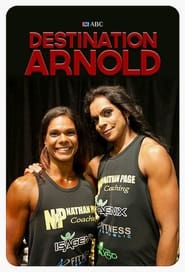
Destination Arnold
2016
Tash and Kylene are two Indigenous women with a dream to make it to the Arnolds – an amateur bodybuilding competition being held in Australia for the first time.Call Her Applebroog
2016
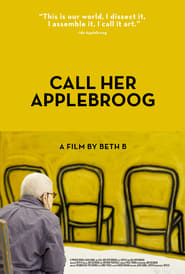
Call Her Applebroog
2016
This deeply personal portrait of acclaimed New York–based artist Ida Applebroog was shot with mischievous reverence by her filmmaker daughter, Beth B. Born in the Bronx to Orthodox Jewish émigrés from Poland, Applebroog, now in her 80s, looks back at how she expressed herself through decades of drawings and paintings, as well as her private journals. With her daughter’s encouragement, she investigates the stranger that is her former self, a woman who found psychological and sexual liberation through art. As Beth B finds a deeper understanding of her mother as a human being, Applebroog shares a newfound appreciation for her own provocative work.Tested
2015
Tested
2015
A diverse group of 8th graders in New York City vie for a coveted spot in one of the city's elite public schools by taking a single standardized test.Footprint
2016
Footprint
2016
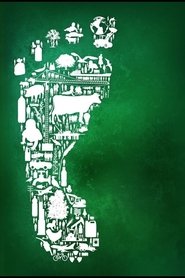
Feature length documentary film on population growth and its challenges, with a focus on women's empowerment and family planning. Shot in USA, Kenya, Egypt, Pakistan and the Philippines.Oleg's Choice
2016
Oleg's Choice
2016
Fighting in eastern Ukraine broke out in early 2014. Since the summer, thousands of young Russians, driven by television propaganda and a thirst for adventure, began to pour in. Among these volunteers were Oleg and Max. Oleg became a battalion commander and Max remained an ordinary soldier. While they prepare to fight, they discuss their motivations and share their own perspective on the conflict. The image becomes a unique personal testimony of one side of the war, one rarely seen in the western media.A Balinese Trance Seance
1981
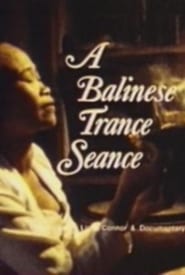
Bringing offerings of rice, flowers, and woven coconut leaves, clients visit Jero in her household shrine to determine the cause of their son's death. Jero lights an incense brazier, sprinkles holy water, and recites mantras as preliminaries to trance. Several ancestors and finally the young son speak through her voice, revealing the nature of his premature death (witchcraft) and his wishes for cremation. In contrast to other films about Balinese trance which focus on spectacular, community performances, this film provides an intimate view of a fascinating process of communication between Jero, the spirits, and her clients who are at one point moved to tears. (der.org)The Tentmakers of Cairo
2015
Amid the tumult of the Arab Spring in Cairo, vendors in a small souk observe the political upheaval while seeking to preserve an ancient tradition of fabric making.The Professor: Tai Chi's Journey West
2016
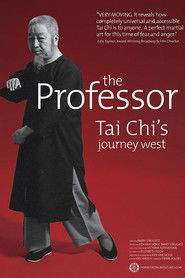
The Professor: Tai Chi's Journey West is the first major feature documentary about Tai Chi and one of its greatest masters, Cheng Man-Ching, a man who brought Tai Chi and Chinese culture to the West during the swinging, turbulent 60’s. Though Cheng is an important transformational figure, his teachings have been overlooked. This documentary film tells the story of his remarkable life and features Tai Chi as a martial art and a spiritual practice. Over the past decade, we have shot approximately fifty hours of footage in New York, North Carolina, and California.Today the Hawk Takes One Chick
2008
Witnessing the highest rate of HIV infection in the world and the lowest life expectancy on the planet, three grandmothers in Swaziland cope in this critical moment in time.Rabin in His Own Words
2016
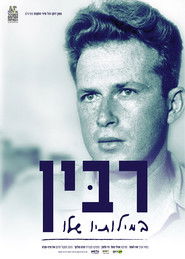
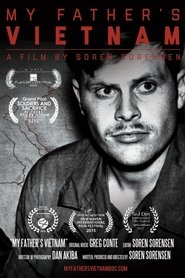
20 years after his assassination, Yitzhak Rabin himself tells his dramatic life story.My Father's Vietnam
2015
My Father's Vietnam
2015
A personal documentary about a public subject, My Father's Vietnam personifies the connections made and unmade by the Vietnam War. Featuring never-before-seen photographs and 8mm footage of the era, My Father's Vietnam is the story of three soldiers, only one of whom returned home alive. Interviews with the filmmaker's Vietnam Veteran father, and the friends and family members of two men he served with who were killed there, give voice to individuals who continue to silently carry the psychological burdens of a war that ended over 40 years ago. My Father's Vietnam carries with it the potential to encourage audiences to broach the subjects of service and sacrifice with the veterans in their lives.My Mother India
2002
My Mother India
2002
Patricia Uberoi, an Australian woman, married an Indian professor in the 60s and moved to his home in New Delhi. They raised three children there, but the riots and the anti-Sikh feelings led to her encouraging her children to move to Australia. A documentary about a multicultural family becomes a commentary on the events surrounding the anti-Sikh riots of 1984.Sugar Slaves
1995
Sugar Slaves
1995
Australia’s slave trade is an untold story. Few people know that the Australian sugar industry was founded on the sweat of men and women enticed or kidnapped from the islands of the South Pacific. Sugar Slaves is the story of that human traffic, euphemistically known as "blackbirding".The Passionate Industry: Australian Cinema 1920-1930
1971
Part 2 of the History of Australian Cinema series. Covering the 1920s and 30s. From an origin that promised so much, the Australian film production industry faced new challenges from abroad which ultimately proved to be more than they could cope with. Unfortunately very few films from then now survive.KONELĪNE: our land beautiful
2016
Set deep in the traditional territory of Tahltan First Nation, Northern British Columbia’s Red Chris gold and copper mine is the backdrop to a lyrical tapestry of landscapes and diverse personal stories from the land. Language preservation initiatives and mining opposition evoke emotional tones as the story swells with ravishing images of wilderness as a rough and untamed beauty. A thoughtful shift from Wild’s traditional narrative style of radical point of view documentary, "KONELĪNE" is a meditation on nature, culture, and economy as experienced by those who live and work on the land.Mabo: Life of an Island Man
1997
On June 3rd 1992, six months after Eddie "Koiki" Mabo's tragic death, the High Court upheld his claim that Murray Islanders held native title to land in the Torres Strait. The legal fiction that Australia was empty when first occupied by white people had been laid to rest. Mabo-Life of an Island Man tells the private and public stories of a man so passionate about family and home that he fought an entire nation and its legal system. Though his greatest victory was won only after his death, it has forever ensured his place - on Murray Island and in Australian history.Friends & Enemies
1987
Friends & Enemies
1987
One thousand power workers went on strike against the South East Queensland Electrical Board (SEQEB)in February 1985 in protest against the introduction of contract worker hire. This documentary details the industrial relations dispute between the ensuing Joh Bjelke Peterson coalition government and the Electrical Trades Union in Queensland, Australia during 1985.Hoover Street Revival
2002
Documentary about the lives of worshippers from the congregation of the Greater Bethany Community Church in South Central LA and the sermons of its Bishop Noel Jones