Top Rated Documentary Movies on Kanopy - Page 296
All Services
Free Services
 Netflix
 Amazon Prime Video
 Apple iTunes
 Apple TV Plus
 Disney Plus
 Google Play Movies
 Paramount Plus
 Hulu
Hulu
 HBO Max
 YouTube
 fuboTV
 Peacock
 Peacock Premium
 Amazon Video
 The Roku Channel
 AMC+
AMC on Demand
AMC+
AMC on Demand
 Kocowa
 Hoopla
 The CW
 Vudu
Vudu
 Starz
Starz
 Showtime
 PBS
PBS
 Pantaflix
 FXNow
FXNow
 Tubi TV
 Kanopy
 Comedy Central
 Crunchyroll
 Microsoft Store
 Redbox
 Sun Nxt
 ABC
ABC
 DIRECTV
 Crackle
 Fandor
 Plex
Plex
Netflix
Amazon Prime Video
Apple iTunes
Apple TV Plus
Disney Plus
Google Play Movies
Paramount Plus
Hulu
HBO Max
YouTube
fuboTV
Peacock
Peacock Premium
Amazon Video
The Roku Channel
AMC+
AMC on Demand
Kocowa
Hoopla
The CW
Vudu
Starz
Showtime
PBS
Pantaflix
FXNow
Tubi TV
Kanopy
Comedy Central
Crunchyroll
Microsoft Store
Redbox
Sun Nxt
ABC
DIRECTV
Crackle
Fandor
Plex

The Cremaster Cycle: A Conversation with Matthew Barney
2004
For his five Cremaster films Matthew Barney's created a multitude of sculptural forms and structures. Recently both the sculptures and the films traveled to museums in Cologne, Paris and New York's Guggenheim. In THE CREMASTER CYCLE: A Conversation with Matthew Barney, the artist guides the camera through this remarkable creation at the Guggenheim Museum while being questioned by Michael Kimmelman, chief art critic of the New York Times.Unrequited Love
2006
Unrequited Love
2006
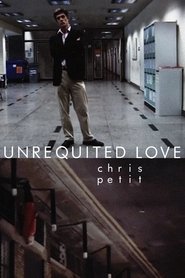
Based on an English academic’s memoir on stalking and being stalked, a digital film essay on cinema and absence, on Hitchcock and Antonioni, on cinema and cities. It is a story of waiting, self-delusion, panic, fear of violence, and of modern technologies which define the urban stalker as they do the new terrorist.Hunger in America
2014
Hunger in America
2014
Hunger in America is a powerful documentary tackling the hunger epidemic in America. Narrated by James Denton. What does the face of hunger look like? Is it a child in Ethiopia? An aging man in Somalia? Or a family in poverty-stricken India? This eye-opening documentary will change your whole perception on what hunger looks like. In America today, one in six people, including hard-working men and women, suburban families and children are struggling with hunger. Tonight, over 50 million Americans won't have enough food to eat by day's end. The face of hunger in America is not just the homeless, like everyone thinks. As it turns out, the face of hunger in America is the single mom, it's grandparents raising babies, it's the elderly, it's the infirm. This is their story...A Composer’s Notes: Philip Glass and the Making of an Opera
1986
This documentary by Michael Blackwood looks at the development and production of Glass' opera Akhnaten. The film follows two productions by the Württemberg State Theater, Stuttgart, and the Houston Grand Opera.Steve Jobs: Consciously Genius
2012
This unauthorized documentary examines the influential life of Apple co-founder Steve Jobs, the visionary CEO who forever altered how Americans used computers and digested music.Invisible Girlfriend
2009
Invisible Girlfriend
2009
Charles is in love with his invisible girlfriend, Joan of Arc, so he decides to ride his big red bicycle 400 miles from Monroe through rural Louisiana to find her in a New Orleans bar. Along the way, he encounters a farmer, a witch, a tin man, and a man who honors the dead. Working within the tradition of creative non-fiction, Invisible Girlfriend is a Southern tale that transcends literal interpretations of images in order to open up rich, loamy textures of humor and drama. The cinematography is startling in its intensity and violent beauty, representing an optical trope that offsets the desperate love that Charles sets off on his journey to find.I'm With Phil
2015
I'm With Phil
2015
I'm with Phil is a feature length documentary concerning a series of events that transpire in a small Alabama town with a very unique name, Phil Campbell.Marie's Dictionary
2015
Marie's Dictionary
2015
This short documentary tells the story of Marie Wilcox, the last fluent speaker of the Wukchumni language and the dictionary she created in an effort to keep her language alive.Changing Season
2015
Changing Season
2015
Venture out to the Masumoto Farm – eighty acres of prime, peach-growing orchards – where seven varieties of the sweet juicy fruit are cultivated to sun-kissed perfection by a dynamic father-and-daughter team of David “Mas” and Nikiko Masumoto. Director Jim Choi succinctly captures this underrepresented facet of the CA farming industry about an Asian American family-run business, three generations strong, which in turn presents us with the changing idea of the American Dream. - See more at: http://laapff.festpro.com/films/detail/changing_season_2015#sthash.54OdJcdi.dpufFrom Baghdad to Brooklyn
2015
At the height of the war in Iraq, thousands of Iraqis were fleeing the country each day. Among them was Mohamed, a 23-year-old from Baghdad, whose strikingly Western appearance and manner resulted in threats to his life. Forced into exile in Syria, Mohamed crosses path with Jennifer, a freelance video journalist from Brooklyn, New York, who begins to document his life as a refugee. Drawn into the fantasy world he invents to escape his harsh reality, Jennifer forms a unique friendship with Mohamed, embarking on a series of adventures around the city of Damascus.Of the Land
2015
Of the Land
2015
Within the last half century, our agriculture and food has changed more than it has changed before in several thousand years. New technologies and scientific ingenuity have given rise to genetically modified organisms (GMO) and other novel foods. Some people have raised concerns about the safety of GMOs in our food supply, given their incredible dominance in the majority of our diet. Traditional, organic farmers, have consistently been under attack by large corporate farming interests, who seek to dominate the food industry and run family farms out of business. This film looks at our current food system as well as a variety of smaller, organic options available to consumers who want to support sustainable farming methods.Neurotypical
2013
Neurotypical
2013
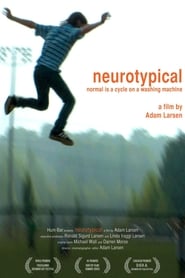
Neurotypical is an unprecedented exploration of autism from the point of view of autistic people themselves. Four-year-old Violet, teenaged Nicholas and adult Paula occupy different positions on the autism spectrum, but they are all at pivotal moments in their lives. How they and the people around them work out their perceptual and behavioral differences becomes a remarkable reflection of the "neurotypical" world — the world of the non-autistic — revealing inventive adaptations on each side and an emerging critique of both what it means to be normal and what it means to be human.Strange and Familiar: Architecture on Fogo Island
2015
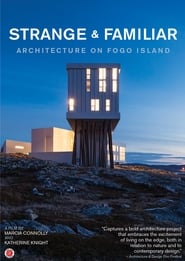
Architect Todd Saunders’s buildings on Fogo Island, Newfoundland embrace the excitement of being on the edge of nature and contemporary design while fulfilling the goal of doing ‘new things with old ways’. Saunders and commissioner, Zita Cobb, provide a personal account of the ideas and traditions that inspire this bold and socially ambitious architectural venture. Gorgeously photographed over the Island’s seven seasons, the film is a flowing, visual narrative that unfolds over time as the principal stage of the project, the Fogo Island Inn, approaches completion.Beauty Queens: Helena Rubinstein
1988
Helena Rubinstein is rightly seen as one of the pioneers of a market worth millions - the female beauty market. Born in Krakow, Rubinstein started her career in the early years of the twentieth century in Australia, from where she quickly went on to conquer Europe and the United States. What began with twelve jars of her mother's beauty cream was to develop into a company with 100 branches in 14 countries and a workforce of 30,000 employees.Habeas Corpus
2015
Habeas Corpus
2015
After the coup d’état in 1973, employees at the Vicariate for Solidarity began the risky road to save the lives of the prosecuted and find the fate of the detained. With time, they understood there was a politics of extermination in place against the dissidents, and that, in order to decipher its functioning and those directly responsible, they had to turn into a sophisticated intelligence team.The Bible's Buried Secrets
2008
The film presents the latest archaeological scholarship from the Holy Land to explore the beginnings of modern religion and the origins of the Hebrew Bible, also known as the Old Testament. This archaeological detective story tackles some of the biggest questions in biblical studies: Where did the ancient Israelites come from? Who wrote the Bible, when, and why? How did the worship of one God—the foundation of modern Judaism, Christianity, and Islam—emerge? The producers surveyed the evidence and take positions that are mainstream among archaeologists and historians, although they continue to raise objections among both Christians who believe in the bible as either literal or historical truth and minimalists who assert that the Bible has no historical validation.Land of the Morning Star
2003
The western half of the island of New Guinea has been known by many names including Netherlands New Guinea, West Papua, Irian Jaya and Papua. It is an extraordinary place where snow-capped mountains drain into massive rivers and 250 languages are spoken. For centuries, the world has jostled for control of this rugged, isolated region, with its abundant natural resources and strategic position. Through eyewitness accounts and rare archival film, this fascinating documentary paints a picture that is intimate in detail but epic in scope. It is a sweeping saga of colonial ambitions, cold war sellouts and fervent nationalism, which highlights the role of players such as Australia and the UN at crucial points.Mary: The Mary MacKillop Story
1994
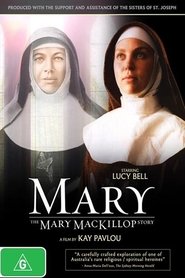
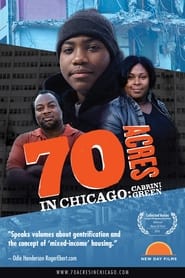
star 7MARY is based on the true life story of Mary MacKillop who in the 1860s began an order of nuns to teach poor Catholic children in rural Australia. When she refused to obey the local Bishop, she was ex-communicated. More than 100 years later, in 1995, she was beatified as Australia's first saint. The film follows her tumultuous journey.70 Acres in Chicago: Cabrini Green
2015
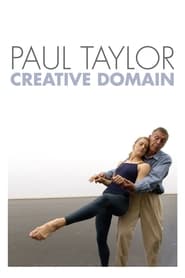
Documenting the demolition of Cabrini Green, Chicago's most infamous public housing development, through the stories of three public housing residents whose lives are turned upside down in the name of progress.Paul Taylor Creative Domain
2014
Among the most acclaimed choreographers in American history, Paul Taylor has been reinventing the roles of music, movement and theme in dance for nearly 60 years. In that time he has offered only glimpses into his creative process. Creative Domain is a rare in-depth documentation of how he creates a single dance. Through the lens of award-winning cinematographer Tom Hurwitz, we see Paul’s non-verbal communication with his dancers. Below the surface of this dance and the many works that came before, is Paul’s power of acute observation, revealing a side to his choreography that is strangely prophetic. The dominant voice is Paul’s, between the guarded and unguarded moments we see him with new eyes and new understanding.