Top Rated Documentary Movies on Kanopy - Page 304
All Services
Free Services
 Netflix
 Amazon Prime Video
 Apple iTunes
 Apple TV Plus
 Disney Plus
 Google Play Movies
 Paramount Plus
 Hulu
Hulu
 HBO Max
 YouTube
 fuboTV
 Peacock
 Peacock Premium
 Amazon Video
 The Roku Channel
 AMC+
AMC on Demand
AMC+
AMC on Demand
 Kocowa
 Hoopla
 The CW
 Vudu
Vudu
 Starz
Starz
 Showtime
 PBS
PBS
 Pantaflix
 FXNow
FXNow
 Tubi TV
 Kanopy
 Comedy Central
 Crunchyroll
 Microsoft Store
 Redbox
 Sun Nxt
 ABC
ABC
 DIRECTV
 Crackle
 Fandor
 Plex
Plex
Netflix
Amazon Prime Video
Apple iTunes
Apple TV Plus
Disney Plus
Google Play Movies
Paramount Plus
Hulu
HBO Max
YouTube
fuboTV
Peacock
Peacock Premium
Amazon Video
The Roku Channel
AMC+
AMC on Demand
Kocowa
Hoopla
The CW
Vudu
Starz
Showtime
PBS
Pantaflix
FXNow
Tubi TV
Kanopy
Comedy Central
Crunchyroll
Microsoft Store
Redbox
Sun Nxt
ABC
DIRECTV
Crackle
Fandor
Plex

Empire of the Nude: The Victorian Nude
2001
The Victorian era is often cited for its lack of sexuality, but as this documentary reveals, the period's artists created a strong tradition surrounding the classical nude figure, which spread from the fine arts to more common forms of expression. The film explains how 19th-century artists were inspired by ancient Greek and Roman works to highlight the naked form, and how that was reflected in the evolving cultural attitudes toward sex.Deep Hearts
1980
Deep Hearts
1980
Deep Hearts is a film about the Bororo Fulani, a nomadic society located in central Niger Republic and the title is a reference to an important aspect of these people’s thought and demeanor.A Hole in a Fence
2008
A Hole in a Fence
2008
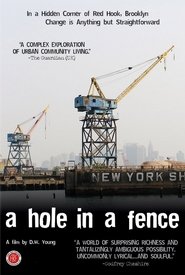
The changing face of Red Hook -- a one-of-a-kind neighborhood in Brooklyn, N.Y. -- is the subject of this rich examination of city living by filmmaker D.W. Young. The documentary peeks in on an urban farm run by local kids; an uphill struggle to save a portion of the waterfront; the infamous arrival of an IKEA store; and more. The film was an official selection at the 2008 San Francisco International Documentary Film Festival.Maria's Story
1991
Maria's Story
1991
It is El Salvador, 1989, three years before the end of a brutal civil war that took 75,000 lives. Maria Serrano, wife, mother, and guerrilla leader is on the front lines of the battle for her people and her country. With unprecedented access to FMLN guerrilla camps, the filmmakers dramatically chronicle Maria's daily life in the war.Himalayan Herders
1997
Himalayan Herders
1997
John Bishop and Naomi Bishop present a portrait a peculiar life style of the Himalayan indigenous Sherpa people in their documentary , the Himalayan Herders. The 76 minutes long film is about the diverse culture and life style of herders community near Mt. Everest region of Nepal.The film was made in 1997 as a part of Case Studies in Cultural Anthropology Series.Turner at Tate
2006
Turner at Tate
2006
The artist J.M.W. Turner is widely recognised as England’s greatest painter. Tate has the world’s finest and most extensive collection of his work. Turner at Tate explores Turner’s art through many of his best-known canvases and exquisite sketches and watercolours, all newly and exceptionally filmed in HDTV from the original artworks. Incorporating the landscapes and places that inspired the works, the film provides an overview of Turner’s life and - in an accessible and engrossing way - of critical approaches to his art. The film’s focus is Turner and England, and his work is considered against the radical social and political changes of the early nineteenth century. Turner at Tate is a film about ideas and history and landscape, a film about colour and light. Contributors include Tate curators Ian Warrell and David Blayney Brown, and art historians Sam Smiles and Barry Venning. Also featured on the DVD are ten additional short films, each of which considers in detail a major work.Amílcar Cabral
2000
Amílcar Cabral
2000
Documentary about African freedom fighter Amílcar Cabral, whose story is told by his relatives and friends. Amílcar, besides being a humanist and nationalist, was also a brilliant poet.Apollo 13: The Untold Story
1995
This film tells the real story behind the unforgettable Ron Howard/Tom Hanks film. In this film we feature the real astronauts, the actual footage and real events of Apollo 13.WWII: Saving the Reality
2013
See Kenneth W. Rendell's collection of over 6,000 artifacts that range from the end of World War I and the rise of Nazism to the start of World War II and the fight in Europe and the Pacific.Thing with No Name
2008
Thing with No Name
2008
THING WITH NO NAME, a feature-length documentary, provides an unprecedented, intimate glimpse into the traditional life of a rapidly changing culture. Set in Okhahlamba, South Africa, a stunning, mountainous Zulu area, and UNESCO World Heritage Site, the story follows Danisile and Ntombeleni, two women with full-blown AIDS, as they attempt to access recently introduced antiretroviral (ARV) treatment through the public sector.Beyond Elections: Redefining Democracy in the Americas
2008
From the communal councils of Venezuela to constitutional assemblies, grassroots movements and cooperatives, filmmakers Silvia Leindecker and Michael Fox explore the many incarnations of democracy across the Americas. The documentary examines democracy in nations such as Brazil, Colombia and Canada, and features interviews with journalists, cooperative and community members, elected representatives, academics and activists.Jan Vermeer: Light Love and Silence
2006
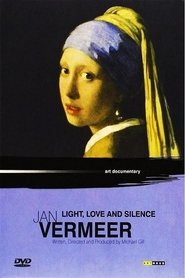
Not much is known about Jan Vermeer. He only produced around 35 works of art, yet they made him immortal. He was born in Delft and never left the town; he married there, worked as an art-dealer and died in debt. Michael Gill delves into the master's world and talks about the camera obscura and Vermeer's interest in science and cartography. Together with experts, he explores Vermeer's secrets of perspective, space, allegory and symbolic relationships in his works.It Was a Wonderful Life
1993
They're clean, educated, articulate and rarely receive public assistance. But following a divorce, job loss or a long illness, a growing number of middle-class women are forced to live out of their cars. Directed by Michèle Ohayon (Colors Straight Up) and narrated by Jodie Foster, It Was a Wonderful Life chronicles the hardships and triumphs of six "hidden homeless" women as they struggle to survive, one day at a time.In the Name of Democracy
2009
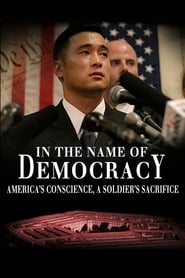
The first officer in the United States Army to refuse deployment to Iraq on moral grounds, and attempts to clarify the issues that prompted Lt. Watada to choose the course he did in order to protest an immoral and, to him, unconstitutional war.Code Yellow: Hospital at Ground Zero
2002
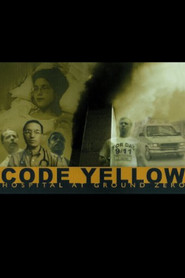
CODE YELLOW: HOSPITAL AT GROUND ZERO is a feature documentary, produced in association with NYU Downtown Hospital, narrated by Brian Dennehy, and written by Dennis Watlington and Dr. Antonio Dejar, which tells the story of the remarkable medical response of the hospital closest to Ground Zero on 9/11.Casting About
2005
Casting About
2005
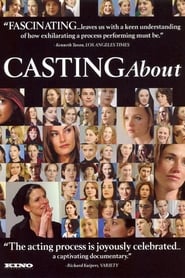
A lyrical, feature documentary that explores the captivating experience of casting actors. From the point of view of a filmmaker, we see and hear many of the 350 actresses who audition for three roles in a dramatic film. CASTING ABOUT includes footage from audition sessions held in Berlin, Boston, Chicago, London, and Los Angeles - weaving together actor interviews, monologues, and scene work to create an impressionistic collage of the casting experience.Desert Heart
2008
Desert Heart
2008
After 40 years in exile, Yulparitja elders take Daniel Walbidi, their most promising young artist, back to the desert heartland they left behind. In the remote Aboriginal community of Bidyadanga a new art movement has emerged. At its helm is a young Aboriginal man who is well on the way to international fame and possible fortune. Daniel Walbidi paints the desert country that his parents walked out of 40 years ago. Now, with the rock holes, sandhills and salt lakes of their country revitalized through the creation of the paintings, they are determined to go back and show Daniel their desert country for the first time.Genetically Modified Food: Panacea or Poison
2005
In the last thirty years global demand for food has doubled. In a race to feed the planet, scientists have discovered how to manipulate DNA, the blueprint of life, and produce what they claim are stronger, more disease-resistant crops. However, fears that genetically modified food many not be safe for humans or the environment has sparked violent protest.Gold Star Children
2011
Gold Star Children
2011
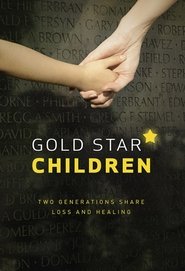
A cross-generational story of how the gold star children of Vietnam are mentoring the gold star children from the wars in Iraq and Afghanistan. It is a one hour film of resilience, hope and the power of sharing.A Promise to My Father
2013
We re-trace the steps of Holocaust survivor Israel Arbeiter as he returns to Poland and Germany for the final time to look for items buried in 1939 in the basement of his old home in Plock, Poland as the German army advanced. We also travel with "Izzy" to Treblinka death camp where his parents and younger brother were murdered and to other camps, most notably Auschwitz-Birkenau, where "Izzy" used the motivation of his father's final words to him to stay alive.