Top Rated Documentary Movies on Kanopy - Page 303
All Services
Free Services
 Netflix
 Amazon Prime Video
 Apple iTunes
 Apple TV Plus
 Disney Plus
 Google Play Movies
 Paramount Plus
 Hulu
Hulu
 HBO Max
 YouTube
 fuboTV
 Peacock
 Peacock Premium
 Amazon Video
 The Roku Channel
 AMC+
AMC on Demand
AMC+
AMC on Demand
 Kocowa
 Hoopla
 The CW
 Vudu
Vudu
 Starz
Starz
 Showtime
 PBS
PBS
 Pantaflix
 FXNow
FXNow
 Tubi TV
 Kanopy
 Comedy Central
 Crunchyroll
 Microsoft Store
 Redbox
 Sun Nxt
 ABC
ABC
 DIRECTV
 Crackle
 Fandor
 Plex
Plex
Netflix
Amazon Prime Video
Apple iTunes
Apple TV Plus
Disney Plus
Google Play Movies
Paramount Plus
Hulu
HBO Max
YouTube
fuboTV
Peacock
Peacock Premium
Amazon Video
The Roku Channel
AMC+
AMC on Demand
Kocowa
Hoopla
The CW
Vudu
Starz
Showtime
PBS
Pantaflix
FXNow
Tubi TV
Kanopy
Comedy Central
Crunchyroll
Microsoft Store
Redbox
Sun Nxt
ABC
DIRECTV
Crackle
Fandor
Plex

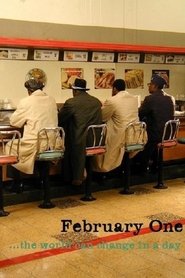
February One: The Story of the Greensboro Four
2003
On February 1, 1960, four college students changed American history. Ezell Blair, Jr., David Richmond, Franklin McCain and Joseph McNeil began a sit-in at a white only lunch counter in Greensboro. This act of bravery is noted as one of the vital moments in the American Civil Rights Movement. Offering a portrait of how four young men whose courage at led other non-violent protests through the '60s.The MindFulness Movie
2013
An entertaining, secular, and educational look at the benefits of mindful practice, 'The Mindfulness Movie' brings together an unprecedented group of the world's leading neuroscientists, psychiatrists, authors, and others to decode mindfulness. First, they help to define what mindfulness is and how the concept of neuroplasticity plays into the practice. Then, they walk you through eight practical, foundational mindful lessons--like managing stress and mindful eating. Finally, meet some heartwarming veterans and teens who are using mindfulness to overcome issues like PTSD, depression, bi-polar disorder, anxiety, and everyday life stresses. Everyone, regardless of belief system or background, has something to gain from watching ' The Mindfulness Movie.'Dwarves Kingdom
2015
Dwarves Kingdom
2015
Dwarves Kingdom is a documentary film about a theme park featuring performances by little people with dwarfism who live in a fantasy recreation of a magical empire. Built by a wealthy Chinese businessman, this other-worldly kingdom, officially called World Ecological Garden of Butterfly and Little People Kingdom, is located in the mountains surrounding the city of Kunming in Western China.How the Myth Was Made: A Study of Robert Flaherty's Man of Aran
1978
American documentary film-maker George C. Stoney visits the Aran Islands to try and unravel some of the myths surrounding a film that had engrossed him as a youngster - Robert Flaherty's famous documentary "Man of Aran" released in 1934.Song of Umm Dalaila, the Story of the Sahrawis
1993
Takes place in the Saharawi refugee camps in Algeria against the historical backdrop of Spanish colonialism and the Moroccan invasion of the Western Sahara. The Saharawi women, who make up 80% of the adult refugee population, provide a powerful voice as they reveal how they came to assume primary responsibility for the survival of the remains of their families and in turn the entire refugee population.Shaping Bamboo
1979
Shaping Bamboo
1979
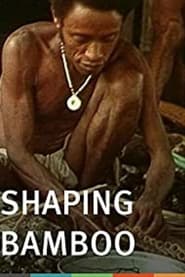
For the 'Are'are people of the Solomon Islands, the most valued music is that of the four types of panpipe ensembles. With the exception of slit drums, all musical instruments are made of bamboo; therefore the general word for instruments and the music performed with them is "bamboo" ('au). This film shows the making of panpipes, from the cutting the bamboo in the forest to the making of the final bindings. The most important part of the work consists in shaping each tube to its necessary length. Most 'Are'are panpipe makers measure the length of old instruments before they shape new tubes. Master musician 'Irisipau, surprisingly, takes the measure using his body, and adjusts the final tuning by ear. For the first time we can see here how the instruments and their artificial equiheptatonic scale-seven equidistant degrees in an octave-are practically tuned.Mike and Stefani
1955
Mike and Stefani
1955
A Ukrainian couple become refugees during and after World War Two, and they end up as Displaced Persons (DPs) in a camp in Germany, before they are eventually accepted for resettlement in Australia.My Name Is Jonah
2014
My Name Is Jonah
2014
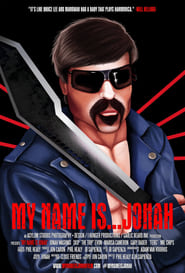
What is the secret origin of this self-proclaimed 'real-life warrior, adventurer and musician'? How has he gained his tremendous cult following? Steel yourselves for a quest to explore how this enigmatic personality came to be and the powerful effect he has on all those he meets.Sourlands
2012
Sourlands
2012
One green spot on a map, in an age of high land prices, high temperatures, and hungry deer.Children Must Laugh
1936
Children Must Laugh
1936
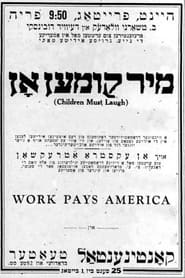
One of the few surviving documentaries about Jewish life in Poland before World War II, this film was produced to raise funds for the Vladimir Medem Sanitarium, an institution that stood as the embodiment of health and enlightenment, in striking contrast to the grim images of urban Polish-Jewish poverty.Handmaidens and Battleaxes
1990
Throughout history, the perception of nurses has ranged from wise women to witches, sots to ministering angels, handmaidens to battleaxes. The professional role of the nurse has changed dramatically. Originally the nurse held an independent, curative position in healing the sick. Most of this responsibility has since been lost. In its place, a profession has developed which, while demanding altruism and dedication, is locked into a supportive and secondary role to that of the medical profession.Hommage to La Sarraz
1981
Hommage to La Sarraz
1981
Dammbeck relocates the Leipzig-based artists' circle known as Herbstsalon to La Sarraz Palace in Switzerland, which in 1929 was the venue of the legendary congress held by important protagonists of new, independent cinema as a forum to discuss issues such as elitist thinking, the taste of the masses, and the difference between art and life. One participant was the avant-garde filmmaker Walter Ruttman, who had already begun to produce abstract films for advertising purposes at a time when his co-pioneers Viking Eggeling and Hans Richter were still preoccupied with painting. All the same, Ruttman placed his talent at the disposal of Nazi propagandists during the Third Reich. Dammbeck reflects upon the durability of the notion we term avant garde by vacillating it between the extremes of Modernism and anti-modernism. Hommage à La Sarraz was at the core of the film footage deployed in Dammbeck's 'Hercules Media Collage' of 1984/85.Cowboy and Maria in Town
1991
Exploring individual responses to rapid social change, Cowboy and Maria in town follows the parallel lives of its two central characters. Cowboy and Maria have independently landed in Port Moresby, negotiating ways to survive urban life in a city ranked as one of the most dangerous in the world. Cowboy is an ex-raskol (urban bandit) and Maria an inhabitant of a squatter settlement. Unemployed and with a jail record, Cowboy has constructed an electric guitar out of scrap materials and plays on street corners. Maria lives an equally precarious existence, cultivating a seasonal garden in an urban settlement inflamed by frustration and intertribal conflicts. Far from being third world victims, they go about their daily lives with humour and imagination, rising to the challenge of enormous cultural upheaval.The Red Tail
2009
The Red Tail
2009
On August 19, 2005 Roy Koch, along with 4,400 airline mechanics, custodians, and cleaners, went on strike against Northwest Airlines, the fourth largest airline in the world. Northwest, otherwise known as “The Red Tail” by its employees, wanted to lay off 53% of their union and outsource their jobs. What followed was a 444-day strike that would end with 4,000 union members out of work, including Roy.History and Memory: For Akiko and Takashige
1991
This film is a poetic composition of recorded history and non-recorded memory. Filmmaker Rea Tajiri’s family was among the 120,000 Japanese and Japanese Americans who were imprisoned in internment camps after the attack on Pearl Harbor. And like so many who were in the camps, Tajiri’s family wrapped their memories of that experience in a shroud of silence and forgetting. This film raises questions about collective history – questions that prompt Tajiri to daringly re-imagine and re-create what has been stolen and what has been lost.Fight Back, Fight AIDS: 15 Years of ACT UP
2002
A look at the ACT UP movement from its inception to the present day.Tender
2014
Tender
2014
A big hearted community celebrates life by fronting up to death. Set against the stunning backdrop of the industrial seaside town of Port Kembla, a feisty and resilient community group have determined to take back the responsibility that most of us leave to someone else — to care for their own dead. Scattered throughout are stories that cut to the core revealing why this small band have decided to take on a practice that for most is taboo. As their plans for community-based funerals gather momentum one of their own is diagnosed with a life-threatening illness. Tender is at once a heartbreakingly beautiful and beautifully funny glimpse of an extraordinary community taking on one of the most essential challenges of human life … its end.The Collector: Allan Stone's Life in Art
2006
Olympia Stone presents a cinematic portrait of her father, famed New York City gallery owner and art collector Allan Stone, in this fascinating documentary tracing his rise in the international art world from the 1950s to 2006. Regarded as a pioneering collector, Allan Stone was considered an expert on the work of Abstract Expressionists, particularly Willem de Kooning, Arshile Gorky, Barnett Newman and Franz Kline.A Decent Factory
2005
A Decent Factory
2005
This documentary follows an Ethical and Environmental expert from Nokia as she travels to China to inspect the facilities under contract to her company.Uranium Drive-In
2013
Uranium Drive-In
2013
A new uranium mill -- the first in the U.S. in 30 years -- would re-connect the economically devastated rural mining community of Naturita, Colorado, to its proud history supplying the material for the first atomic bomb. Some view it as a greener energy source freeing America from its dependence on foreign oil, while others worry about the severe health and environmental consequences of the last uranium boom.