Top Rated War Movies on Kanopy - Page 13
All Services
Free Services
 Netflix
 Amazon Prime Video
 Apple iTunes
 Apple TV Plus
 Disney Plus
 Google Play Movies
 Paramount Plus
 Hulu
Hulu
 HBO Max
 YouTube
 fuboTV
 Peacock
 Peacock Premium
 Amazon Video
 The Roku Channel
 AMC+
AMC on Demand
AMC+
AMC on Demand
 Kocowa
 Hoopla
 The CW
 Vudu
Vudu
 Starz
Starz
 Showtime
 PBS
PBS
 Pantaflix
 FXNow
FXNow
 Tubi TV
 Kanopy
 Comedy Central
 Crunchyroll
 Microsoft Store
 Redbox
 Sun Nxt
 ABC
ABC
 DIRECTV
 Crackle
 Fandor
 Plex
Plex
Netflix
Amazon Prime Video
Apple iTunes
Apple TV Plus
Disney Plus
Google Play Movies
Paramount Plus
Hulu
HBO Max
YouTube
fuboTV
Peacock
Peacock Premium
Amazon Video
The Roku Channel
AMC+
AMC on Demand
Kocowa
Hoopla
The CW
Vudu
Starz
Showtime
PBS
Pantaflix
FXNow
Tubi TV
Kanopy
Comedy Central
Crunchyroll
Microsoft Store
Redbox
Sun Nxt
ABC
DIRECTV
Crackle
Fandor
Plex

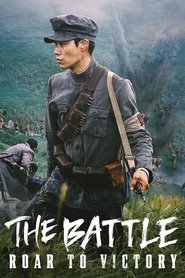
The Battle: Roar to Victory
2019
star 7.4Over a 4 day period, a fierce battle takes place between Korean independence militias and imperialist Japanese forces in Manchuria, China. The militia includes a master swordsman and an expert marksman.Private Peaceful
2012
Private Peaceful
2012
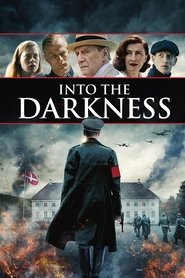
star 6.6Set in the fields of Devon and the WW1 battlefields of Flanders, two brothers fall for the same girl while contending with the pressures of their feudal family life, the war, and the price of courage and cowardice.Into the Darkness
2020
Into the Darkness
2020
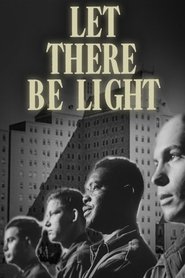
star 6.1Karlskov is a self made, successful owner of a large electronics factory, has a wife and five children. They live the good, privileged upper-class life on Strandvejen north of Copenhagen when the Nazis occupy Denmark in April 1940. Karl struggles to continue production at the factory, but to protect his family and employees he reluctantly begins to produce for the German market. It brings him into a controversial collaboration with the occupying power and causes painful breaks in the family.Let There Be Light
1946
Let There Be Light
1946
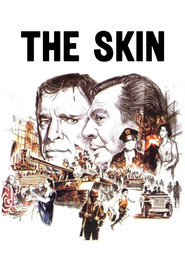
star 7.4The final entry in a trilogy of films produced for the U.S. government by John Huston. Some returning combat veterans suffer scars that are more psychological than physical. This film follows patients and staff during their treatment. It deals with what would now be called PTSD, but at the time was categorised as psychoneurosis or shell-shock. Government officials deemed this 1946 film counterproductive to postwar efforts; it was not shown publicly until 1981.The Skin
1981
The Skin
1981
star 6.3Based on the memoirs of author Curzio Malaparte, diplomatic liaison between the Allied and Italian forces after the defeat of the Nazis in Italy, The Skin follows the collapse of Italian society under the US occupation and the desperate measures required for survival.Betrayed
2020
Betrayed
2020
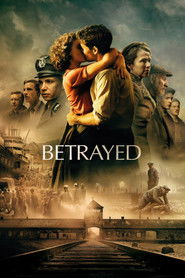
star 7During World War II, millions of Jews from all over Europe are deported and killed in German concentration camps. When the German troops invade Norway, the Norwegian Jews feel safe and protected. But anti-Semitism knows no borders and as the war escalates in Europe, the situation changes drastically. Suddenly, their radios are taken away; their passports are stamped with a big J and one day, all the men men over the age of 15 are arrested and taken to prisons camps. Many of the women left behind are too frightened to escape and are desperately waiting for their husbands and sons to come back home. On November 26, 1942, hundreds of Jews are picked up by the police in the middle of the night and are transported to the dock in Oslo. Unknowing and frightened men, women, children, sick and old are forced on board the awaiting German cargo ship "SS DONAU". The ship leaves with 532 Norwegian Jews onboard; 302 men, 188 women and 42 children. The end station is Auschwitz.The Last of the Mohicans
1936
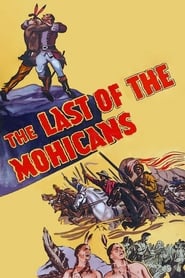
star 6.3The story is set in the British province of New York during the French and Indian War, and concerns—in part—a Huron massacre (with passive French acquiescence) of between 500 to 1,500 Anglo-American troops, who had honorably surrendered at Fort William Henry, plus some women and servants; the kidnapping of two sisters, daughters of the British commander; and their rescue by the last Mohicans.The Boy in the Woods
2023
The Boy in the Woods
2023
star 6.7The remarkable true-life survival story of a Jewish boy hiding and being hunted in the forests of Nazi-occupied Eastern Europe, based on Maxwell Smart's memoir.Canopy
2014
Canopy
2014
star 5.8Wartime, 1942. Singapore. An Australian fighter pilot shot down in combat awakens suspended in the treetops. As night devours day, he must navigate through dangerous jungle in search of sanctuary.Resistance
2011
Resistance
2011
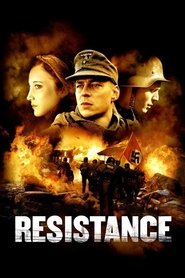
star 4.8It is 1944 and the D-Day invasion has failed, Germany's army have successfully invaded England and the Nazi war-machine is now heading west towards Wales. A group of women in an isolated Welsh village near the English border wake up to discover all of the their husbands have mysteriously vanished. They have headed into the mountains to join the Resistance.Strategic Air Command
1955
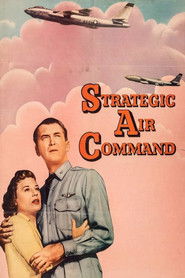
star 6.1Air Force reservist Lt. Col. Robert "Dutch" Holland is recalled into active duty at the peak of his professional baseball career.Kippur
2000
Kippur
2000
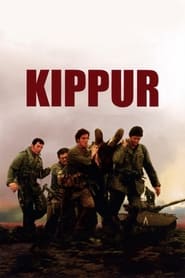
star 5.4The film takes place in 1973 during the Yom Kippur War in which Egypt and Syria launched attacks in Sinai and the Golan Heights. The story is told from the perspective of Israeli soldiers. We are led by Weinraub and his friend Ruso on a day that begins with quiet city streets, but ends with death, destruction and devastation of both body and mind. Various scenes are awash in the surreal, as Weinraub's head hangs out over a rescue helicopter's open door, watching with tranquil desperation as the earth passes beneath, the overpowering whir of the blades creating a hypnotic state. It is not a traditional blood, guts and glory film. There are no men in battle, only the rescue crew trying to pick up the broken pieces.Story of G.I. Joe
1945
Story of G.I. Joe
1945
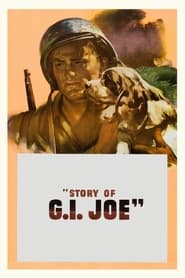
star 6.4War correspondent Ernie Pyle joins Company C, 18th Infantry as this American army unit fights its way across North Africa in World War II. He comes to know the soldiers and finds much human interest material for his readers back in the States. Preserved by the Academy Film Archive in partnership with The Film Foundation in 2000.Blood on the Sun
1945
Blood on the Sun
1945
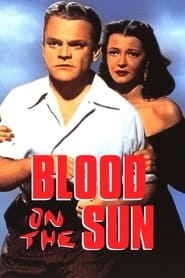
star 5.8Nick Condon, an American journalist in 20s Tokyo, publishes the Japanese master plan for world domination. Reaction from the understandably upset Japanese provides the action, but this is overshadowed by the propaganda of the time.The Soviet Story
2008
The Soviet Story
2008
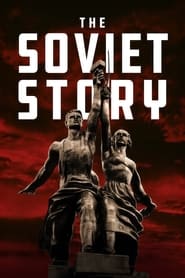
star 7.3“The Soviet Story” is a story of an Allied power, which helped the Nazis to fight Jews and which slaughtered its own people on an industrial scale. Assisted by the West, this power triumphed on May 9th, 1945. Its crimes were made taboo, and the complete story of Europe’s most murderous regime has never been told. Until now...The Kill Team
2013
The Kill Team
2013
star 6.9In 2010, the media branded a platoon of U.S. Army infantry soldiers “The Kill Team” following reports of its killing for sport in Afghanistan. Now, one of the accused must fight the government he defended on the battlefield, while grappling with his own role in the alleged murders. Dan Krauss’s absorbing documentary examines the stories of four men implicated in heinous war crimes in a stark reminder that, in war, innocence may be relative to the insanity around you.Kill Them All and Come Back Alone
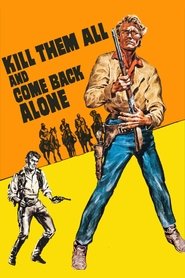
1968
star 6.1During the American Civil War, a Confederate prisoner, Clyde McKay, attempts to steal a box of gold from a Union prison camp. He is aided by a group of prisoners and a prison guard but he is double-crossed along the way.Why We Fight: The Battle of Russia
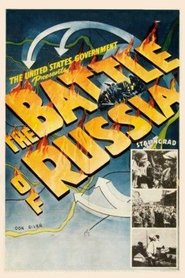
1943
star 6.8The fifth film of Frank Capra's Why We Fight propaganda film series, revealing the nature and process of the fight between the Soviet Union and Germany in the Second World War.Another Mother's Son
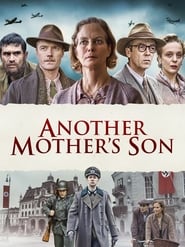
2017
Another Mother's Son
2017
star 6.8The true story of Louisa Gould, a widow living in Nazi occupied Jersey, who takes in a Russian prisoner of war.Line of Demarcation
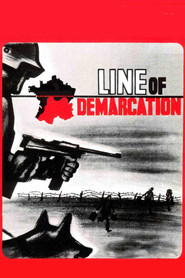
1966
Line of Demarcation
1966
star 6.2It is based on upon the memoir Mémoires d'un agent secret de la France libre et La Ligne de démarcation by Gilbert Renault under his pseudonym Colonel Rémy. A small village in the Jura is split by the river Loue which creates the line of demarcation between Nazi occupied France and freedom. A French officer, Pierre, is released by the Nazi soldiers to find his chateau converted into a German command centre. Whilst he is obliged to co-operate with the enemy, his wife Mary supports the resistance movement and is willing to risk her life for it. The Nazis step up their activity against the resistance, insisting that any who attempt to cross the line of demarcation will be shot. When his wife is arrested, Pierre decides to switch his allegiance.