Top Rated War Movies on Kanopy - Page 15
All Services
Free Services
 Netflix
 Amazon Prime Video
 Apple iTunes
 Apple TV Plus
 Disney Plus
 Google Play Movies
 Paramount Plus
 Hulu
Hulu
 HBO Max
 YouTube
 fuboTV
 Peacock
 Peacock Premium
 Amazon Video
 The Roku Channel
 AMC+
AMC on Demand
AMC+
AMC on Demand
 Kocowa
 Hoopla
 The CW
 Vudu
Vudu
 Starz
Starz
 Showtime
 PBS
PBS
 Pantaflix
 FXNow
FXNow
 Tubi TV
 Kanopy
 Comedy Central
 Crunchyroll
 Microsoft Store
 Redbox
 Sun Nxt
 ABC
ABC
 DIRECTV
 Crackle
 Fandor
 Plex
Plex
Netflix
Amazon Prime Video
Apple iTunes
Apple TV Plus
Disney Plus
Google Play Movies
Paramount Plus
Hulu
HBO Max
YouTube
fuboTV
Peacock
Peacock Premium
Amazon Video
The Roku Channel
AMC+
AMC on Demand
Kocowa
Hoopla
The CW
Vudu
Starz
Showtime
PBS
Pantaflix
FXNow
Tubi TV
Kanopy
Comedy Central
Crunchyroll
Microsoft Store
Redbox
Sun Nxt
ABC
DIRECTV
Crackle
Fandor
Plex

1982
2020
1982
2020
star 6.6On the eve of an invasion in 1982 Lebanon, an 11-year-old boy at a mountain school is determined to express his feelings to a classmate. As tension builds across the country, the day takes an unexpected turn, reflecting the fragile line between innocence and conflict. Through a child's eyes, the film explores the impact of war, the power of love, and the resilience of the human spirit.Copperhead
2013
Copperhead
2013
star 5A family is torn apart during the American Civil War. Abner Beech (Billy Campbell), a righteous farmer from upstate New York, exercises his right to free speech in a time when families are divided by the Civil War.The World Will Tremble
2025
star 6.8The incredible, untold true story of how a group of prisoners attempt a seemingly impossible escape from the first Nazi death camp in order to provide the first eyewitness account of the Holocaust.Out of the Darkness
2022
Out of the Darkness
2022
star 7.1This Danish movie "Out of The Darkness" ( in Danish 'De Forbandede år 2' ) is a continuation of the popular WW II drama "Into The Darkness" ( in Danish 'De forbandede år' ) and it portraits the Danish Resistance movements fight. This movie takes place after 1943 where the official politic of 'corporation' comes to an end, and the Danish Resistance movement is gaining traction. The movie follows the Skov family from 1943 to the end of WWII. The growing opposition to the occupation and the increased brutality of the Germans have fatal consequences for the family.Ouzeri Tsitsanis
2015
Ouzeri Tsitsanis
2015
star 5.8During World War II in Greece, under the submission of Germans, one Christian, Giorgos, falls in love with a Jewish, Estrea, something completely forbidden. Can they and their families overcome all the obstacles, along with racial discriminations and hardship? The story mainly takes place in an ouzeria, in which Tsitsanis works, one of the greatest Greek composer, librettist and singer in the 20th century.The Real Glory
1939
The Real Glory
1939
star 6.3Fort Mysang, southern Philippine Islands, under US rule, 1906. A small group of army officers and native troops resist the fierce and treacherous attacks of the ruthless Alisang and his fanatical followers.Battle of the Coral Sea
1959
star 5.6A US submarine and its crew are captured by the Japanese on the eve of a major WWII battle.For Ever Mozart
1996
For Ever Mozart
1996
star 5.8Episodic film that follows a theater troupe from France attempting to put on a play in Sarajevo. Along their journey they are captured and held in a POW camp, and they call for help from their friends and relations in France.Why We Fight: The Battle of Britain
1943
star 6.7The fourth of Frank Capra's Why We Fight series of seven propaganda films, which made the case for fighting and winning the Second World War. It was released in 1943 and concentrated on the German bombardment of the United Kingdom in anticipation of Operation Sea Lion, the planned German invasion.The Day and the Hour
1963
The Day and the Hour
1963
star 6.7It's the spring of 1944 and Therese is in a hurry to get back to Paris. The trains aren't running from the village where she has gone to visit her father's grave and to fill two suitcases with food. Some British and American planes have been shot down and the Germans want to know where the pilots are hiding. An acquaintance has clearance to drive to Paris with a truckload of goats. After she is in the truck Therese discovers that two British pilots and an American pilot are back there with the goats. She must get the men on a train to Paris and to a safe house there, where there is no room for the American. Can she leave him at the Metro station trying to figure out the map?War Requiem
1989
War Requiem
1989
star 6.4During World War I, British soldier Owen is mortified by the examples of cruelty that surround him in the trenches. He combats these terrifying images by maintaining hope in his love for an army nurse. But he also begins to accept his fate as another battlefield sacrifice.Escape from Germany
2024
Escape from Germany
2024
star 61939, Hitler's army was closing borders, and 85 American missionaries were in Germany serving their church. The escape of these missionaries from Nazi Germany is one of the most dramatic events to occur in modern LDS history.The Last Front
2024
The Last Front
2024
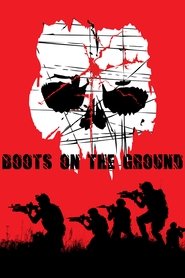
star 5.8In a Belgian village during the start of World War I, the Lambert family finds themselves thrust into the heart of the conflict in The Last Front. Leonard Lambert, a devoted husband and father, grapples with protecting his family as German forces advance to their village. Amidst the war, a tender love story blossoms between Adrien Lambert, Leonard's son, and Louise Janssen, a local villager.Boots on the Ground
2017
Boots on the Ground
2017
star 4.8The story of five British soldiers trying to stay alive on the last night of the Afghan War, facing not just the Taliban, but also supernatural forces more terrifying than anything they've encountered before.Calm at Sea
2012
Calm at Sea
2012
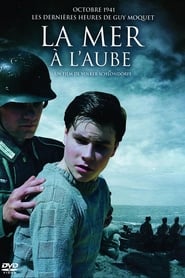
star 6.4October 1941. Eighteen months into France’s occupation by German troops, young Communist members of the Resistance shoot dead an officer of the German Army. In retaliation, Hitler demands the deaths of 150 Frenchmen, as 'retribution'. The targets are to be mostly young men believed to share the assassins’ political convictions. Most of these men are taken from an internment camp for opponents of the occupation; a 35-year-old French rural administrator is ordered to select the victims. Although the parish priest appeals to their conscience and moral sensibilities, both the German military and their French helpers slavishly follow their orders.I Have Never Forgotten You: The Life & Legacy of Simon Wiesenthal
2007
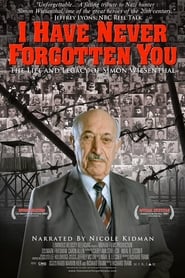
star 7.7"I Have Never Forgotten You" is a comprehensive look at the life and legacy of Simon Wiesenthal, the famed Nazi hunter and humanitarian. Narrated by Academy Award winning actress Nicole Kidman, it features interviews with longtime Wiesenthal associates, government leaders from around the world, friends and family members--many of whom have never discussed the legendary Nazi hunter and humanitarian on camera. Previously unseen archival film and photos also highlight the film. What was the driving force behind his work? What kept him going when for years the odds were against his efforts? What is his legacy today, more than 60 years after the end of World War Two?German Concentration Camps Factual Survey
2017
star 7.3On the 29th September 1945, the incomplete rough cut of a brilliant documentary about concentration camps was viewed at the MOI in London. For five months, Sidney Bernstein had led a small team – which included Stewart McAllister, Richard Crossman and Alfred Hitchcock – to complete the film from hours of shocking footage. Unfortunately, this ambitious Allied project to create a feature-length visual report that would damn the Nazi regime and shame the German people into acceptance of Allied occupation had missed its moment. Even in its incomplete form (available since 1984) the film was immensely powerful, generating an awed hush among audiences. But now, complete to six reels, this faithfully restored and definitive version produced by IWM, is being compared with Alain Resnais’ Night and Fog (1955).War Comes to America
1945
War Comes to America
1945
star 7The seventh and final film of Frank Capra's Why We Fight World War II propaganda film series. This entry attempts to describe the factors leading up to America's entry into the Second World War.Genocide
1982
Genocide
1982
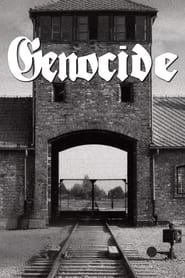
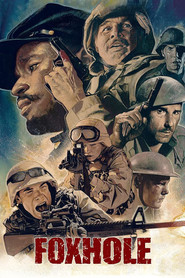
star 7.4The mass murder of Jewish people by the Nazi regime is chronicled, with a warning that anti-Semitism is on the rise and the events of the Holocaust could happen again. The history of European Jewish culture and events before and during the Holocaust are seen in newsreels, photographs, and animated segments. The words of the victims of the era are read, and footage from the liberation os a concentration camp is shown.Foxhole
2021
Foxhole
2021
star 6.1Unfolding over the span of 36 hours in three separate wars – The American Civil War, World War I, and Iraq – FOXHOLE follows five soldiers confined in a foxhole as they grapple with morality, futility, and an increasingly volatile combat situation. Casting the same five actors in each episode, the film depicts the shifting roles of race and gender over time against the backdrop of the seemingly endless human struggle for power and domination. (Olivia Belluck)