Top Rated Animation Movies on Pantaflix - Page 430
All Services
Free Services
 Netflix
 Amazon Prime Video
 Apple iTunes
 Apple TV Plus
 Disney Plus
 Google Play Movies
 Paramount Plus
 Hulu
Hulu
 HBO Max
 YouTube
 fuboTV
 Peacock
 Peacock Premium
 Amazon Video
 The Roku Channel
 AMC+
AMC on Demand
AMC+
AMC on Demand
 Kocowa
 Hoopla
 The CW
 Vudu
Vudu
 Starz
Starz
 Showtime
 PBS
PBS
 Pantaflix
 FXNow
FXNow
 Tubi TV
 Kanopy
 Comedy Central
 Crunchyroll
 Microsoft Store
 Redbox
 Sun Nxt
 ABC
ABC
 DIRECTV
 Crackle
 Fandor
 Plex
Plex
Netflix
Amazon Prime Video
Apple iTunes
Apple TV Plus
Disney Plus
Google Play Movies
Paramount Plus
Hulu
HBO Max
YouTube
fuboTV
Peacock
Peacock Premium
Amazon Video
The Roku Channel
AMC+
AMC on Demand
Kocowa
Hoopla
The CW
Vudu
Starz
Showtime
PBS
Pantaflix
FXNow
Tubi TV
Kanopy
Comedy Central
Crunchyroll
Microsoft Store
Redbox
Sun Nxt
ABC
DIRECTV
Crackle
Fandor
Plex

Light
1973
Light
1973
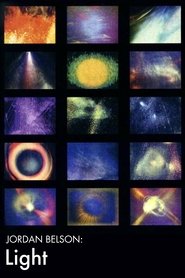
star 7.7Based on the continuity of the electromagnetic spectrum. It is a ride through space and light.Réflexion
2012
Bumble Boogie
1948
Bumble Boogie
1948
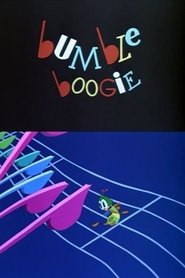
star 5.3A bumblebee (to a boogie-woogie version of Flight of the Bumblebee) is being attacked by flowers made of piano keys, flowers made of trumpets, snakes made of piano keys, the piano hammers hitting the "strings" of the sheet music, and so forth.Andrey Svislotskiy
1991
Andrey Svislotskiy
1991
star 5.9This animated short focuses on the lives of three eccentric people living on a farm in the Ukrainian countryside. Told in a non-linear, stream of consciousness style, the film depicts the deceitful relationship between a master and his two servants. Preserved by the Academy Film Archive in 2007.Wonder
2014
Wonder
2014
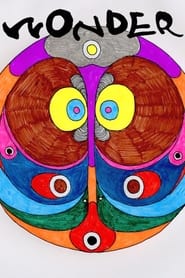
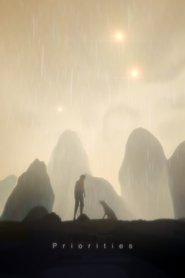
star 5.4The 365 days animation consists of sequence of 8760 pictures, all different shape and color, hand-drawn by the director every day in 365 days. This is the ultimate analog approach by the abstract animated film creator in digital era.Priorities
2014
Priorities
2014
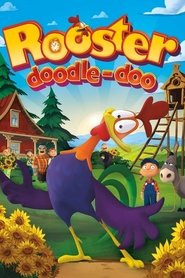
star 5.5After a plane crash, a young man and his dog, who are stranded on an deserted island, must bond together in order to survive the elements.The Rooster of St. Victor
2014
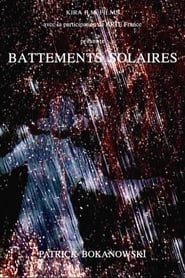
star 6.6In this fun family comedy, a village rooster's punctual (and loud!) crowing keeps everyone awake until a group of sleepy locals hatch a scheme to get rid of him.Solar Beats
2008
Solar Beats
2008
star 8.4Walking towards the fire. In a ceaseless stream of light, people, landscapes and objects lead us to mysterious regions. French filmmaker Patrick Bokanowski’s work is hard to classify - and all the richer for it. Together with his wife Michèle, whose musique concrète compositions form the basis of the sound design, Bokanowski offers a prolonged, dense and visually visceral experience of the kind that is rare in cinema today. Difficult to define and locate, its strangeness is quite unique.Printed Rainbow
2006
1895
1995
1895
1995
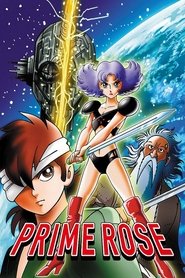
star 6.61895 is a picture about the life of brothers Auguste and Louis Lumiere, who have immortalized their names as inventors of cinematography. What inspired them?A Time Slip of 10,000 Years: Prime Rose
1983
star 6.1A powerful entity known as Death Mask hurls Kujukuri City, Japan, and Dallas, Texas 10,000 years into the future, reshaping them into a ruthless battleground where only the strongest survive. Determined to shatter this tyrant's hold on time itself, Gai Tanbara ventures into the dystopian future. Along the way, he meets Emiya, a fierce warrior fighting to reclaim her city from the darkness. Together, they confront the horrors of a shattered world and the sinister forces threatening the fate of humanity!Dive Olly Dive and the Pirate Treasure
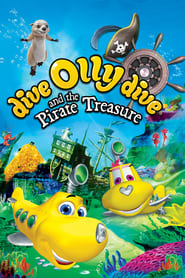
2014
star 5.3Submarines Olly and Beth join their friend Bobsie, who is convinced he is the great-grandson of the Rainbow “Pie-Rats”, to search for the legendary secret treasure that reflects the beautiful rainbows in the sky. Their exciting treasure hunt is filled with wonder, comedy, thrills and adventure. But, they are followed by the unscrupulous Snarky Sharkskin and his slippery seahorse gang. As resourceful as ever, Olly and Beth manage to overcome all the problems they encounter, survive the storms at sea, make a heroic rescue, and find the glittering rainbow treasure. However, in the end, the treasure hunt leads them to understand that the best treasure of all is family and friendship.T.Z.
1979
T.Z.
1979
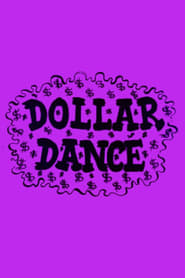
star 6.4An elegant home movie, its subject is Breer's apartment which faces the Tappan Zee (T.Z.) Bridge. It is permeated, as are all his films, with subtle humor, eroticism and a sense of imminent chaos and catastrophe.Dollar Dance
1943
Dollar Dance
1943
star 4.7This wartime publicity trailer by Norman McLaren focuses on wartime inflation and the role of price control. Single-frame animation is used with pen drawings made directly on 35mm film stock. Music is by Louis Applebaum, a leading composer and advocate for the arts in Canada.Mail Early
1941
Mail Early
1941
star 5.1This publicity clip for Canada Post is Norman McLaren's first film for the NFB. For this animated short, McLaren drew symbols by pen onto clear 35 mm stock, which was then superimposed on a photographed painted background. Benny Goodman's rendition of Jingle Bells provides the accompaniment. (NFB)A Farewell to Weapons
2013
star 6.2In a post-apocalyptic future, a group of soldiers is sent to a ghost city to destroy an automated sentry.Chronus
2014
Chronus
2014
star 6.6Makoto Nakazono is a high school student with a small dark secret. Since he was little, he has had the mysterious power to see "black entities" that steal souls. One day, he is suddenly interrogated by one of the "black entities," Akira Seno: "Will you get in our way?" But Makoto replies with an air of resignation, "There's nothing I can do anyway, so I won't." At that moment, Makoto didn't notice the threatening shadow approaching his childhood friend Hazuki...The Subject of the Picture
2007
star 6With the complicity of a painter, an elderly man recovers youth and manages to wander through paintings.Perspectives
1975
Perspectives
1975
star 5.7An animated short where no real story is being told and the perspective is constantly shifting.Elementary Phrases
1994
Elementary Phrases
1994
star 5.7Colleagues at the University of Colorado at Boulder, the two began with strips of film Brakhage had painted on by hand, photographing them frame by frame with Solomon’s optical printer. They often printed two strips of film together, some of them containing images taken by Solomon, then chose from the images what Brakhage says “seemed to us natural phrases,” which Brakhage arranged into the final form. The result is a 40-minute silent film in which occasional hints of photographic images sometimes seem to peek through largely abstract shapes.