Top Rated Documentary Movies on Pantaflix - Page 350
All Services
Free Services
 Netflix
 Amazon Prime Video
 Apple iTunes
 Apple TV Plus
 Disney Plus
 Google Play Movies
 Paramount Plus
 Hulu
Hulu
 HBO Max
 YouTube
 fuboTV
 Peacock
 Peacock Premium
 Amazon Video
 The Roku Channel
 AMC+
AMC on Demand
AMC+
AMC on Demand
 Kocowa
 Hoopla
 The CW
 Vudu
Vudu
 Starz
Starz
 Showtime
 PBS
PBS
 Pantaflix
 FXNow
FXNow
 Tubi TV
 Kanopy
 Comedy Central
 Crunchyroll
 Microsoft Store
 Redbox
 Sun Nxt
 ABC
ABC
 DIRECTV
 Crackle
 Fandor
 Plex
Plex
Netflix
Amazon Prime Video
Apple iTunes
Apple TV Plus
Disney Plus
Google Play Movies
Paramount Plus
Hulu
HBO Max
YouTube
fuboTV
Peacock
Peacock Premium
Amazon Video
The Roku Channel
AMC+
AMC on Demand
Kocowa
Hoopla
The CW
Vudu
Starz
Showtime
PBS
Pantaflix
FXNow
Tubi TV
Kanopy
Comedy Central
Crunchyroll
Microsoft Store
Redbox
Sun Nxt
ABC
DIRECTV
Crackle
Fandor
Plex

Portrait of a Young Man in Three Movements
1931
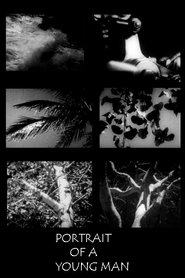
star 6.4This is a non-narrative film, comprised of shots that "portray a certain young man in the terms of the things that he likes", such as the flow of the tide on a seashore, the motion of finely-tuned machinery, and sunlight shining through the fronds of a palm.Surname Viêt Given Name Nam
1989
star 5.2The film evolves around questions of identity, popular memory and culture. While focusing on aspects of Vietnamese reality as seen through the lives and history of women resistance in Vietnam and in the U.S, it raises questions on the politics of interviewing and documenting.Bosphore
1964
Bosphore
1964
star 6.7Short doc by Maurice Pialat. The first film in the series set at Turkey, Bosphore, is also the only one that was shot in color.Men for Sale
2008
Men for Sale
2008
star 5.5An intimate and unflinching look over 12 months at the hardscrabble lives of hustlers in downtown Montreal.Stolen Seas
2013
Stolen Seas
2013
star 7.4A chilling exploration of the Somali pirate phenomenon through audio recordings and found video, right into the middle of the real-life hostage negotiation of a Danish shipping vessel, the CEC Future.I And Others
1971
I And Others
1971
star 6.4How independent are we in our judgments? How do other people influence us? Being like everyone else is a natural desire of a child. He often succumbs to suggestion and passes out someone else's opinion for his own. But for an adult, this is a loss of personality, adaptability, conformism, which forms the psychology of a slave.Blackadder Exclusive: The Whole Rotten Saga
2008
star 7.8To mark the 25th anniversary since the first transmission of Blackadder in 1983, the iconic cast of the much-loved sitcom appear together in a documentary for the first time. The show includes an exclusive in-depth interview with Edmund Blackadder himself, Rowan Atkinson - the first time he has agreed to be interviewed about his experience making the show.A.K.A. Serial Killer
1975
A.K.A. Serial Killer
1975
star 5.7AKA Serial Killer documents the social upheaval and political oppression that roiled Japan in the 1960s, profiling a nineteen-year-old serial killer Norio Nagayama. An indictment of media sensationalism, the film humanizes the young man by situating his crimes in the larger context of his environment.Warsaw Ghetto
1942
King: A Filmed Record... Montgomery to Memphis
1970
star 7.1A presentation of key events in the life of civil rights activist Martin Luther King Jr. Beginning with the 1955 bus boycott in Montgomery, Alabama, MLK is followed through major steps in his struggle to promote racial equality. Including footage of King's stirring speeches, it is a fitting tribute to his legacy, and features clips narrated by a wide range of celebrities, including Harry Belafonte, Paul Newman Charlton Heston, Ruby Dee, Burt Lancaster, Anthony Quinn, Walter Matthau, Ben Gazzara, Clarence Williams III, Joanne Woodward, and James Earl Jones.The Penguin King
2012
The Penguin King
2012
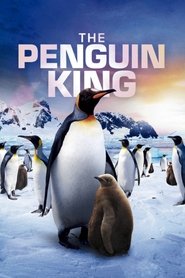
star 7South Georgia - alone in a vast ocean. 900 miles from Antarctica, and a mere 100 miles long. A wild rugged landscape with mountain ranges, vast glaciers, windblown plains half buried beneath snow and ice. Three years ago, the Penguin King left home. Now he is returning to the place where he was born and raised: Penguin City. One of the most densely-packed, sought-after pieces of real estate in the entire southern hemisphere and somehow he must establish his own place in it. He must find a mate.Yippie
1968
Yippie
1968
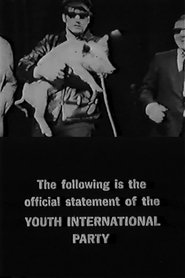
star 5.1The Youth International Party, whose members were commonly called Yippies, was a radically youth-oriented and countercultural revolutionary group opposed to war and the status quo of American culture. Known for using theatrics and humor to advocate social change, several Yippies were notably on trial as the Chicago 7. Primarily consisting of footage from the 1968 Democratic National Convention in Chicago which sparked massive demonstrations that were met by violence and hysteria caused by the police. This film also includes found newsreel footage as well as Pigasus - the pig the Yippies advanced as a candidate for President of the United States.Crulic: The Path to Beyond
2011
star 7An animated feature-length documentary telling the story of the life of Crulic, a 33 year-old Romanian accused of having stolen a wallet from an important Polish judge. Crulic was brought to the Krakow Detention Center Custody prison. He decided to start a hunger strike from the day he was arrested, demanding a meeting with somebody from the Romanian Consulate.Biquefarre
1984
Biquefarre
1984
star 7.5Biquefarre is a small farm in Aveyron. The changing economics of farming lead Raoul, in late middle age, to decide to sell and move to Toulouse. At least two neighboring farmers want to buy Biquefarre: Lucien and the young Marcel. Behind the scenes, Henri, whose brother is Marcel's father and who is also Lucien's brother-in-law, negotiates with Raoul so that Marcel's father can secretly sweeten Marcel's offer. Will dad and uncle succeed? In the background is the hard daily work of farming: milking cows, harvesting at night, and finding help when a farmer falls ill. Progress brings challenges: polluted water, factory farms, and skyrocketing land prices.The Lost Tomb Of Jesus
2007
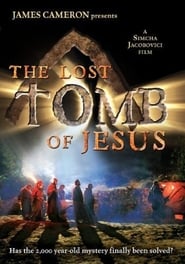
star 5.9Academy Award winning director James Cameron and Emmy Award winning investigative journalist Simcha Jacobovici have joined forces and produced a documentary film claiming to have identified the tomb and physical remains of Jesus of Nazareth.Few Words
2012
Few Words
2012
star 8.5Few Words is the story of a modern skiing pioneer, who became one of the most successful and talented freestyle skiers in the world, Candide Thovex.The Cut-Ups
1966
The Cut-Ups
1966
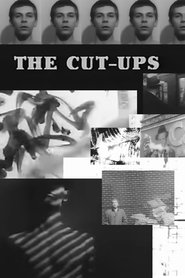
star 6.8Essentially a dizzying montage of quirky shots of legendary Beat Generation writer William S. Burroughs and noted surrealist artist Brion Gysin, this nearly 20 minute avant-garde short features repeated articulations of such random things as "Hello," "Where are we now?," and "Look at that picture" instead of music or standard dialogue. The narrative is decidedly nonlinear and perplexing, with no discernible plot whatsoever as we see images of Gysin working on his paintings and calligraphic designs and Burroughs rummaging through draws, packing a suitcase, giving a young man a physical, making a call in a phone booth, and waiting on a platform for a subway train.Robert. A Fortunate Life
1997
star 6.2Aleksander Sokurov brings the treasures of the Hermitage back into the light by making films about artists and their paintings. He has chosen the painter Hubert Robert, who spent a long time in Italy, and whose preference was for creating ancient ruined landscapes and naturalistic portrayals of times past. He was successful with the wealthy, who bought his works from him. The camera pans across the paintings while Sokurov speaks of a happy era, when the artist was at one with the spirit of the times, and agreed with the taste of his clients. Just how far removed from us this is, is shown by pictures of a "Nô" performance which are inter-cut on the screen. No words are necessary to describe what everybody knows today.Side/Walk/Shuttle
1992
Side/Walk/Shuttle
1992
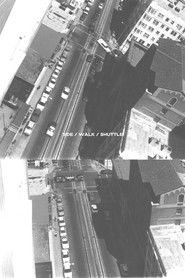
star 6.5In this infamous structural film, Ernie Gehr takes to the glass elevator attached to San Francisco's Fairmont Hotel and rides its 24 stories up and down, constantly shifting the orientation of his camera to offer images of the city as a zone of constant flux, freed from gravity and in perpetual rearrangement.