Top Rated History Movies on Pantaflix - Page 225
All Services
Free Services
 Netflix
 Amazon Prime Video
 Apple iTunes
 Apple TV Plus
 Disney Plus
 Google Play Movies
 Paramount Plus
 Hulu
Hulu
 HBO Max
 YouTube
 fuboTV
 Peacock
 Peacock Premium
 Amazon Video
 The Roku Channel
 AMC+
AMC on Demand
AMC+
AMC on Demand
 Kocowa
 Hoopla
 The CW
 Vudu
Vudu
 Starz
Starz
 Showtime
 PBS
PBS
 Pantaflix
 FXNow
FXNow
 Tubi TV
 Kanopy
 Comedy Central
 Crunchyroll
 Microsoft Store
 Redbox
 Sun Nxt
 ABC
ABC
 DIRECTV
 Crackle
 Fandor
 Plex
Plex
Netflix
Amazon Prime Video
Apple iTunes
Apple TV Plus
Disney Plus
Google Play Movies
Paramount Plus
Hulu
HBO Max
YouTube
fuboTV
Peacock
Peacock Premium
Amazon Video
The Roku Channel
AMC+
AMC on Demand
Kocowa
Hoopla
The CW
Vudu
Starz
Showtime
PBS
Pantaflix
FXNow
Tubi TV
Kanopy
Comedy Central
Crunchyroll
Microsoft Store
Redbox
Sun Nxt
ABC
DIRECTV
Crackle
Fandor
Plex

Exiled
2016
Exiled
2016
star 6.3In the final years of World War I a retired German field medic is sent to a remote sanatorium for soldiers suffering from post-traumatic mental disorders. There he encounters a strange, dreamlike state of existence that challenges his own war-torn mind.The Illinois Parables
2016
star 6.7From dreamy aerial opening shots, we are sent on an expedition through the storied land of our fifth most populous state, Illinois, often called a miniature version of America. Deborah Stratman’s experimental documentary explores how physical landscapes and human politics can each re-interpret historical events. Eleven parables relay histories of settlement, removal, technological breakthrough, violence, messianism, and resistance. Who gets to write history—physical monuments, official news accounts, or personal spoken-word memories?Mayflower: The Pilgrims' Adventure
1979
star 6.5In 1620, the Assembly of the Pilgrims decides to emigrate to the young America because of the persecution they suffer by the English crown. The film tells the adventurous journey of the Pilgrims to an unknown land and future.Persona Non Grata
2015
Persona Non Grata
2015
star 6.9The story of a Japanese diplomat, sometimes called the Schindler of Japan, and his life lading up to and after his decision to issue over 2,000 visas to Jewish refugees in Kaunas, Lithuania resulting in saving the lives of over 6,000 people. This is the story of a man who believed in doing all he could do for the benefit of his beloved Japan, including trying to keep her from becoming embroiled in a worldwide conflict he saw as inevitable. Along the way, he came face to face with the plight of the European Jews as they tried to escape the onslaught of the Nazi's and the rapidly advancing German army. Caught between the unbending policies of his country now bound by treaty with Nazi Germany and his awakening moral responsibilities, we follow his life from his early days in Manchuria to his eventual posting in Lithuania and his appointment with destiny which would forever brand him a hero.Standard
1990
Standard
1990
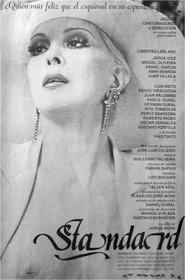
star 4.3Does someone remember that project of López Rega’s which, in 1975, thought up the construction of a Great Homeland Altar where all mythical figures of Argentine history could be in the same building? From San Martín to Perón on his pinto horse. From the Billiken stamps of our childhood to Libertad Leblanc’s tits of our teenage years. All clichés of Argentine-ness gathered under one roof. But the construction delays. Workers entertain themselves with their own masturbatory drives. Or is it that Argentina is an impossibie construction? Always about to begin. always displaying great projects, great plans that never come to fruition. A second-rate country that hides its fundamental vacuity behind monuments. in Acha’s cinema, second-rateness is exposed, shown in all its lying pomposity.Egypt's Lost Queens
2014
Egypt's Lost Queens
2014
star 6.2Professor Joann Fletcher explores what it was like to be a woman of power in ancient Egypt. Through a wealth of spectacular buildings, personal artefacts and amazing tombs, Joann brings to life four of ancient Egypt's most powerful female rulers and discovers the remarkable influence wielded by women, whose power and freedom was unique in the ancient world. Throughout Egypt's history, women held the title of pharaoh no fewer than 15 times, and many other women played key roles in running the state and shaping every aspect of life. Joann Fletcher puts these influential women back at the heart of our understanding, revealing the other half of ancient Egypt.Secret of the Midwife
2016
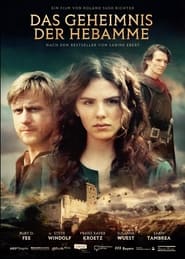
star 6.7Marthe is a girl with a special gift: she can cure illnesses. But the time she lives in is marked by superstition and godliness. When Marthe can not help the burgrave's wife from her village, the girl has to flee. Your path crosses that of Ritter Christian, who moves eastward into the Mark Meissen with a group of Frankish settlers. In the Middle Ages an unimaginably long and arduous way. Christian has a hard time avoiding the fascination of Marthe, but their diverse backgrounds make a relationship impossible and the settlers are afraid of the weird girl.La monja alférez
1944
La monja alférez
1944
star 5.7A 17th century woman, imprisoned for fighting in a bar, recounts her past to a priest. She tells of her father teaching her how to fence, of being sent to a convent by her aunt when her father died, of escaping by dressing as a man, and of her life as a man following the escape.Siempreviva
2015
Siempreviva
2015
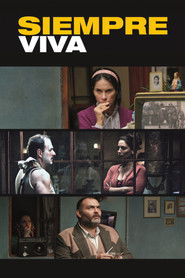
star 7.7The economy is not doing well and in a few months Lucia will lose the mortgaged house where she lives with her two children, Mr. Carlos the owner of the Second-hand store, Sergio, Clown by day, waiter by night, and his wife Victoria. Julieta, the youngest child, is the family's salvation. She just graduated from law school when, on the morning of November 6, 1985, she leaves for her job at the Palace of Justice and never returns. There are witnesses that claim to have seen her alive after the Palace burned down after the Guerilla attack, the habitants lives of the house won't be the same. Based on true events and on a play in Colombia, 1985.One Day I Saw 10,000 Elephants
2015
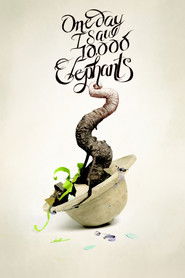
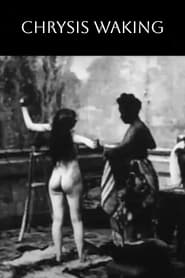
star 6.8The octogenarian Angono Mba recalls the expedition in which he worked as porter for the Spanish filmmaker Manuel Hernández Sanjuán who, between 1944 and 1946, traveled through Spanish Guinea documenting life in the colony as he obsessively searched for a mysterious lake.Chrysis Waking
1899
Chrysis Waking
1899
star 6Chrysis, a Greek priestess, is being fanned by her servant, who helps her get dressed before they both walk off.Merry Riana: A Million Dollars Dream
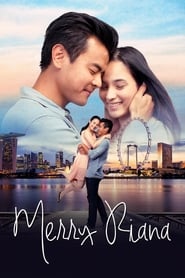
2014
star 7.2Merry who lived in Singapore never thought her life would change. She struggled against rejection until she got 1 million dollars at a young age.The Macedonian Part of Hell
1971
star 5.5At the end of the year 1942 and the start of 1943, to stop spreading the revolution in county of Bitola, bulgarian occupiers are reinforcing the persecutions and the acts of violence on civil population.King Naresuan Part: 6
2015
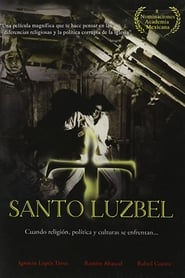
star 6Department of the Red God vent anger at the loss of his son. Viceroy of Hongsa Suphankanlaya to her son and daughter until death. It led the victory of King Naresuan avenge his brother, and she stepped to Bago leveled.Saint Lucifer
1997
Saint Lucifer
1997
star 5.5A conflict arises between the people of the town and the local priest when they have to decide how to represent certain biblical episode.His Most Serene Highness
2000
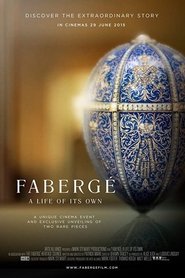
star 6.2This historical drama depicts the waning days of the life of Antonio Lopez de Santa Anna, who waged a war against the United States that ultimately cost his nation half of its territoryFaberge: A Life of Its Own
2014
star 7.8This feature-doc tells the epic story of the Faberge name, from Imperial Russia until the present-day, spanning one hundred and fifty years of turbulent history, romance, artistic development and commercial exploitation. From the bejewel led Easter eggs of the Romanov Tsarinas to the 1970s allure of 'Brut by Faberge' aftershave, and from the Russian revolution to today's high-fashion glitz in New York and London, the film explores a multi-faceted world that began with one man: the prodigiously talented Peter Carl Faberge, Court Jeweler of St Petersburg. Shot at locations across Russia, Europe and USA (including the collection of Her Majesty Queen Elizabeth II), the film features interview contributions from the world's foremost Faberge authorities, as well as personal reminiscences from Faberge family members.Hostage
2014
Hostage
2014
star 7.5Tragicomic family film about the world of children heroes - particularly the son of a local communist officer and his friend, a little hostage of the regime, whose parents emigrated to the West, few years before "Prague Spring" and the occupation of Czechoslovakia. Camaraderie, the first big discoveries of love, enemy gang fights and naive ideas are confronted with the reality of adult's world. The film is about the first contacts with bizarre and absurd reality of relationships and attitudes of adults, politics, emigration, but also betrayal and death and about how all those things form and transform the lives of small boys, who are forced to grow up too quickly.Conquest
1971
Conquest
1971
star 3.7La Araucana is a Chilean film based on an epic poem in Spanish about the Spanish conquest of Chile, by Alonso de Ercilla; it is also known in English as The Araucaniad. It is considered the national epic of the Kingdom of Chile and one of the most important works of the Spanish Golden AgeThe Entire History of the Louisiana Purchase
1998
star 4A kaleidoscopic history of the American heartland, nuclear weapons and the Native American genocide.