Top Rated History Movies on Pantaflix - Page 226
All Services
Free Services
 Netflix
 Amazon Prime Video
 Apple iTunes
 Apple TV Plus
 Disney Plus
 Google Play Movies
 Paramount Plus
 Hulu
Hulu
 HBO Max
 YouTube
 fuboTV
 Peacock
 Peacock Premium
 Amazon Video
 The Roku Channel
 AMC+
AMC on Demand
AMC+
AMC on Demand
 Kocowa
 Hoopla
 The CW
 Vudu
Vudu
 Starz
Starz
 Showtime
 PBS
PBS
 Pantaflix
 FXNow
FXNow
 Tubi TV
 Kanopy
 Comedy Central
 Crunchyroll
 Microsoft Store
 Redbox
 Sun Nxt
 ABC
ABC
 DIRECTV
 Crackle
 Fandor
 Plex
Plex
Netflix
Amazon Prime Video
Apple iTunes
Apple TV Plus
Disney Plus
Google Play Movies
Paramount Plus
Hulu
HBO Max
YouTube
fuboTV
Peacock
Peacock Premium
Amazon Video
The Roku Channel
AMC+
AMC on Demand
Kocowa
Hoopla
The CW
Vudu
Starz
Showtime
PBS
Pantaflix
FXNow
Tubi TV
Kanopy
Comedy Central
Crunchyroll
Microsoft Store
Redbox
Sun Nxt
ABC
DIRECTV
Crackle
Fandor
Plex

The Winter of the Anjanas
2000
star 4.2A young worker enjoying an affair with an upper class beauty, Adelaida, is drafted by the Spanish Army to fight in the Cuban War of Independence. After Adelaida receives an unusual announcement regarding her lover's death in combat, she refuses to believe the loss of her lover. Her class-conscious family, led by her jealous sister Maria, believes that Adelaida has lost her mind and places Adelaida in an insane asylum. However, Adelaida continues to to live according to her beliefs of passion and freedom. Fellow "inmates" tell her about the wood-nymphs which inhabit the adjacent forest. Adelaida is convinced these nymphs will lead her to her lover and to happiness.Iran Is My Land
1999
Iran Is My Land
1999
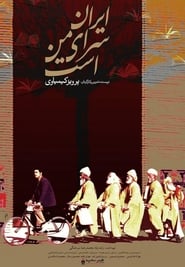
star 7.3Sohrab, a provincial young writer, is lost in the desert on the way to Tehran to get a publication license for his book on old Persian poetry, but the trip involves some bizarre events.The End of Cruising
2013
The End of Cruising
2013
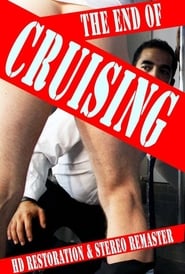
star 4A documentary about gay male cruising and public sex and how it has changed over the years.This Was Pancho Villa: First chapter
1957
star 6.4The disembodied head of Pancho Villa, kept in a glass jar in a research institute, is the narrator of several short stories from his own life, stories that might or might not have happened but are the stuff of legend.In a Southern Town
1969
In a Southern Town
1969
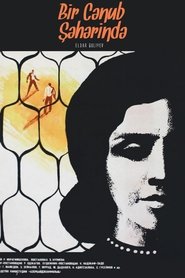
star 4.7Murad, a young man, lives by the old ethical norms that are still valid in the suburbs of his city. He had promised Tofig, his childhood friend, to give him his sister as a wife, but Tofig is in love with another girl. He forgets the promise and takes the girl home. Murad is offended. According to the code of honor, he must take revenge. One of the first films ever produced in the Soviet Union to challenge the sociopolitical establishment.Hostile Whirlwinds
1956
Hostile Whirlwinds
1956
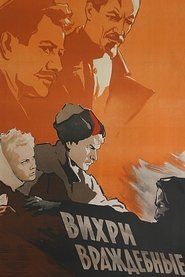
star 4.8About the first years of the formation of Soviet power, about the life and work of Feliks Dzerzhinsky in 1918-1925. The film covers the most important episodes of his biography. In July 1918, as a result of a revolt of the Left Socialist Revolutionaries, the German ambassador Mirbach was killed. Feliks Dzerzhinsky alone goes to the headquarters of the Left Socialist Revolutionaries and Anarchists, he manages to persuade ordinary soldiers and sailors, participants in the rebellion, who are now cracking down on their leaders. In 1921, Dzerzhinsky was aimed at combating homelessness, as a result of which, by 1925, former homeless children, having completed their studies, were sent to the construction of Yugostal, the largest industrial plant in Ukraine.December 20th
1982
December 20th
1982
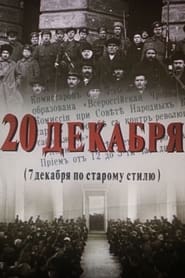
star 4.7Set in December of 1917 after the Bolshevik revolution in Russia. Lenin and the communists are making every effort to strengthen their power. Lenin appoints Felix Dzerzhinsky the Commissar for Internal Affairs and the head of the All-Russian Extraordinary Commission for Combating Counter-Revolution and Sabotage (CheKa). It became the predecessor of GPU and KGB.Voltaire et l'affaire Calas
2007
star 5.7A Protestant businessman, Jean Calas, is tortured to death for allegedly killing his son to stop him becoming a Catholic. Voltaire launches a Europe-wide campaign to win rehabilitation for Calas and compensation for his family.The Naval Battle of 1894
1962
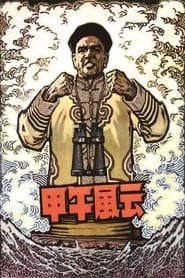
star 5.8In 1894 the Japanese Imperial Navy provokes the Chinese navy to test defenses. Some Chinese want to make concessions while others want to fight. When Japan invades, some naval officers put up a heroic resistance.FDR
1994
FDR
1994
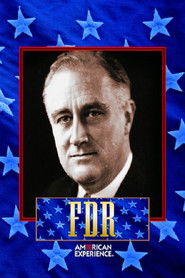
star 7.1Polio at age 39, president at age 50. Explore the public and private life of a determined man who steered this country through two monumental crises: the Depression and World War II. FDR served as president longer than any other, and his legacy still shapes our understanding of the role of government and the presidency. A film by award winning filmmaker David Grubin. This is the second of four parts.Burebista
1980
Burebista
1980
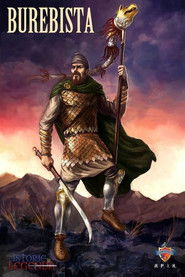
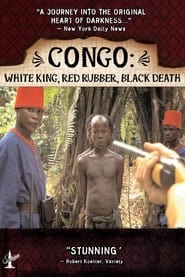
star 7The life of Dacian war-leader Burebista who ruled between 80-44 B.C.and founded a strong Dacian Kingdom despite considerable pressure from the neighboring Celtic warlords and the Greek cities of the Black Sea coast.Congo: White King, Red Rubber, Black Death
2003
star 7.2This true, astonishing story describes how King Leopold II of Belgium turned Congo into its private colony between 1885 and 1908. Under his control, Congo became a gulag labor camp of shocking brutality. Leopold posed as the protector of Africans fleeing Arab slave-traders but, in reality, he carved out an empire based on terror to harvest rubber.A Dream
1964
A Dream
1964
star 5.5Poetic treatment of the early life of Ukrainian poet and painter Taras Shevchenko. A biopic made on the occasion of his 150th anniversary. It dwells on the first part of the Shevchenko's life leading up to the writing of his rebellious poem "A Dream" (A comedy). The film features the first appearance on the silver screen of the iconic Ukrainian actor Ivan Mykolaichuk (as Taras Shevchenko).Hiroshima: Out of the Ashes
1990
star 5.8The movie follows the perspective of several characters (such as Japanese victims, soldiers, American prisoners of war and others) and how they lived or tried to survive the effects felt during the aftermath of the Atomic Bomb dropping by the Enola Gay at Hiroshima, during World War II.Nuclear Savage: The Islands of Secret Project 4.1
2011
star 6.4A shocking political exposé, and an intimate ethnographic portrait of Pacific Islanders struggling for survival, dignity, and justice after decades of top-secret human radiation experiments conducted on them by the U.S. government.Evakko
1956
Evakko
1956
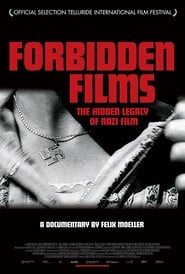
star 7Evakko is a portrayal of Soviet-Finnish winter war of 1939/40 and the associated evacuations in different parts of the country. It tells the story of a Karelian family along with their whole village who were forced to leave their homes because of the war. The film has a surprisingly perky tone for the subject matter.Forbidden Films
2014
Forbidden Films
2014
star 6.5Between 1933 and 1945 roughly 1200 films were made in Germany, of which 300 were banned by the Allied forces. Today, around 40 films, called "Vorbehaltsfilme", are locked away from the public with an uncertain future. Should they be re-released, destroyed, or continue to be neglected? Verbotene Filme takes a closer look at some of these forbidden films.The Last One Will Go to Hell
1982
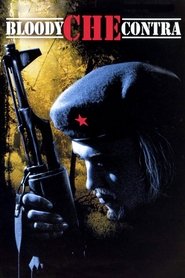
star 4.2A historical film that takes place on the eve of the thirty year war combines aspects of fairy-tales with historical dramas, fencing with a child heroes who find themselves in great dangers. We are in the year 1611 and mercenaries that had previously invaded Czech lands now have to withdraw before the Hungarian king's army. In this chaos a magical bottle, that fulfills the owner one single wish, appears among some fugitives - however after the fulfillment it has to be sold for half it's price to a new owner. The director Ludvík Ráža has created an attractive and surprisingly cruel film aimed not only at young viewers.Bloody Che Contra
1968
Bloody Che Contra
1968
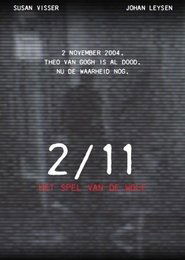
star 7.8The story of Che Guevara's desperate attempt to escape the mountains of Bolivia. Pursued by an elite ranger unit of the army led by a determined CIA agent, Che is eventually trapped and his men are killed.2/11 Het spel van de wolf
2014
star 4.52 November 2004, shortly before nine in the morning. In The Hague, the report comes in that in Amsterdam Theo van Gogh has been murdered. All warning bells start ringing. With the country in flames, sometimes literally, politicians and officials in The Hague have to neutralise all sorts of known and unknown stings, and just when Van Gogh’s cremation seems to herald a period of relative peace, a second explosion follows: the attack on the Hofstad Network in the Laakkwartier in The Hague. A reconstruction of nine days of political high tension and flying dust, a decade after the assassination of the trendsetting filmmaker and TV presenter.