Top Rated Music Movies on Pantaflix - Page 396
All Services
Free Services
 Netflix
 Amazon Prime Video
 Apple iTunes
 Apple TV Plus
 Disney Plus
 Google Play Movies
 Paramount Plus
 Hulu
Hulu
 HBO Max
 YouTube
 fuboTV
 Peacock
 Peacock Premium
 Amazon Video
 The Roku Channel
 AMC+
AMC on Demand
AMC+
AMC on Demand
 Kocowa
 Hoopla
 The CW
 Vudu
Vudu
 Starz
Starz
 Showtime
 PBS
PBS
 Pantaflix
 FXNow
FXNow
 Tubi TV
 Kanopy
 Comedy Central
 Crunchyroll
 Microsoft Store
 Redbox
 Sun Nxt
 ABC
ABC
 DIRECTV
 Crackle
 Fandor
 Plex
Plex
Netflix
Amazon Prime Video
Apple iTunes
Apple TV Plus
Disney Plus
Google Play Movies
Paramount Plus
Hulu
HBO Max
YouTube
fuboTV
Peacock
Peacock Premium
Amazon Video
The Roku Channel
AMC+
AMC on Demand
Kocowa
Hoopla
The CW
Vudu
Starz
Showtime
PBS
Pantaflix
FXNow
Tubi TV
Kanopy
Comedy Central
Crunchyroll
Microsoft Store
Redbox
Sun Nxt
ABC
DIRECTV
Crackle
Fandor
Plex

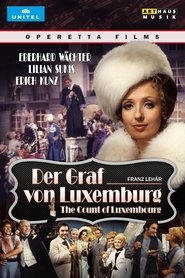
The Count of Luxembourg
1972
star 7.3Der Graf von Luxemburg (The Count of Luxembourg) is an operetta in three acts by Franz Lehár to a German libretto by Alfred Willner, Robert Bodanzky, and Leo Stein. A Viennese take on bohemian life in Paris at the beginning of the 20th century, the story revolves around an impoverished aristocrat and a glamorous opera singer who have entered into a sham marriage without ever seeing each other and later fall in love at first sight, unaware that they are already husband and wife.Love at First Sight
1956
Love at First Sight
1956
star 6.7Matilda, a girl from a wealthy family, is in love with Mario de Larosa, a singer and heartthrob who is adored by women everywhere. She knows all his songs by heart and prays to heaven to give her the opportunity to meet her idol in person. Her dreams come true — Mario is scheduled to sign autographs at an appliance and record store, and Matilda and her cousin rush to this fateful meeting, which will fundamentally change the lives of the young woman and Mario himself...Tosca
1941
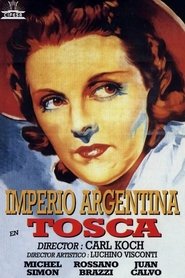
Tosca
1941
star 5.3Non-musical account of Puccini's opera: Tosca and Cavaradossi are in love, but the tyrant Scarpia desires Tosca and oppresses Cavaradossi who is fighting for freedom.Hasta que se ponga el sol
1973
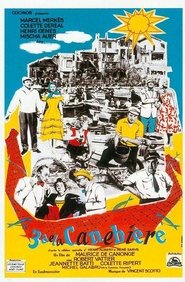
star 6.3Concert film documenting the foundational stage of the Argentine 'rock nacional' movement. It was filmed during the third edition of the historic B.A. Rock rock festival, which took place in 1972 at the Argentinos Juniors stadium.Three of the Canebière
1955
star 3.3Toinet, Girelle and Pénible fish for sardines in Marseille. To dazzle their conquests, they present themselves as rich can manufacturers, while the little flower girls play movie stars. A ridiculous suitor wants to discuss a business deal, a potential sponsor appears and the whole tohu-bohu reclaims the songs of Vincent Scotto.Hatsune Miku: Magical Mirai 2016
2016
star 9.3A Crypton VOCALOID concert, and the successor to the 2013, 2014, and 2015 Magical Mirai concerts. It was held in the Makuhari Messe International Exhibition Hall in Chiba, Japan. The main visual was illustrated by LENA[A-7]. The concert was accompanied by a three-day exhibition which included toys, artwork, and a life-size Miku statue designed after the main visual of the concert.The Maiden and the Princess
2011
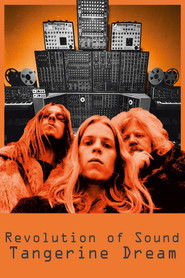
star 3During a game of catch-the-boy-and-kiss-him, Emmy, a precocious ten-year-old, kisses another little girl, Alice.Revolution of Sound - Tangerine Dream
2017
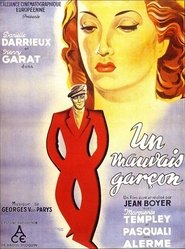
star 6.3‘Tangerine Dream is science fiction!’ declares band leader Edgar Froese who died in January, 2015 aged 70. For almost fifty years he and his band ‘Tangerine Dream’ explored sound and its effect on our emotions. This film about one of Germany’s first electronic bands kicks off with the young Berlin musicians who were as inspired by the space age of the 1960s, with its rocket launchings and visions of the future, as they were by their own heartbeat, on which Froese also based compositions. Aided by the Moog and other synthesisers Froese (and various band members) revolutionised popular music. His explorations took him into the worlds of classical, new and film music. He preferred to visualise moods rather than create clearly structured songs. A blend of amateur footage, interviews with band members, relatives, friends and colleagues such as Jean-Michel Jarre that creates a comprehensive portrait of an artistic pioneer.Un mauvais garçon
1936
Un mauvais garçon
1936
star 5Monsieur Serval has made a deal with his daughter Jacqueline. She can be a lawyer and act her own way provided that, in a given period of time, she becomes a great name of the profession. If she does not, she must pledge herself to marry the son of a rich man, Monsieur Feutrier. Jacqueline accepts and starts her career by defending Pierre Besnard, a bad Boy. Not only does she get the case dismissed but she falls in love with Pierre as well. But she is not famous for all that and sooner or later she will have to bring herself to marry Feutrier's son.Kaunis Veera eli ballaadi Saimaalta
1950
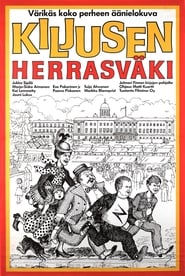
star 3.3Tar Steam Princess Armada travels along Lake Saimaa to St. Petersburg and back during the years of Russian rule over Finland. The ship's crew gets tired of their sophisticated coffee maker and replaces her with Roma girl Veera, who has escaped from an arranged marriage. On the way back, mysterious passengers appear on the ship.Kiljusen herrasväki
1981
Kiljusen herrasväki
1981
star 6.8The Kiljunen family wins a holiday trip to Helsinki and the city will never be the same again.You are Teddybears
2017
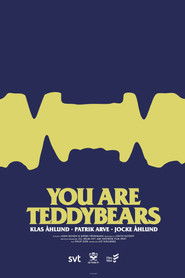
You are Teddybears
2017
star 8A humorous, vibrant music documentary introducing us to the faces behind the masks of the eccentric Swedish band Teddybears.Lucky Boy
1929
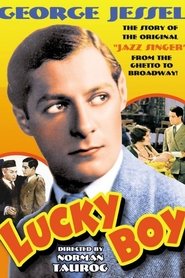
Lucky Boy
1929
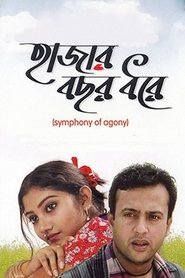
star 4.7A young Jewish man works in his father's jewelry business, but he doesn't like it at all--he wants to be an entertainer, something he knows that his father would never approve of. He comes up with a scheme to put on his own show in a theater and show his father that he can be a success, but things don't work out quite as well as he planned.Hajar Bachhor Dhore
2005
Hajar Bachhor Dhore
2005
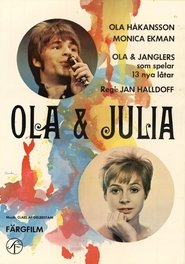
star 8The barren wife of a rich man allows him to marry a younger woman in order to have a child.Ola and Julia
1967
Ola and Julia
1967
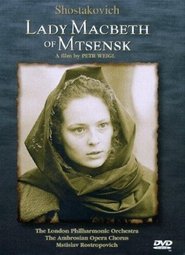
star 5.3Ola is a pop idol, touring with his band in Sweden in the mid-60's. Julia is a young actress in a traveling theatre company. They meet and fall in love.Lady Macbeth of Mtsensk
1992
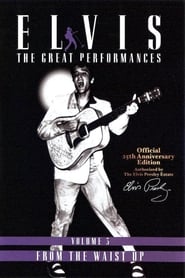
star 2.7A young woman, married to a wealthy man, but miserably lonely; trapped within a world ruled with an iron fist. Katerina is driven by a lust for life and for love. Her husband, though, is impotent; her father-in-law a tyrant. No wonder, then, that she longs to free herself from this yoke. When Sergei starts work on the family estate, she sees in him a chance for salvation. However, their subsequent affair marks the beginning of a descent into crime.Elvis The Great Performances Vol. 3 From The Waist Up
2002
star 8.3Elvis Presley's first year (March '56 to January '57) on TV is spotlighted on "From the Waist Up," the third of three Elvis: The Great Performances DVDs. And what a time it was, as his appearances on the Dorsey Brothers, Milton Berle, Steve Allen, and especially Ed Sullivan shows electrified an ever-growing national audience with tunes ranging from the lascivious "Baby, Let's Play House" to the reverent "Peace in the Valley." Written by Presley biographer Peter Guralnick (Last Train to Memphis) and narrated by U2's Bono, volume 3 is the most documentary-like of the three discs; some basic history is provided (the Sun Records years, the arrival of Col. Tom Parker, etc.), most of which will be old hat to Presley aficionados. Unfortunately, it's also the only disc that truncates some of the King's performances, but the three straight complete songs from the '57 Sullivan show that end the program help make up for that. --Sam GrahamA Miracle Maker
1957
Singing Café
1953
Singing Café
1953
star 5Sor Clemente escapes the surveillance of his wife and goes to attend a variety show.