Top Rated History Movies on Tub Tv - Page 245
All Services
Free Services
 Netflix
 Amazon Prime Video
 Apple iTunes
 Apple TV Plus
 Disney Plus
 Google Play Movies
 Paramount Plus
 Hulu
Hulu
 HBO Max
 YouTube
 fuboTV
 Peacock
 Peacock Premium
 Amazon Video
 The Roku Channel
 AMC+
AMC on Demand
AMC+
AMC on Demand
 Kocowa
 Hoopla
 The CW
 Vudu
Vudu
 Starz
Starz
 Showtime
 PBS
PBS
 Pantaflix
 FXNow
FXNow
 Tubi TV
 Kanopy
 Comedy Central
 Crunchyroll
 Microsoft Store
 Redbox
 Sun Nxt
 ABC
ABC
 DIRECTV
 Crackle
 Fandor
 Plex
Plex
Netflix
Amazon Prime Video
Apple iTunes
Apple TV Plus
Disney Plus
Google Play Movies
Paramount Plus
Hulu
HBO Max
YouTube
fuboTV
Peacock
Peacock Premium
Amazon Video
The Roku Channel
AMC+
AMC on Demand
Kocowa
Hoopla
The CW
Vudu
Starz
Showtime
PBS
Pantaflix
FXNow
Tubi TV
Kanopy
Comedy Central
Crunchyroll
Microsoft Store
Redbox
Sun Nxt
ABC
DIRECTV
Crackle
Fandor
Plex

SPK Complex
2018
SPK Complex
2018
star 6.2The anti-psychiatric Socialist Patients' Collective (SPK) was founded in Heidelberg in 1970 and attributed individual suffering to society’s capitalist structures. It began as a self-organised experiment in group therapy led by doctor Wolfgang Huber with psychiatric patients, featuring Hegel readings and individual agitation, before subsequently radicalizing, which ended in criminal proceedings against its members, some of whom went underground with the Red Army Faction.Maynard
2017
Maynard
2017
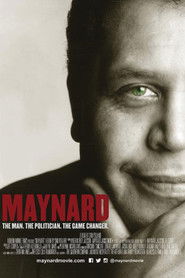
star 5.2Director Sam Pollard constructs a portrait of charismatic trailblazer Maynard Jackson, who became Atlanta’s first black mayor in 1973. The son of pastors raised in the segregated South, Jackson entered college at 14 and took office at 35. During his three-term tenure, he led the city through the traumatic Atlanta child murders scare and triumphantly hosted the 1996 Olympics, all while championing racial equality. Family and colleagues, including Bill Clinton, Andrew Young and Al Sharpton, tell the epic story of a dynamic leader and his legacy of honor and progress.Lena and the Geese
1912
Lena and the Geese
1912
star 4.4A first-born baby girl is sent away and placed in the care of Gretchen, a trusted peasant woman, who is the widowed mother of a child about the same age. The two children grow up as sisters. Later, upon her deathbed, the noble lady repents and sends for her child to reinstate her. Gretchen takes this opportunity to make a great lady of her own daughter Lena, the goose girl, by sending her to court instead of the real heiress. Hence Lena is taken before the noble lady, happy in the belief that she has made reparation. Lena is now a great lady, but the title does not fit well-- She longs to be back with Gretchen and her "geeses".El Che
2017
El Che
2017
star 5.8Ernesto "Che" Guevara's controversial story told by the Mexican writer Paco Ignacio Taibo II. He revisits places where the guerrilla and revolutionary leader has passed and interviews people who knew Che, making revelations about this important figure in Cuba's political history.Mommilan veriteot 1917
1973
star 6.5On the eve of the Finnish Civil War, the film follows the last days of Alfred Kordelin, the richest man in Finland.The Happy Valley
1987
The Happy Valley
1987
star 5.8In 1940 Kenya as their country prepares for war, the local aristocratic social set lives a decadent, self-indulgent lifestyle, that leads to murder. The same events were also dramatised in the feature film White Mischief, which was released seven months after the first transmission of The Happy Valley.The Price of Fame
2017
The Price of Fame
2017
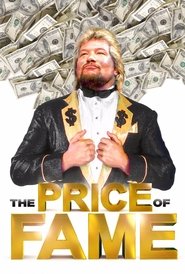
star 7Ted DiBiase Jr. takes a journey through pro-wrestlings past to tell the faith-based story of his father's rise, fall and redemption.Peacemaker Kurogane: Belief
2018
star 6.1Although traumatized by witnessing the murder of his parents by one of the Choushuu, Ichimura Tetsunosuke's thirst for revenge leads him to desire strength. At the age of 15, Tetsunosuke approached the Shinsengumi, wanting to become one of its members. However, Tetsunosuke lacked the skill, mind, and will to emotionlessly cut down whoever threatened peace and the Shinsengumi. Even with the support of his brother Tatsunosuke and his newfound friends of the Shinsengumi, little did Tetsunosuke know the blood and pain he would have to face being part of this historical group.Árulók
2017
Who Killed Tupac?
2017
Who Killed Tupac?
2017
star 8“Who Killed Tupac?” is a six-hour limited series, focusing on the investigation, twenty years after the death of the prolific and influential rapper and actor, Tupac Shakur. Each installment of this investigative series will include aspects from the legendary artist’s life as well as follow famed civil rights attorney Benjamin Crump as he conducts a full-scale, intensive investigation into key theories behind his murderDrancy Future
1997
Drancy Future
1997
star 6.2Director Arnaud de Pallières presents an experimental three-part film designed to stimulate the intellect and inspire reflection on the past. The first part tells the story of the last living Holocaust survivor, who is nearing the end of life and regrets not leaving behind an official record of the horrors he witnessed during the dark years of World War II. Later, a young historian researching a concentration camp in Drancy is shocked to discover that the site now houses an unwelcoming housing project called La Muette (the Silent). The trilogy winds to a close with the story of a ship's captain who recalls the time he ventured up an uncharted river towards an undiscovered civilization.NOVA: The Great Math Mystery
2015
star 7.8NOVA leads viewers on a mathematical mystery tour -- a provocative exploration of math's astonishing power across the centuries. We discover math's signature in the swirl of a nautilus shell, the whirlpool of a galaxy and the spiral in the center of a sunflower. Math was essential to everything from the first wireless radio transmissions to the prediction and discovery of the Higgs boson and the successful landing of rovers on Mars. But where does math get its power? Astrophysicist and writer Mario Livio, along with a colorful cast of mathematicians, physicists and engineers, follows math from Pythagoras to Einstein and beyond, all leading to the ultimate riddle: Is math an invention or a discovery? Humankind's clever trick or the language of the universe?Pilgrimage
2017
Pilgrimage
2017
star 5.4Adventurer, pilgrim, penitent but above all outstanding writer, Fernão Mendes Pinto left us an unparalleled romance, the living and human palpitation of one of the greatest historical adventures of man.The Day the Sun Fell
2015
The Day the Sun Fell
2015
star 7.2Tracing the past of her deceased grandfather who worked as a young doctor in the Red Cross hospital of HirSwiss-Japanese filmmaker Aya Domenig, the granddaughter of a doctor on duty during the 1945 atomic bombing of Hiroshima, approaches the experience of her deceased grandfather by tracing the lives of a doctor and of former nurses who once shared the same experience. While gathering the memories and present views of these last survivors, the nuclear disaster in Fukushima strikes and history seems to repeat itself.oshima after the atomic bomb was dropped over the city, the filmmaker encounters doctors and nurses who went through similar experiences to his at the time. Right up until his death in 1991, her grandfather was never able to speak about his experiences, but the formidable stories and openness of her protagonists bring her closer to his past.Raag Desh
2017
Raag Desh
2017
star 7.7Three officers of the Indian National Army are on trial for treason. An ailing lawyer must help them face the consequence of their courage.Little Crusader
2017
Little Crusader
2017
star 5.4Knight Borek is searching for his missing son. Enthralled by the stories of children's crusades, little Jan has run away from home. Borek's crusade is a journey into his own subconscious, where he is forced to confront his greatest fear.Nuremberg: The Nazis Facing their Crimes
2006
star 8.4The documentary of the Nuremberg War Trials of 21 Nazi dignitaries held after World War II.Andreas Hofer
1929
Andreas Hofer
1929
star 5.6A film based on the story of the Tyrolean innkeeper and patriot Andreas Hofer who led an Austrian uprising against Bavarian and French troops during the Napoleonic Wars.Nice Girls Don't Stay for Breakfast
2019
star 4.6In the late 1990s, iconic photographer Bruce Weber barely managed to convince legendary actor Robert Mitchum (1917-97) to let himself be filmed simply hanging out with friends, telling anecdotes from his life and recording jazz standards.Stories About Lenin
1957
Stories About Lenin
1957
star 6.2Two stories ("The feat of the soldier Mukhin", "The Last Autumn"). The events of one concern 1917, when Lenin had to hide in Finland, the second takes place in 1923-1924 during the last months of his life in Gorki.