Top Rated History Movies on Tub Tv - Page 248
All Services
Free Services
 Netflix
 Amazon Prime Video
 Apple iTunes
 Apple TV Plus
 Disney Plus
 Google Play Movies
 Paramount Plus
 Hulu
Hulu
 HBO Max
 YouTube
 fuboTV
 Peacock
 Peacock Premium
 Amazon Video
 The Roku Channel
 AMC+
AMC on Demand
AMC+
AMC on Demand
 Kocowa
 Hoopla
 The CW
 Vudu
Vudu
 Starz
Starz
 Showtime
 PBS
PBS
 Pantaflix
 FXNow
FXNow
 Tubi TV
 Kanopy
 Comedy Central
 Crunchyroll
 Microsoft Store
 Redbox
 Sun Nxt
 ABC
ABC
 DIRECTV
 Crackle
 Fandor
 Plex
Plex
Netflix
Amazon Prime Video
Apple iTunes
Apple TV Plus
Disney Plus
Google Play Movies
Paramount Plus
Hulu
HBO Max
YouTube
fuboTV
Peacock
Peacock Premium
Amazon Video
The Roku Channel
AMC+
AMC on Demand
Kocowa
Hoopla
The CW
Vudu
Starz
Showtime
PBS
Pantaflix
FXNow
Tubi TV
Kanopy
Comedy Central
Crunchyroll
Microsoft Store
Redbox
Sun Nxt
ABC
DIRECTV
Crackle
Fandor
Plex

The Return of She-Wolf
1990
star 3A young couple arrives to the palace, where years ago the Countess Julia, She-Wolf was terrorising its inhabitants. Soon the ghost of the Countess attacks the fiancée.Twilight Over Burma
2015
Twilight Over Burma
2015
star 7.4The U.S. scholarships Austrian student Inge and young mining student from Burma Sao Kya Seng fall in love. But it's only at the lavish wedding ceremony that Inge discovers her husband is the ruling prince of the Shan state of Burma. After a coup staged by the Burmese military, Sao is imprisoned. Inge does everything she can to free him. Base on the true story of Inge Sargent.Helen Keller: Angel of Love and Light
1981
star 5Based on the story of Helen Keller who at a very young age was left deaf and blinded by an illness. But she fought through the obstacles, trying to live a normal life as possible. She became on of the first disabled rights-pioneers.Bialik - King of the Jews
2014
star 7.3By the age of thirty he’d already become the most famous poet in the Jewish world. He spent very few years living in Tel Aviv, but he loved the city dearly. Some 100,000 people attended his funeral in 1934. “King of the Jews” is a portrait of the most beloved Jew of his day, Chaim Nachman Bialik. Combining special animation, a voice track by Chaim Topol, rare archival footage, long-forgotten photographs, poems by Bialik performed by Ninet and interviews with the foremost Bialik researchers and fans in Israel and around the world, this film retells the story of the little boy from the shtetl, who became King of the Jews.Russia in Bloom
2013
Russia in Bloom
2013
star 6.4A documentary about Sergei Prokudin-Gorsky, a pioneer in color photography of early 20th-century Russia.Reign: The Conqueror Movie
2000
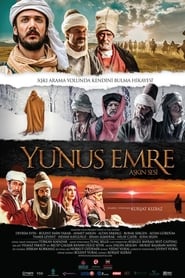
star 7.6Prince Alexander, son of King Philip, and heir to the Macedonian empire, must fend off political saboteurs, assassins, and the jealousy of his own father to ascend to the position of king. Once there, he begins his quest to conquer all nations and become known as the Great King, though an ancient prophecy foretells that he will be the destroyer of the world and forever remembered as the Devil King.Yunus Emre: Aşkın Sesi
2014
star 7We follow the story of Yunus, who lives in one of the Anatolian villages ravaged by war and violence, and his transformation into Yunus Emre, a figure of global significance whose thoughts and poems blend love and passion. His great regret at choosing to console himself with wheat will drive him to seek answers. This quest will be so profound that he will set out on the road, bidding farewell to everyone he loves, especially his beloved Balım Kız. On his journey to attain the greatest love of all, Divine Love, he will seek guidance from all the saints of Anatolia, unaware that what he seeks is already within him.Bloody Queens: Elizabeth and Mary
2016
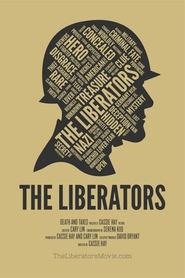
star 6.8A dramatisation based on the exchange of letters between Mary Queen of Scots and her cousin Elizabeth I, detailing the hatred and obsession in their bitter rivalry. Expert historians examine and interpret the royals' motives for the animosity that lasted more than two decades, and which threatened to tear apart the reigning monarch and her kingdom.The Liberators
2016
The Liberators
2016
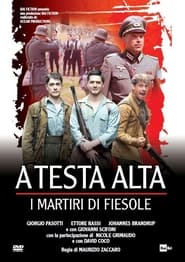
star 5.6Medieval art treasures seized by the Nazis go missing at the end of World War II. Were they destroyed in the chaos of the final battles? Or were these thousand-year-old masterpieces stolen by advancing American troops? For over forty years, the mystery remained unsolved. A true detective story, "The Liberators" follows a dogged German art detective through the New York art world and military archives to the unlikeliest of destinations: a small town on the Texas prairie. Featuring interviews with Willi Korte (Portrait of Wally) and Texas attorney Dick DeGuerin, the film raises intriguing questions as to the motivations of the art thief and the whereabouts of the items that, to this day,A testa alta: I martiri di Fiesole
2014
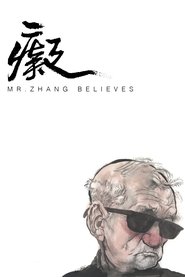
star 5.8In July 1944, the Germans discover a link between a small country barracks of the Arma dei Carabinieri Reali and the Resistance and one of the carabinieri, Sebastiano Pandolfo, and a young partisan are shot. Three other carabinieri (Alberto La Rocca, Vittorio Marandola, and Fulvio Sbarretti) manage to escape and try to join the Resistance, but the Germans take ten civilians hostage and threaten to kill them if the carabinieri do not surrender. Upon hearing the news, just before they reach the partisans, the three carabinieri choose to surrender to honor the role of the carabinieri as guarantors of legality and justice, thus saving the lives of the ten hostages.Mr. Zhang Believes
2015
Mr. Zhang Believes
2015
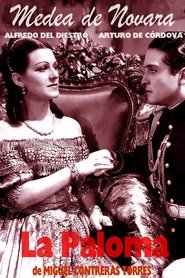
star 8.2Zhang Xianchi is a man thrown into the Cultural Revolution and its afterimage, plunged into the ideological deadlocks of the era and suffering its consequences beyond it. Born into a family that supports the nationalist Kuomintang, Zhang eventually became a leftist and joined the Communist Party. But his family’s background eventually catches up with him, and in a series of bureaucratic measures, he is labelled as a Rightist, leading to a slew of irrational yet life-affecting consequences. His story is told through an exhilarating hybrid of forms, blending documentary-styled interviews and spectral theatrical displays within an ever-mutating studio-space. Hypnagogic in its imagery and ironic in attitude, Mr. Zhang Believes is a tour-de-force treatise of a man caught within dogmatic political maneuverings, which it critiques indirectly with creative and stoic fervour.La paloma
1937
La paloma
1937
star 5Dazzled by the Empress Carlotta's graciousness, magnanimity and charm, a young officer in the Mexican army switches his allegiance to the Imperial government with Maximilian as figurehead. Bad move, space cadet.The Revenge of the Outlaws
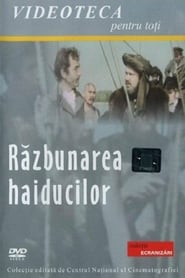
1968
star 6.8Second of 2 films set during the 18th century in the mountains of Wallachia, about a band of outlaws aiming to undermine the rule of the Phanariots and the Ottomans. The story evolves around the two stepbrothers who lead this band, Sarbu and Amza, with their complex and violent relationship.Kuningas lähtee Ranskaan
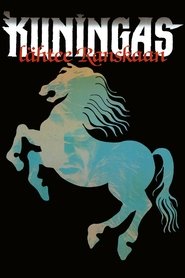
1986
star 4A new ice age is coming to England. All energy sources have been depleted and despair is taking over the earth. The young king decides to use his last trump card before his power collapses and anarchy reigns over the island kingdom.Migrations
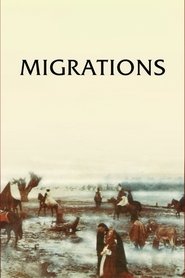
1989
Migrations
1989
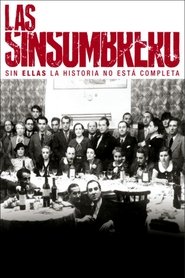
star 6.2Based on the famous novel of Milos Crnjanski, the story follows Serbian migrations from the Austro-Hungarian Empire during the XVIII century.Las sinsombrero
2015
Las sinsombrero
2015
star 6.6Spain, 1914. A group of women fight with courage for their rights in a society that condemns them to mediocrity. In 1927, their most advantaged students free themselves from the intellectual, social and physical corset that constricted them to a role as wives and mothers, so they will participate without complexes in the cultural life of Spain from then until the disaster of the Spanish Civil War.Sofies Verden
2000
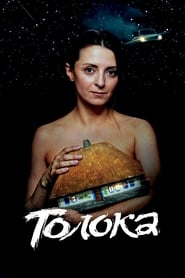
Toloka
2020
Toloka
2020
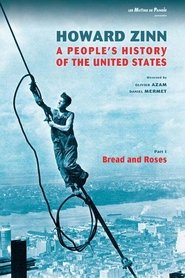
star 6.2There is a ballad written by Ukrainian poet Taras Shevchenko called “That Catherine's hut is on the hill...". It is about a rescue of Catherine's lover, whom she saves by posing him as her brother. This story, as a parable, flies throughout Ukraine's history and reconstructs its dramatic and heroic episodes. Every challenge, including the Chernobyl accident, leaves Catherine without her home. But she is stubborn, as many generations of Ukrainians, in rebuilding her house out of pieces. The story is not only about Catherine's redemption, but also about Ukraine's survival throughout the centuries that is reflected in a folk tradition called Toloka.Howard Zinn: A People's History of the United States
2015
star 6.9Between 1900 and 1920 more than 14 million immigrants arrived in the US, like Howard Zinn's parents. They came fleeing poverty or war, or racism, or religious persecution. They dreamed of a promised land, of wealth, or simply of a better life.Erich Mielke - Master of Fear
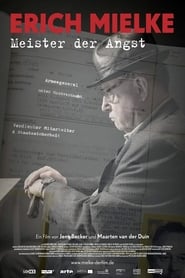
2015
star 5Docudrama about life, career and breakdown of Erich Mielke, the former Security chief of East Germany.