Top Rated History Movies on Tub Tv - Page 275
All Services
Free Services
 Netflix
 Amazon Prime Video
 Apple iTunes
 Apple TV Plus
 Disney Plus
 Google Play Movies
 Paramount Plus
 Hulu
Hulu
 HBO Max
 YouTube
 fuboTV
 Peacock
 Peacock Premium
 Amazon Video
 The Roku Channel
 AMC+
AMC on Demand
AMC+
AMC on Demand
 Kocowa
 Hoopla
 The CW
 Vudu
Vudu
 Starz
Starz
 Showtime
 PBS
PBS
 Pantaflix
 FXNow
FXNow
 Tubi TV
 Kanopy
 Comedy Central
 Crunchyroll
 Microsoft Store
 Redbox
 Sun Nxt
 ABC
ABC
 DIRECTV
 Crackle
 Fandor
 Plex
Plex
Netflix
Amazon Prime Video
Apple iTunes
Apple TV Plus
Disney Plus
Google Play Movies
Paramount Plus
Hulu
HBO Max
YouTube
fuboTV
Peacock
Peacock Premium
Amazon Video
The Roku Channel
AMC+
AMC on Demand
Kocowa
Hoopla
The CW
Vudu
Starz
Showtime
PBS
Pantaflix
FXNow
Tubi TV
Kanopy
Comedy Central
Crunchyroll
Microsoft Store
Redbox
Sun Nxt
ABC
DIRECTV
Crackle
Fandor
Plex

Punainen viiva
1959
Punainen viiva
1959
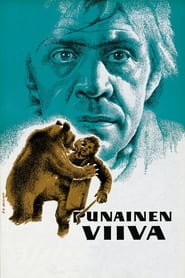
star 5.8The story of the first elections in Finland. Farmer Topi Romppainen lives a modest life with his family in Kainuu in the early 20th century. While shopping in the village, Topi hears about the upcoming parliamentary elections. His wife Riikka decides to find out more and ends up at a meeting of the Social Democrats.The Island of Wind
2015
The Island of Wind
2015
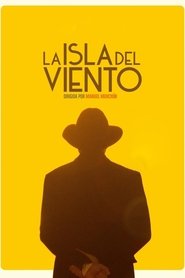
star 6.5The first fiction feature by Spanish director Manuel Menchón reconstructs the banishment of writer and philosopher Miguel de Unamuno (1864-1936) from Bilbao to Fuerteventura by Primo de Rivera's dictatorship, as punishment for his openly dissident statements against the military regime, the King and the monarchic system.Fueled: The Man They Called "Pirate"
2016
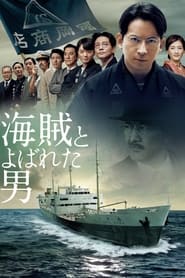
star 7.8In a time when the main source of energy was still coal, there was a man who saw the future in oil. Young Tetsuzo Kunioka who hails from Moji, Kitakyushu, rides out into the oil business, but is faced with numerous challenges and competitors who stand in his way, including domestic suppliers and major western oil companies, or the "oil majors". But Tetsuzo never gave up, however despairing the situation was. He always found a way and paved a new road with his unconventional ideas, eccentric actions, and most of all, his caring heart toward his own men. That style of Tetsuzo's was not something that would ever change, even when the tides were against him in a war-lost Japan.Serenity
1961
Serenity
1961
star 6.5Originally edited in two versions. Version I, 70 minutes; version II, 90 minutes. (The only known existing version is not Markopoulos’s edit and contains additional titles, music and voice-over added later than 1961. 65 minutes.) Filmed in Mytilene and Annavysos, Greece, 1958. Existing copy on video, J. and M. Paris Films, Athens.Pope John Paul II
1984
Pope John Paul II
1984
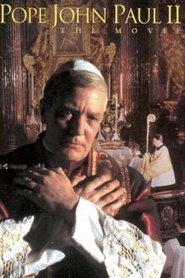
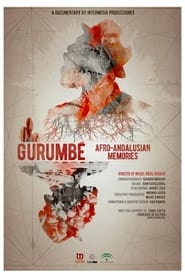
star 6.9Bio-drama tracing the life and career of Polish cardinal Karol Wojtyla from his days as a young activist in Poland to his rise and installation in 1978 as Pope of the Catholic world.Gurumbé: Afro-Andalusian Memories
2016
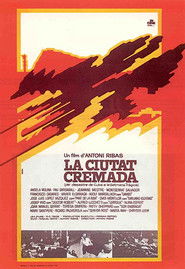
star 6.5Once the commercial exploitation of the resources existing in the American provinces of the Hispanic Monarchy began, hundreds of Africans were enslaved. Those who remained in Spain ended up forming a community that, over time, managed to gain a small space in society. Music and dance helped to strengthen their identity.The Burned City
1976
The Burned City
1976
star 5.5The film depicts ten years of Catalan history, from 1899 with the defeat of the Spanish side in the Cuban War of Independence to the Tragic Week 1909.Woman of the Ruins
2013
Woman of the Ruins
2013
star 4.5On a storm-ravaged island that has seen its share of tragedy, a person who had been assumed dead reappears and ignites a frenzy of reactions, ranging from ecstatic religious fervor to fear.Lumiere's First Picture Shows
2013
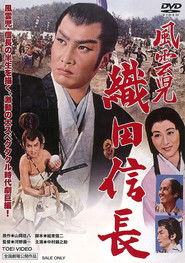
star 6.5An overview of the works of French film pioneers Louis and Auguste Lumière from 1895 to 1897.Lucky Adventurer Nobunaga Oda
1959
star 7.5Oda Nobunaga (1534–1582) was a major daimyo during the Warring State period of Japanese history. He was the second son of Oda Nobuhide, a deputy military governor with land holdings in Owari province. Nobunaga lived a life of continuous military conquest, eventually conquering a third of Japanese daimyo before his death in 1582. Telling the story of his rise to prominence as he leads an army of 4,000 men against the 40,000 troops of Lord Imagawa Yoshimoto to prevent the arrogant daimyo from crushing the Oda clan and taking control of the entire nation. From a newly restored anamorpic widescreen print, this is the ultimate warlord movie.Sugar Fields
2016
Sugar Fields
2016
star 5.8A young peasant is forced to flee for killing involuntarily an abusive guard. After an entire year hiding in a remote fishing island, he decides to return to his countryside and reunite with his wife and daughters.Signal Fires of Shanghai
1944
star 8.8During the Taiping Rebellion of the mid-19th century, anti-Qing (Manchu) Chinese forces led by Taiping commander Li Xiucheng march on Shanghai. Although the Western powers are officially neutral, the British consul in Shanghai sides with the Qing imperial government, and counter to his own government's policy he retains American adventurer Frederick Townsend Ward to raise a mercenary force of foreigners in Shanghai and oppose the Taipings. Ward's force is routed, with heavy casualties, but since many of the casualties are British, the British army soon is drawn in on the side of the Qings. The only support for the Chinese comes from Japanese in Shanghai and anti-imperialist demonstrations in Japan. A family drama plays out against this historical background. After a Chinese home is destroyed by careless British shelling, killing the father and crippling a daughter, the surviving son vows revenge but begins to see that his true friends may be the Japanese.9/11: Inside the Pentagon
2016
star 7.8The Sept. 11, 2001, attack on the Pentagon is recalled via the first-person accounts of Pentagon personnel, first responders, aviation experts and journalists. Included: Department of Defense footage from inside the Pentagon.Targeted: Exposing the Gun Control Agenda
2016
star 4.2Targeted will be examining one of the key issues of the day, gun control, and will take you on a fast-paced journey, following 22 year-old director Jesse Winton as he travels across the world, and goes back to the historical roots of the gun-control agenda, exposing it, and bringing out the dark truth behind gun control.Agnes
1995
Agnes
1995
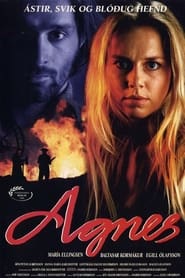
star 4In a barren land ruled by oppression and ignorance, a spirited woman driven by hope of a better life must fight against the odds. Agnes is a servant in the house of the county sheriff. There she is constantly sexually harassed by him and treated with contempt by his wife. Agnes falls in love with Natan, a self taught homoeopathic doctor. The sheriff takes revenge on Natan by making it illegal for him to practice his profession. The dramatic relationship between the three main characters ultimately leads to a fatal web of events where a love affair turns into a nightmare of brutality and destruction.Vino el remolino y nos alevantó
1950
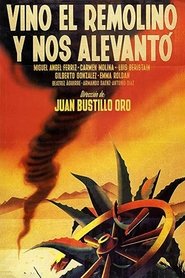
star 6Three generations of a stable, middle-class family in the capitol are scattered to the four winds by blowback from the Mexican Revolution.Comrade Abram
1919
Comrade Abram
1919
star 5One of a series of short Bolshevik films, Comrade Abram focuses on Abram Hersh, a young Jewish pogrom survivor who became a factory worker and organizer in Moscow and eventually rose to leadership in the Red Army. This short film emphasizes Hersh's suffering and heroism as both worker and Jew, and promotes solidarity over anti-semitism.Moscow Skies
1944
Moscow Skies
1944
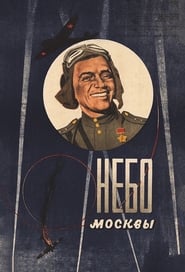
star 6.8Based on the play of the same name by Georgi Mdivani. In September 1941, lieutenant Ilya Streltsov, who graduated from the flight school, was assigned to the fighter aviation regiment guarding the sky of Moscow. He meets in part the nurse Zoya, with whom he grew up in the same yard and with whom he has long been in love. During the first training flight on the "Seagull", lieutenant Streltsov shot down a German plane and received the nickname "Lucky." Streltsov is jealous of the squadron commander to nurse Zoya, believes that he is finding fault with him. For a whole month he is not allowed to fly sorties. In October 1941, lieutenant Streltsov made his first sortie, he shot down one plane and rams the second. For this battle, he is awarded the title Hero of the Soviet Union.Sveaborg
1972
Sveaborg
1972
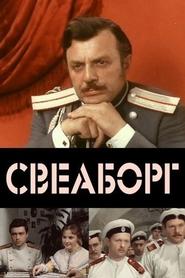
star 4.8The film is based on history of the Russian Military garrison in Sveaborg (Suomenlinna, near Helsinki) in Finland, which was an autonomous part of Russian Empire. In 1906 Russia had about 12 thousand troops stationed in Sveaborg fortress. The riots were provoked by the Socialist - Revolutionaries who spread influence on the minds of Sveaborg garrison. First acts of un-subordination broke on July 17, 1906, when revolutionary sailors were supported by mine-men. Minemen were arrested and disarmed by the infantry regiment. Gunners decided to release their comrades. The following fight ignited a bloody revolt, that was headed by lieutenants A. Yemelyanov and Y. Kohansky, members of the Lenin's Bolshevik party. A general strike began in Helsinki on the next day. The revolt lasted three days and was crushed by the Baltic Fleet naval bombardment. Over 40 men were executed, hundreds were sentenced to prison.