Top Rated History Movies on Tub Tv - Page 277
All Services
Free Services
 Netflix
 Amazon Prime Video
 Apple iTunes
 Apple TV Plus
 Disney Plus
 Google Play Movies
 Paramount Plus
 Hulu
Hulu
 HBO Max
 YouTube
 fuboTV
 Peacock
 Peacock Premium
 Amazon Video
 The Roku Channel
 AMC+
AMC on Demand
AMC+
AMC on Demand
 Kocowa
 Hoopla
 The CW
 Vudu
Vudu
 Starz
Starz
 Showtime
 PBS
PBS
 Pantaflix
 FXNow
FXNow
 Tubi TV
 Kanopy
 Comedy Central
 Crunchyroll
 Microsoft Store
 Redbox
 Sun Nxt
 ABC
ABC
 DIRECTV
 Crackle
 Fandor
 Plex
Plex
Netflix
Amazon Prime Video
Apple iTunes
Apple TV Plus
Disney Plus
Google Play Movies
Paramount Plus
Hulu
HBO Max
YouTube
fuboTV
Peacock
Peacock Premium
Amazon Video
The Roku Channel
AMC+
AMC on Demand
Kocowa
Hoopla
The CW
Vudu
Starz
Showtime
PBS
Pantaflix
FXNow
Tubi TV
Kanopy
Comedy Central
Crunchyroll
Microsoft Store
Redbox
Sun Nxt
ABC
DIRECTV
Crackle
Fandor
Plex

The 47 Masterless Samurai
1959
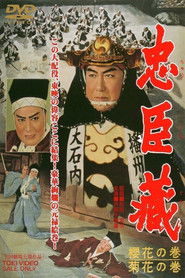
star 7.2While the story of the Ako Clan's vendetta has been told countless times, never before has there been an array of major motion picture stars to bring new life to this timeless tale. Starting with the corrupt practices of Lord Kira and Yanagi-sawa, the Shogun's Secretary, which in essence led to the incident of Lord Asano's attacking Kira in the Pine Corridor of the Shogun's Palace, this is the definitive version. Asano Takumi no kami was a young lord with high scruples, who refused to join in the general corruption and bribery which ran rampant in the capital at that time. By not giving bribes, he angered Kira Kozuke no suke the elder lord in charge of protocol at the Palace. Refusing to teach the younger man, and giving him false instructions was only the beginning. Insults followed, and a man of honor had no choice but to draw his sword in anger. Forty seven masterless samurai are willing to give their lives to avenge their lord.A Magical Substance Flows Into Me
2015
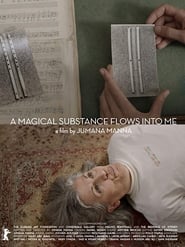
star 6.8Robert Lachmann was a German-Jewish ethnomusicologist. In the 1930s, his radio show "Oriental Music" explored the musical traditions of Palestine and included regular live performances by musicians from different ethnic and religious groups. Inspired by Lachmann’s musicological studies, Palestinian artist Jumana Manna travels through Israel and the Palestinian territories of today with recordings from the programme. What do these songs sound like now when performed by Moroccan, Kurdish, or Yemenite Jews, by Samaritans, members of the urban and rural Palestinian communities, Bedouins and Coptic Christians?For the King and Fatherland
2015
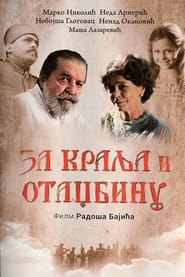
star 4The film is picturing the faith of the old Serbian warrior Milisav Janjic, who fought against the German occupation in the Second World War as a member of the "Ravnogorski pokret". The storyline narrates his memories of the past and the war events in the spring of 1941 interwoven with the contemporary moments, the author features the attack of fascist Germany, the April war and the fall of the Kingdom of Yugoslavia, the misfortune placed upon the Serbian people, loss of freedom, birth of the freedom movement in Serbia and one Serbian soldier, who after 70 years of expatriation in America returns to his homeland.Dastaar
2016
Dastaar
2016
star 6.2An interracial couple faces social tensions in the aftermath of the September 11, 2001 terrorist attacks. The film follows the perspective of Harpreet, a young Sikh-American man, as he cautiously navigates a sudden climate of fear and dangerous assumptions.The Last Company
1930
The Last Company
1930
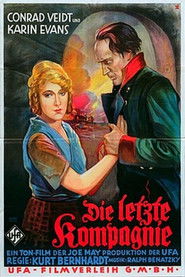
star 6Following the Battle of Jena in 1806 as the French armies commanded by Napoleon overrun Prussia, a small detachment of Prussian troops take up position in a windmill and resolve fight to the last man to hold them off for as long as possible. Meanwhile, the windmill owner's daughter chooses to stay and fight alongside them.The Searching Eye
1964
The Searching Eye
1964
star 6.5The simple actions of a young boy on the beach provide visual metaphors for the normally unseen world. The camera adds a profound dimension to what the boy has seen, giving us a deeper understanding of visual awareness.The Pendle Witch Child
2011
star 8The extraordinary story of the most disturbing witch trial in British history and the key role played in it by one nine-year-old girl. Jennet Device, a beggar-girl from Pendle in Lancashire, was the star witness in the trial in 1612 of her own mother, her brother, her sister and many of her neighbours and, thanks to her chilling testimony, they were all hanged.Operación Palace
2014
Operación Palace
2014
star 6.2Finally, 33 years later, the whole truth behind the attempted coup d'état that shook Spain on the afternoon of February 23, 1981, is revealed by those who lived through those dreadful hours; a deep look behind the heavy curtain which hides the real mastermind, waiting to be unmasked.11 septembre 2001
2011
Hitler's People: A Portrait of the Third Reich
2015
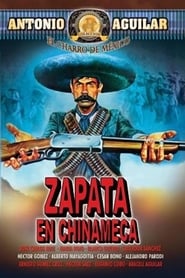
star 8How was Adolf Hitler able to count on the German public even in the face of unspeakable suffering and impending doom? Evocative and previously unseen private archive footage, much of it in colour, shows life in Nazi Germany from 1933 onwards till the end of the Nazi regime in 1945. This documentary is a revealing portrait of the German people, how they lived and perceived the world, under Hitler.Zapata en Chinameca
1987
Zapata en Chinameca
1987
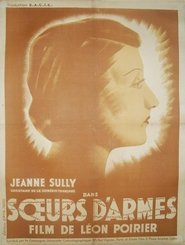
star 5.8Urbino Martínez, on his deathbed, regrets his wrongdoing after betraying Emiliano Zapata.Sisters-in-Arms
1937
Sisters-in-Arms
1937
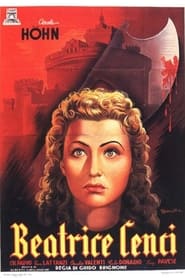
star 4.5During the war from '14-'18, two women travel by foot in the North of France and Belgium to aid an organization to provide information to the EnglishBeatrice Cenci
1941
Beatrice Cenci
1941
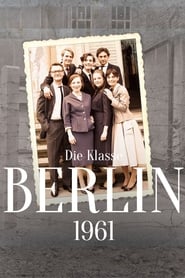
star 5Italian historical drama portraying the story of the sixteenth century Italian noblewoman Beatrice Cenci.Die Klasse - Berlin '61
2015
star 7.2In the motley final-year class 13e at Kepler School in Neukölln, children who have moved to the western part of the city legally as well as border crossers who live in East Berlin but commute to the West every day come together for lessons every day. After the school-leavers had completed their written exams in July 1961, they faced their oral exams after the summer vacation in September. But when the Berlin Wall was built in August, Berlin was divided and torn apart from one day to the next - including class 13e. The students from the eastern part of the city quickly have to make a difficult decision: should they attempt to cross the border or throw their dreams of the future to the wind?A Short History of Nuclear Folly
2014
star 6.8This sobering roundup of nuclear mishaps highlights lost bombs, reckless acts and dangerous misuses of nuclear materials following World War II.The Story of Dr. Sun Yat Sen
1986
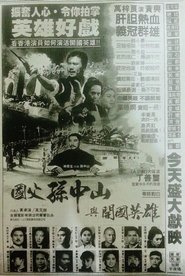
star 4.5As befits the telling of the story of perhaps the most universally beloved hero of modern-day Chinese history Dr. Sun Yat-Sen (1866-1925), this lavishly produced biographical film uses techniques culled from Chinese Opera to dramatize the great man's political history. Concentrating on the period following his rise to political prominence in 1894 until his death in 1925, the movie is couched in terms of heroes who look heroic and villains who look villainous. Huge numbers of extras and vast battle scenes dot this production, and well-known Hong Kong and Taiwan-based movie stars appear in many cameos.Guerrilla Brigade
1939
Guerrilla Brigade
1939
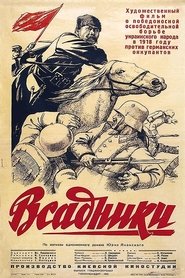
star 5Episodic story of the resistance to the German invasion of Ukraine in 1918 during World War 1, and made as an example of the guerrilla warfare and fierce spirit in which Ukrainian peasants were again resisting Teuton onslaughts in 1939. Highlights a small band of guerrillas and their battles using scythes, shotguns and, often, just clubs against the Kaiser's army in the Ukrainian forests.Eternamente Pagu
1987
Eternamente Pagu
1987
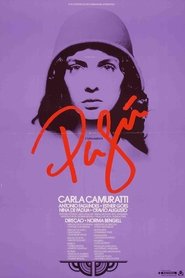
star 6.2Eternamente Pagu is a biographical film about Patrícia Galvão, best known as Pagu, a Brazilian political, literary and artistic activist. An important figure of the Brazilian Modernism, Pagu was also a militant for the Brazilian Communist Party after she married writer Oswald de Andrade. She broke up with Andrade and, as a journalist was arrested by the Dictatorship of Getúlio Vargas. After she left prison, she abandoned Communism in favor of Trotskyist Socialism, married Geraldo Ferraz, and started a career as theatre director.Love and Sex under Nazi Occupation
2011
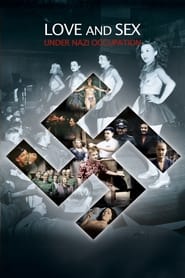
star 6.8Love & Sex under Nazi Occupation questions the burning mystery of intimate heterosexual and homosexual relations in times of war... and shows how being close to death reinforces the yearning for passion, for pleasure, for transgression, for desire as a last burst of freedom, as an ultimate call to life. Nearly two hundred thousands children are thought to be born of the union of French women with German soldiers. Women weren't the Germans' only conquests; indeed, occupied Paris swarms with all kinds of homosexuals—from Genet to Cocteau—who treated with the occupier. The fate of those women who were shaved at the end of the war for fraternizing with Germans is the punishment of a France that lied down and slept with the enemy.Those Years
1974
Those Years
1974
star 5.5President Juárez fights against the conservatives, who have ordered an emperor to be brought from France to govern Mexico