Top Rated History Movies on Tub Tv - Page 312
All Services
Free Services
 Netflix
 Amazon Prime Video
 Apple iTunes
 Apple TV Plus
 Disney Plus
 Google Play Movies
 Paramount Plus
 Hulu
Hulu
 HBO Max
 YouTube
 fuboTV
 Peacock
 Peacock Premium
 Amazon Video
 The Roku Channel
 AMC+
AMC on Demand
AMC+
AMC on Demand
 Kocowa
 Hoopla
 The CW
 Vudu
Vudu
 Starz
Starz
 Showtime
 PBS
PBS
 Pantaflix
 FXNow
FXNow
 Tubi TV
 Kanopy
 Comedy Central
 Crunchyroll
 Microsoft Store
 Redbox
 Sun Nxt
 ABC
ABC
 DIRECTV
 Crackle
 Fandor
 Plex
Plex
Netflix
Amazon Prime Video
Apple iTunes
Apple TV Plus
Disney Plus
Google Play Movies
Paramount Plus
Hulu
HBO Max
YouTube
fuboTV
Peacock
Peacock Premium
Amazon Video
The Roku Channel
AMC+
AMC on Demand
Kocowa
Hoopla
The CW
Vudu
Starz
Showtime
PBS
Pantaflix
FXNow
Tubi TV
Kanopy
Comedy Central
Crunchyroll
Microsoft Store
Redbox
Sun Nxt
ABC
DIRECTV
Crackle
Fandor
Plex

Owl Mountain
2018
Owl Mountain
2018
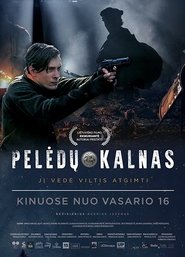
star 8Radio Free Europe, BBC, and Voice of America can only rarely get through the Iron Curtain and Soviet mufflers to Lithuania, a country torn by a war between the local resistance movement and the Soviet regime that is forced onto Lithuanian people by bayonets of the Russian army. Everybody who tries to resist the Soviet rule is either terrorized or executed or exiled to Siberia. He is one of the local high-school students who witness the local armed resistance to the Soviet occupation and ultimately decide to join it by taking a gun into their hands. He collects documents and all possible kinds of evidence that prove daunting crimes of the Kremlin. He soon becomes a legend among his peers. To girls, he is John Wayne the Hollywood Icon. Guys see him as an insurmountable obstacle and an invincible rival in matters of love.Julius Caesar Revealed
2018
star 8Mary Beard is on a mission to uncover the real Julius Caesar, and to challenge public perception, exploring Caesar's surprising legacy.Benito Mussolini
1962
The Timok Rebellion
1983
The Timok Rebellion
1983
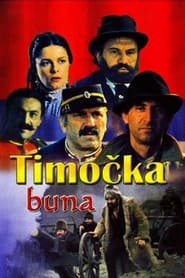
star 5.7In 1883 Milan Obrenovic, arrogant and despotic king of Serbia, felt threatened by the militia segments of his army. In order to remove that threat he disbanded militia. However, people of Timok Valley decide not to surrender their arms to the regular troops. The movie was made for the 100th anniversary of the event.El Che
1997
Do It
2000
Do It
2000
star 6.3Odyssey of the fortune-teller Daniele von Arb who, aged sixteen, joined the revolutionary underground and made the headlines as a top Swiss terrorist.The Voice That Thrilled the World
1943
star 5.3This short traces the history of sound in the movies, beginning with French scientist Leon Scott's experiments in 1857. Featured are snippets from early sound pictures.Le Harem du Pharaon-Soleil
2017
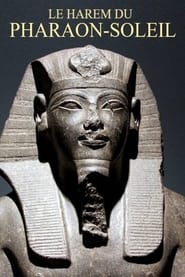
star 7.7January 2011: a team from the University of Basel makes two spectacular discoveries. The first was a previously unknown tomb, which was given the number KV64 and contained two mummies. It had originally been created at the time of Amenhotep III for a princess of the 18th dynasty and was reused a few centuries later for the burial of a noblewoman of the 22nd dynasty. Right next to it is the already known burial site KV40, where the Basel researchers have now carried out excavations for the first time. They discovered dozens of mummies - an unusual find in the Valley of the Kings, where most tombs were built for just one pharaoh. Initially, the archaeologists estimated the number of dead at 30, but after months of collaboration with evolutionary scientist Frank Rühli from the University of Zurich, they came to the conclusion that there must actually be more than 90. Who were these women?Chinese Chariots Revealed
2017
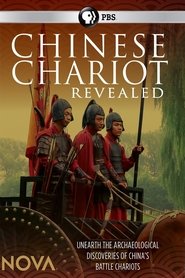
star 8For over 1,000 years, chariots were indispensable weapons in ancient China. The art of chariot driving and special warfare were used there for longer than anywhere else. Their contribution to the unification of the Chinese empire is undisputed. New archaeological discoveries reveal how the Chinese developed and perfected this sophisticated weapon. In the Bronze Age, over 3,000 years ago, chariots and other war equipment arrived in China from Central Asia via the Hexi Corridor. In addition to trade and new alliances, their spread was mainly due to the Zhou dynasty's incessant military campaigns against rebellious vassal states and the constant attacks by the mobile cavalries of its northern neighbors. Manned with spearmen or archers, the chariots were a decisive weapon in battle.Gramsci 44
2016
Gramsci 44
2016
star 5Between 1926 and 1927, the Italian intellectual and Communist political figure Antonio Gramsci spent 44 days imprisoned on the island of Ustica, off the northern coast of Sicily. Together with his fellow prisoners, he founded a school. This unique institution was open to all, welcoming people of all ages and social backgrounds, even the illiterate. Ustica still remembers this revolutionary school. Ustica, remote and neglected, still waits patiently at the harbor, hoping that the boat from the mainland will come.Chaplin/Keaton: Duel of Legends
2016
star 9Charlie Chaplin and Buster Keaton were two incredibly talented artists who enjoyed enormous worldwide success at a very young age. The two giants of the golden age of silent cinema were perceived to be constantly competing with each other for the crown of the king of laughter.Dasdhunga
2010
Dasdhunga
2010
star 5.7Based on true events of the mysterious death of CPN-UML leader Madan Bhandari in Dashdhunga, Nepal.I Betrayed Hitler
2016
I Betrayed Hitler
2016
star 6.7During the worst days of World War II, the British government asks the mathematician Alan Turing to unravel the mysteries of the German Enigma encryption machine, an impossible task to accomplish without the invaluable information that Hans-Thilo Schmidt, a disenchanted but greedy German citizen, had been handing over to the French secret services since 1931.Hakanlar Çarpışıyor
1977
Hakanlar Çarpışıyor
1977
star 7.5Tigin, born under a blood-stained omen in the Turkistan village of Yesi, grows into a chieftain determined to unite the Turkic tribes and build a mighty state, while Olcayto, rescued as the lone survivor of a brutal raid, dedicates his life to avenging his dead family.Bakumatsu no Spasibo
1997
Bakumatsu no Spasibo
1997
star 5Based on the real life events around Yevfimy Vasilyevich Putyatin, a Russian admiral noted for his diplomatic missions to Japan and China, and the signing of the Treaty of Shimoda in 1855.Nostradamus IV
1944
Nostradamus IV
1944
star 4.7This Carey Wilson Miniature takes a further look at prophecies by 16th century seer Nostradamus.The Pilgrims
2015
The Pilgrims
2015
star 7.7Arguably one of the most fateful and resonant events of the last half millennium, the Pilgrims journey west across the Atlantic in the early 17th century is a seminal, if often misunderstood episode of American and world history. The Pilgrims explores the forces, circumstances, personalities and events that converged to exile the English group in Holland and eventually propel their crossing to the New World; a story universally familiar in broad outline, but almost entirely unfamiliar to a general audience in its rich and compelling historical actuality. Includes the real history of the "first thanksgiving".Sree Hari Hara Sudhan Swami Ayyappan
2017
star 9Sree Hari Hara Sudhan Swami Ayyappan Movie is Fully 3D Animated Devotional Story of Lord Ayyappan.Tarzan's testicles
2017
Tarzan's testicles
2017
star 7A research center in Sukhumi, the capital of today’s Abkhazia. Legend has it that it was built at the end of the 1920s to create a hybrid between man and monkey. The hypothetical creature never saw the light of day, but people and primates, like sad relics of the past, live together in the derelict wings of the medical institute to this very day. [KVIFF]