Top Rated History Movies on Tub Tv - Page 316
All Services
Free Services
 Netflix
 Amazon Prime Video
 Apple iTunes
 Apple TV Plus
 Disney Plus
 Google Play Movies
 Paramount Plus
 Hulu
Hulu
 HBO Max
 YouTube
 fuboTV
 Peacock
 Peacock Premium
 Amazon Video
 The Roku Channel
 AMC+
AMC on Demand
AMC+
AMC on Demand
 Kocowa
 Hoopla
 The CW
 Vudu
Vudu
 Starz
Starz
 Showtime
 PBS
PBS
 Pantaflix
 FXNow
FXNow
 Tubi TV
 Kanopy
 Comedy Central
 Crunchyroll
 Microsoft Store
 Redbox
 Sun Nxt
 ABC
ABC
 DIRECTV
 Crackle
 Fandor
 Plex
Plex
Netflix
Amazon Prime Video
Apple iTunes
Apple TV Plus
Disney Plus
Google Play Movies
Paramount Plus
Hulu
HBO Max
YouTube
fuboTV
Peacock
Peacock Premium
Amazon Video
The Roku Channel
AMC+
AMC on Demand
Kocowa
Hoopla
The CW
Vudu
Starz
Showtime
PBS
Pantaflix
FXNow
Tubi TV
Kanopy
Comedy Central
Crunchyroll
Microsoft Store
Redbox
Sun Nxt
ABC
DIRECTV
Crackle
Fandor
Plex

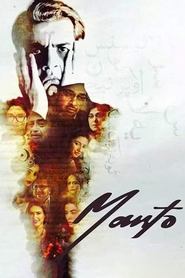
Manto
2015
Manto
2015
star 9.3The controversial and troubled Indo-Pakistani writer Saadat Hasan Manto finds his artistic choices challenged by censors.Luka
2013
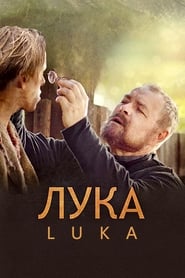
Luka
2013
star 5.7Year 1917. Young doctor Valentin Voyno-Yasenetskyj with his wife and four children moved to Tashkent, beset by civil war and intervention. Voyno-Yasenetskyj became head physician in the city hospital. He not only saves hundreds of patients every day, operating under the bullets of the permanent street battles, fighting for his life and life of his beloved wife, dying of TB. In the midst of persecution, he as alone with four children on the outskirts of the former empire, so he decides to become a priest. And since then, he never altered neither scalpel, nor cross, he goes with them through all their hard exiles and arduous life, treating both: body and soul.13 Courts Mortels
2006
13 Courts Mortels
2006
star 6.2In this thematic series of 13 short films on "Death," the filming constraint was unity: 1 set, 1 actor, 1 day of shooting. Each film addresses the last minutes of their main character's life in a variety of genres. From thrills to dark humor, discover 13 talented young directors.The Story of Liubao
1957
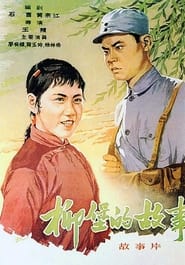
The Story of Liubao
1957
star 5Lin Jin, a solider of the New Fourth Army, stayed in Liubao village with his Army. During Lin Jin's stay, he fell in love with a local girl, Ermeizi. However, he had to leave Liubao with his troops for several years. Lin Jin and Ermeizi lost contact during the war after Lin Jin had left Liubao. Years later, Jin returns to Liubao where he finds Ermeizi again.The Moscow Trials
2014
The Moscow Trials
2014
star 5.5In March 2013, a courtroom was set up to provide a stage for a show trial that pitted the different sides of the cultural war in Russia. Yet the people on stage were no professional thespians but real-life actors: artists, politicians, church leaders, real lawyers, a real judge and a real jury. Director Milo Rau achieved a unique and oppressive insight into Russia under Putins authoritarian reign.Tyrant Yeonsan
1962
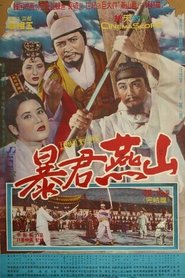
Tyrant Yeonsan
1962
star 6Prince Yeonsan-gun turns into a tyrant out of grief for his mother's death. He orders beheadings of all the officials who displease him or who advised the previous king to depose the queen. He becomes crueler by the day. But in 10th year of his reign, he is kicked out of the throne and dies a tragic death.Canada Vignettes: Sodbusters
1978
star 4.3A Canadian prairie farm family has a tough beginning on their new farm.The Great Train Robbery
2012
star 6.7It was one of the greatest heists in British history. £3 million – worth over £40 million today – stolen from a moving train by a gang of thieves who almost got away with it.The Man who Discovered Egypt
2012
star 6.7Ancient Egypt was vandalised by tomb raiders and treasure hunters until one Victorian adventurer took them on. Most of us have never heard of Flinders Petrie, but this maverick genius underook a scientific survey of the pyramids, discovered the oldest portraits in the world, unearthed Egypt's prehistoric roots - and in the process invented modern field archaeology, giving meaning to a whole civilisation.1945
2022
1945
2022
star 5.3Set in Burma in the year 1945, Netaji Subhash Chandra Bose plans to launch the INA to fight the British. This is also the time when Adi comes back to Burma to take care of his family business. Upon his arrival, he gets engaged to a British Tasildar’s daughter. Just as he is set to get married, the atrocities of the British keep growing and Adi is forced to fight the British.The Sun Street Boys
2007
The Sun Street Boys
2007
star 6Some of the most symbolic moments of the 1956 Revolution in Hungary were the tooth-and-nail battles fought by the so-called 'Pest Lads' who dared to defy odds by taking on the panzers of one of the world's superpowers. The story begins on October 23rd, 1956 and ends on November 4th of the same year. Juli is Totya's girlfriend but also loves Gábor. Their love triangle will have to endure the trials and tribulations of these stirring times. A group of boys living in the outskirts of the capital are playing football in abandoned lot when Juli, a ticket inspector, brings news of protests breaking out in the city. Only Gábor accompanies her into town and together they become part of this historical event. At dawn, when the boys too come under fire from Soviet forces, they decide to join in the fight.The Secret World of Lewis Carroll
2015
star 6It's a timeless classic of children's literature and the third most-quoted book in English after the Bible and Shakespeare. But what lies behind the extraordinary appeal of Alice's Adventures in Wonderland to generations of adults and children alike? To mark the 150th anniversary of its publication, this film explores the life and imagination of its author, the Reverend Charles Dodgson, better known as Lewis Carroll. Journalist Martha Kearney delves into the biographies of both Carroll himself and of the young girl, Alice Liddell, who inspired his most famous creation. She discusses the book with a range of experts, biographers and distinguished cultural figures - from actor Richard E Grant to children's author Philip Pullman - and explores with them the mystery of how a retiring, buttoned-up and meticulous mathematics don, who spent almost his entire life within the cloistered confines of Christ Church Oxford, was able to capture the world of childhood in such a captivating way.Eight Women Fighters
1987
Eight Women Fighters
1987
star 5Women soldiers of the Volunteer Army battle the Japanese in Northeast China in 1936.Guerra do Paraguay
2016
Guerra do Paraguay
2016
star 7A soldier coming home after the Paraguay War meets a theater group. A shock between war and art.Talking to the Air: The Horses of the Last Forbidden Kingdom
2016
star 8.7The world’s most magnificent horsemen face an unsure future in one of the planet’s last great equine cultures. The Tibetan Buddhist region of Mustang in the High Himalaya is the Last Forbidden Kingdom and their unique heritage and remarkable spiritual bond with the horse is under threat. In a land where a man’s wealth can still be measured in horses, death defying races are the colorful back-drop for this story of the ascent of civilization in the high Himalaya. With lush cinematography, and insightful intervieww, the film also recounts the little known story of the CIA’s covert operations in Mustang, and features rare archival footage of the Dalai Lama’s flight on horseback over the Himalaya. The scholarly and perceptive voices of Dr. Sienna Craig - author of "Horses Like Lightning" and Mikel Dunham, author of "Buddha's Warriors" turn this lens to issues of globalization, fragile border politics and the precarious future for Mustang’s distinctive equine culture.Trotsky
1967
Trotsky
1967
star 5Story of the life of an extraordinary man, who with Lenin, was the symbol of the Revolution of 1917.The Houses Are Full of Smoke
1987
star 5.7A powerful three-part documentary studying the US involvement in Guatemala, El Salvador and Nicaragua. The differing factions - Sandinista leaders, Guatemalan campesinos, CIA operatives, Contras and US government apologists - are interviewed and, in the absence of a controlling narration, the audience is encouraged to draw its own conclusions.Solo, Solitude
2017
Solo, Solitude
2017
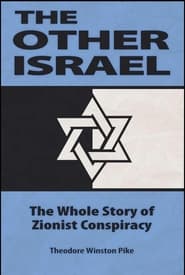
star 9The Suharto regime has been holding power in Indonesia for over 30 years, shutting down democracy time and time again. Highly critical of the regime and unafraid to speak his mind, Wiji Thukul is a poet whose words are often yelled proudly by the crowd during political protests. When riots break out in Jakarta in 1996, he and a few other activists are accused to be responsible. Forced to flee, Wiji escapes to Pontianak in Borneo where he hides for eight months, sometimes living with complete strangers. There, he has to change his identity several times, but continues to write poetry and short stories under a pen name. In the meantime, in Solo, central Java, his wife, Sipon, lives with their two children under constant surveillance. In May 1998, Wiji Thukul is declared missing, a month before Suharto is deposed by his own people.The Other Israel
1987
The Other Israel
1987
star 9.7Compiled after 15 months filming and editing, this fast-moving, professional video documentary will give you a unique education on the inner teachings of Judaism and the Talmud. Through the television camera "The Other Israel" takes you where few Christian scholars have gone before.