Top Rated War Movies on Tub Tv - Page 439
All Services
Free Services
 Netflix
 Amazon Prime Video
 Apple iTunes
 Apple TV Plus
 Disney Plus
 Google Play Movies
 Paramount Plus
 Hulu
Hulu
 HBO Max
 YouTube
 fuboTV
 Peacock
 Peacock Premium
 Amazon Video
 The Roku Channel
 AMC+
AMC on Demand
AMC+
AMC on Demand
 Kocowa
 Hoopla
 The CW
 Vudu
Vudu
 Starz
Starz
 Showtime
 PBS
PBS
 Pantaflix
 FXNow
FXNow
 Tubi TV
 Kanopy
 Comedy Central
 Crunchyroll
 Microsoft Store
 Redbox
 Sun Nxt
 ABC
ABC
 DIRECTV
 Crackle
 Fandor
 Plex
Plex
Netflix
Amazon Prime Video
Apple iTunes
Apple TV Plus
Disney Plus
Google Play Movies
Paramount Plus
Hulu
HBO Max
YouTube
fuboTV
Peacock
Peacock Premium
Amazon Video
The Roku Channel
AMC+
AMC on Demand
Kocowa
Hoopla
The CW
Vudu
Starz
Showtime
PBS
Pantaflix
FXNow
Tubi TV
Kanopy
Comedy Central
Crunchyroll
Microsoft Store
Redbox
Sun Nxt
ABC
DIRECTV
Crackle
Fandor
Plex

Aad en Arie Vocaat Advocatenbureau: Civil War
2023
While Aad and Arie are on vacation, someone breaks in. This takes a surprising turn, for everyone involved...From D-Day to Germany
1944
Behind-the-lines documentary filmed by World War II correspondent Jack Lieb. Most of the footage shows areas already cleared by Allied forces as they made their way to Germany.Axe. 1943
2021
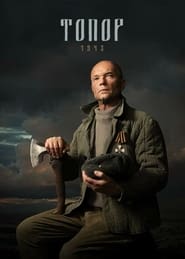
Axe. 1943
2021
1943. On the eve of the Red Army offensive, Captain Belov's group, which includes Ivan Rodin, accidentally discovers a disguised tank division near the village of Anino. The scouts understand that only they know about the ambush arranged by the Germans. The wounded Belov orders Ivan to reach the Soviet command and warn them of the danger. He reports to the headquarters about the tanks he saw and even reproduces the tactical number of the division, but the front command does not believe him. Suspecting Ivan of misinformation and working for the Germans, the military sends him under arrest. Colonel Alyoshin tries to save his friend: thanks to his perseverance, the command sends another group to Anino — Ivan becomes the guide, and Odintsovo leads the detachment.Axe. 1944
2022
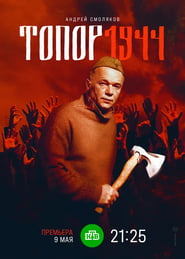
Axe. 1944
2022
Odintsovo's reconnaissance group, which includes Ivan Rodin, is making its way through the deep rear with a special task — to ferry a young man named Savichev across the front line. Who he is, from where and how he got to the Odintsovo partisans, are not reported.Axe. 1945
2023
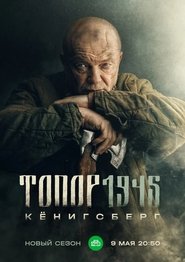
Axe. 1945
2023
Winter of 1945. The Soviet Army is conducting a successful offensive in East Prussia. A new addition is coming to the reconnaissance company — young guys without combat experience. Everyone understands perfectly well that there is very little left until the end of the war, and the command decides to gather them into one department and leave them in the rear, in a small estate where a German family lives.Grain
2023
Grain
2023
While staying with her daughter in a Ukrainian bomb shelter at the beginning of the Russian invasion, Maya is looking for an opportunity for them to go somewhere safe.The Blood of Hero
2011
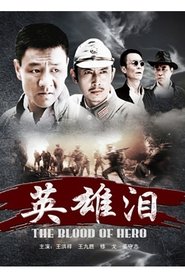
The Blood of Hero
2011
In the spring of 1937, a small group of Japanese troops was stationed in Fuwang Town in the Japanese-occupied area of Central China. On the surface, they are controlling the Chinese civilians, but in fact strictly guarding the safety of a secret underground arms depot, warehouse 103, waiting for the arms support response from their larger army. After the Communist Army learned about this, they sent an intelligence agent to sneak into the Japanese army in Fuwang Town to explore the information of Warehouse 103.Nook of War
2003
Nook of War
2003
During the Second Sino-Japanese War, Shanwa's family of three lived peacefully in the Taihang Mountains. One day, Japanese soldiers built a artillery tower at the mountain pass, which worries Shanwa's family, their peaceful life was soon disrupted. The Japanese soldiers spotted Shanwa hunting and shot him. The bullet pierced one of his ears and almost killed him. This made the innocent Shanwa feel indignant and thus his need to vent out his anger. Ignoring his wife's dissuasion, he came to the opposite side of the blockhouse at dawn, shouted curses and fired shots in protest. This angered the Japanese soldiers in the artillery tower. They chased him into the mountains several times and finally found his home. The Japanese soldiers brutally killed his wife and child, but he managed to escape with his life. From then on, Shanwa with the help of his father launched a desperate battle against the Japanese soldiers.Na Terra do Sol
2005
Na Terra do Sol
2005
Inspired in "Os Sertões" by Euclides da Cunha, this film tells the saga of the last survivors of the Canudos war.Klooga Death Camp
1944
Klooga Death Camp
1944
The Valley Train
1989
The Valley Train
1989
An adolescent boy in a kibbutz of the 1960s. A relationship between the boy and a young kibbutznik who serves in an elite unit. The boy dreams of resuming the train that once passed through the valley. In the background, Israeli wars disrupt life.Ikkis
2025
Ikkis
2025
Set against the backdrop of the 1971 war, follows the life of second Lieutenant Arun Khetrapal.Hürriyet Şarkısı
1951
Hürriyet Şarkısı
1951
The film tells the story of a soldier's struggle for freedom against the sultan. Hasan graduates first in his class from the Military Academy. When he returns home, he learns that his father will be executed for being a supporter of freedom. He takes revenge on the governor who ordered the execution. However, he is wounded while fleeing from the soldiers. Gypsies passing by hide Hasan and help him. Hasan and his friends will attempt to unite the scattered forces in the mountains and establish a regular army for the cause of freedom.Kendini Kurtaran Şehir
1951
The film tells the story of the struggle to liberate Maraş from French occupation. Maraş is occupied by the French. The occupying forces issue a proclamation demanding that the people obey the French. The people refuse to obey the enemy and begin to organize among themselves. Two enemy soldiers attack a girl named Zeynep. Ali, who is at the head of the organization, rescues Zeynep. After this incident, the people begin to clash with the occupying soldiers. Realizing that the people have risen up, the French prepare to attack key points in the city. However, Ali and his friends, who are aware of these preparations, will devise a plan to liberate Maraş.The Son
2021
The Son
2021
Using unpublished photos taken by Italian war photographer Enrico Sarsini, and the reconstruction of key events, this film examines the battle for a strategically-located church that was defended by Azerbaijani teenager Natig Gasimov. After his surrender and interrogation by Armenian forces, he was never heard of again. This film finds out what happened to Natig and who may be responsible. Filmed over a period of three years, filmmaker Karan Singh spoke to witnesses in Armenia, Azerbaijan, Italy and Russia in his search for the truth.Kıbrıs Şehitleri
1959
Kıbrıs Şehitleri
1959
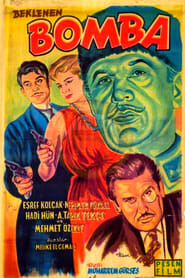
Beklenen Bomba
1959
Beklenen Bomba
1959
In Stock
1988
In Stock
1988
Film-monologue of a young guy, demobilized military service, establishing life "in civilian life". A person recalls how well he served in the army, talks about the present day, about his family, about his son, about working in a factory, about drinking, fishing, friends and acquaintances.Katusha
2008
Katusha
2008
The year is 1943. Russian Counter-Intelligence intercepts a radio transmission which indicates the Germans' intention to destroy the production line of a new type of weaponry in Ural region. Commander of the Special Unit, Captain Greenhoff, arrives in the Ural region, but he is not the person indicated by his ID. Not many people know the know the technical name of this weaponry, but it is known all around the world as the rocket launcher: KATUSHA.Liza, Go On
2023
Liza, Go On
2023
The main character of the film is a journalist — Liza, a woman in her mid-forties, who, 25 years ago, worked as a war reporter during the Georgian-Abkhazian military conflict (1992-1993), which Russia provoked for the purpose of occupying Abkhazia.