New Documentary Movies - Page 108
All Services
Free Services
 Netflix
 Amazon Prime Video
 Apple iTunes
 Apple TV Plus
 Disney Plus
 Google Play Movies
 Paramount Plus
 Hulu
Hulu
 HBO Max
 YouTube
 fuboTV
 Peacock
 Peacock Premium
 Amazon Video
 The Roku Channel
 AMC+
AMC on Demand
AMC+
AMC on Demand
 Kocowa
 Hoopla
 The CW
 Vudu
Vudu
 Starz
Starz
 Showtime
 PBS
PBS
 Pantaflix
 FXNow
FXNow
 Tubi TV
 Kanopy
 Comedy Central
 Crunchyroll
 Microsoft Store
 Redbox
 Sun Nxt
 ABC
ABC
 DIRECTV
 Crackle
 Fandor
 Plex
Plex
Netflix
Amazon Prime Video
Apple iTunes
Apple TV Plus
Disney Plus
Google Play Movies
Paramount Plus
Hulu
HBO Max
YouTube
fuboTV
Peacock
Peacock Premium
Amazon Video
The Roku Channel
AMC+
AMC on Demand
Kocowa
Hoopla
The CW
Vudu
Starz
Showtime
PBS
Pantaflix
FXNow
Tubi TV
Kanopy
Comedy Central
Crunchyroll
Microsoft Store
Redbox
Sun Nxt
ABC
DIRECTV
Crackle
Fandor
Plex

I'm Recording
2025
I'm Recording
2025
The film-poem is a kaleidoscope of home video footage and reflections of the narrator-heroine. The unrealistically real narration and family VHS footage accompanied by oneiric electronic music induce a unique cinematic trance.A Good Heart
2025
A Good Heart
2025
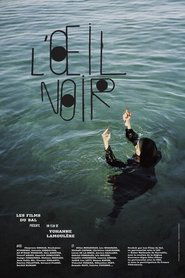
An animated short documentary about a grandmother, who advises her granddaughter on how to go through life.L'Œil noir
2025
Monstruo Obscura
2025
Monstruo Obscura
2025
Seoul, 1996. Wastewater from developed film reels is dumped into the sewers. From this toxic discharge, a monster awakens, carrying the memories of countless movies imprinted on the film reels. Burdened by a vanished past, the monster wanders the city.Your Tomorrow Will Be My Song
2025
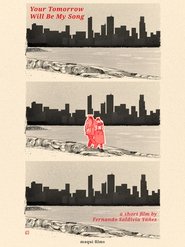
In this heartfelt re-enactment, Suni and Alondra discuss a return to their home in the Andes and what their future wedding could look like. Together, they contemplate blending their new experiences in the U.S., contemporary beliefs, and traditional ceremonial practices.Make No Mistake: These Are the Glory Days
2025
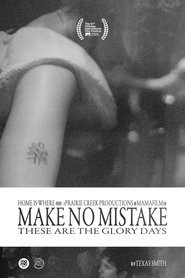
While on tour for their sophomore album, emo band HOME IS WHERE pulls up to venues across the country and provides moments of community, celebration, and freedom for their trans-forward audience as well as themselves. Energetic performances are the bridge between moments of vulnerability for the two trans women who lead the band and the fans lining up to see them.Blue Bird
2025
Blue Bird
2025
"Blue Bird" is a letter to the director’s ancestors and a quest to understand the anxiety consuming his body, exploring how memories and the body intertwine.Sacred Wisdom Sacred Earth
2025
Filmed over three years, “Sacred Wisdom Sacred Earth” documents the interconnected stories of the Indigenous people of the Great Lakes, beginning with the Ho-Chunk Nation, and expanding outward to a global call for unity and environmental healing.O Pai e o Pajé
2025
O Pai e o Pajé
2025
Awake Before Your Gaze
2025
Two mixed-race children of the US military in Taiwan, one speaking Hakka, the other Taiwanese. In the ruins of a former military dormitory, they speak slowly, uncovering a history their faces and languages could never fully inhabit, their memories moving like ghosts along the edges of history.PAX VOBIS
2025
PAX VOBIS
2025
Bokeh Baraneh
2025
Bokeh Baraneh
2025
Drought and water scarcity have become part of Iranian identity. This poetic documentary explores a ritual to seek the fading rain, where a grandmother sends her grandson to revive the tradition with a doll called Bokeh Baraneh, in the hope that the new generation will better understand the importance of water and show greater respect for the environment.No Packers, No Life
2025
No Packers, No Life
2025
Suh, whose favorite Packer will always be Mason Crosby; Omi and Ayaka, whose infant daughter already sports a green and gold onesie, and Ryuta aka “fatdragon08” who briefly lived in Milwaukee in 1990, studying English, where he was teased for wearing a San Fancisco 49ers jacket, and subsequently converted to the Pack Life. Benzine’s film lets us spend quality time with these super fans, and then follows them as they make plans to cross the sea to see their beloved Packers in-person at Lambeau! As director Benzine says, “No Packers, No Life is a story about a sports team and their fans, but more than that it illustrates how people from all over the world can come together and unite over a common passion. Also, the Japanese fans arrive in Green Bay and get to ride the Zippin Pippin and party a lot. It’s a very good time.”Letters to My Friend Yohei Yamakado From His Homeland
2025
Yohei Yamakado has not returned to his native Japan for eight years; his friend Olivier Cheval therefore embarks on an exploration of the land of the Rising Sun, evoking his friend’s memories, almost in a re-enactement of his friend’s life by proxy. Cheval travels, moving from Tokyo to Kyoto, from Kobe to Lake Towada, and in the meantime he juggles, in an equally exploratory way, between childhood and memory, between exile and friendship, making the invisible tangible.Super Paradise
2025
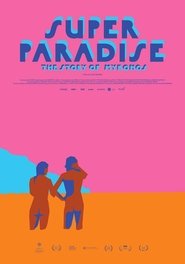
Super Paradise
2025
In the 1970s, a small Greek island emerges as a symbol of hope, freedom, and self-expression. Mykonos was "paradise on earth," and for some, it still is.Circusboy
2025
Circusboy
2025
Santino, a circus kid constantly on the move, listens to his great-grandfather's stories as his own life is just beginning.Letters from Wolf Street
2025
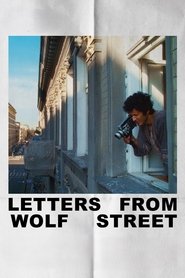
star 10A street in downtown Warsaw transforms into a kaleidoscopic portrait of Polish society. Behind the viewfinder is an Indian immigrant, who seeks to overcome the boundaries between himself and an anxiety-ridden country.Ai Weiwei's Turandot
2025
Ai Weiwei's Turandot
2025
There's a first time for everything, and thus Chinese multi-disciplinary artist Ai Weiwei set out to make his debut as an opera director, with an entire film crew following the meticulous preparations of this endeavour. Ai Weiwei's Turandot provides not only a rich insight into the creation process, but also offers a glimpse into the heart and brain of China's most famous artistic dissident.