New Documentary Movies - Page 74
All Services
Free Services
 Netflix
 Amazon Prime Video
 Apple iTunes
 Apple TV Plus
 Disney Plus
 Google Play Movies
 Paramount Plus
 Hulu
Hulu
 HBO Max
 YouTube
 fuboTV
 Peacock
 Peacock Premium
 Amazon Video
 The Roku Channel
 AMC+
AMC on Demand
AMC+
AMC on Demand
 Kocowa
 Hoopla
 The CW
 Vudu
Vudu
 Starz
Starz
 Showtime
 PBS
PBS
 Pantaflix
 FXNow
FXNow
 Tubi TV
 Kanopy
 Comedy Central
 Crunchyroll
 Microsoft Store
 Redbox
 Sun Nxt
 ABC
ABC
 DIRECTV
 Crackle
 Fandor
 Plex
Plex
Netflix
Amazon Prime Video
Apple iTunes
Apple TV Plus
Disney Plus
Google Play Movies
Paramount Plus
Hulu
HBO Max
YouTube
fuboTV
Peacock
Peacock Premium
Amazon Video
The Roku Channel
AMC+
AMC on Demand
Kocowa
Hoopla
The CW
Vudu
Starz
Showtime
PBS
Pantaflix
FXNow
Tubi TV
Kanopy
Comedy Central
Crunchyroll
Microsoft Store
Redbox
Sun Nxt
ABC
DIRECTV
Crackle
Fandor
Plex

Kenny Dalglish
2025
Kenny Dalglish
2025
star 5An in-depth look at the iconic Scottish soccer player who led Liverpool Football Club to a slew of victories as both player and manager.Holler for Service
2025
Holler for Service
2025
In a small Southern town in the United States, a sharp-witted woman runs the local hardware store — and shakes up tradition, one corn bag at a time.In The Hive
2025
In The Hive
2025
At the heart of London, Ontario, lies Xuux Artist Venue—a creative hive buzzing with music, poetry, performance, and collaboration. In The Hive is a documentary that immerses viewers in the world of this community-driven studio, where artists of all disciplines find refuge, inspiration, and belonging.Laguna
2025
Laguna
2025
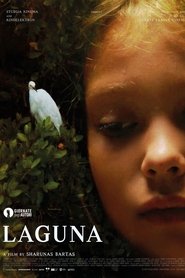
On the Mexican Pacific coast, the land Ina Marija adopted before dying too young, her father and younger sister Una embark on a journey in her footsteps. There, amidst the lush nature of the mangroves—in a lagoon ravaged by hurricanes and constantly reborn—they begin the process of mourning. As he films this journey, Sharunas Bartas lays bare his emotions and, in an act of transmission, seeks a reconstruction nourished by the natural cycles of life and nature.1980 Sabuk
2025
1980 Sabuk
2025
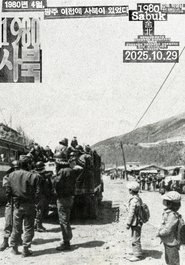
In April 1980, a massive "disturbance" erupted in Sabuk, a town in Jeongseon County, Gangwon Province. Over 3,000 miners, pushed to the brink by relentless surveillance and exploitation, seized control of the area and clashed with authorities. A last-minute deal was struck, narrowly averting the deployment of martial law forces and a potential bloodbath. Nevertheless, the conflict resulted in numerous casualties. Even now, more than four decades later, the scars of this event remain deeply etched in the community's collective memory.An Ordinary Life
2025
An Ordinary Life
2025
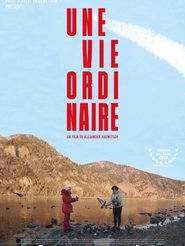
star 7After leaving the psychiatric facility where they had been wrongfully confined, Katya and Yulia, two young Russian women whom I have been filming for many years, finally achieve independent lives. This newfound freedom, which they have fought so hard to attain, promises to make their dreams of a new future come true. But how can one be free and pursue their aspirations in today’s Russia?Nash the Slash Rises Again!
2025
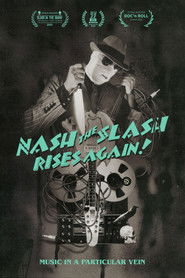
Nash The Slash was deliciously surreal, verging on demented. A mummy wrapped in surgical bandages, an invisible man in full formal white tuxedo and top hat buzz-sawing his violin through endless reams of electronics, melodies and distortion. His music and image were demanding. His life was rock fantasy. ‘NASH THE SLASH RISES AGAIN!’ uncovers the sinister Canadian electronic music innovator. A classically trained violinist and multi-instrumentalist, he created music that was an unlikely combination of prog-rock, punk-rock, classic-rock, psychedelic fused with techno and industrial before they had names. The end result is an unearthly life drenched in film history, enveloped in a wall of sound that would do Phil Spector justice. A career embodied in artistic integrity, courage and the price-tag that comes with it. ‘NASH THE SLASH RISES AGAIN!’ unwinds the bandages of a ground-breaking, mad musical scientist whose career decomposed before the world caught up.Unearthed
2025
Unearthed
2025
In 1967, extensive archaeological excavations took place near the Auschwitz-Birkenau concentration camp, during which over 16,000 objects belonging to deportees were uncovered. The excavations became the subject of a 14-minute documentary film, shot on location by director Andrzej Brzozowski. Ania Szczepańska followed in the footsteps of this film and the entire event with her film Unearthed, which she worked on for 14 years. Her documentary follows the author’s search for the circumstances surrounding the making of the film, and the significance of the excavations themselves.Taste of Salt
2025
Taste of Salt
2025
Ammar and Bilal both have experience as refugees living in present-day Germany. They meet thanks to an interview conducted by an actress and actor, who are using it as inspiration for a play they are preparing. However, the documentary follows their conversations, their everyday lives, and ultimately the theatrical performance that emerges from these conversations.Laufey - Live from Iceland
2025
In this Amazon Music Songline episode, filmed live in Iceland, Laufey reimagines her most beloved songs with stunning new arrangements at her childhood music school.Kristallnacht, the November pogroms
2025
On the night of November 9-10, 1938, the Nazis initiated anti-Jewish violence throughout the German Reich. Hundreds of photographs and films rediscovered in archives provide insight into these pogroms. 30,000 Jews were deported to concentration camps. The November Pogroms mark a deeply disturbing event in German history that remains so to this day.Space Station: We Have A Problem
2025
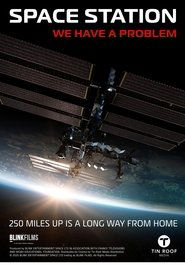
One of humanity’s greatest achievements, the International Space Station is a $150 billion science laboratory hurtling around Earth at 17,000mph, its thin metal walls shielding astronauts from the most hostile environment humans have ever endured. Microgravity, the vacuum of space, extremes of temperature, micrometeorites - life here is perilous. To mark 25 years of continuous habitation onboard, Space Station We Have a Problem reveals how astronauts are only a technical glitch or software error away from disaster. From malfunctioning spacesuits and docking disasters, critical leaks and even the entire space station backflipping out of control, this is life and death played out in low earth orbit, coupled with the bravery and brilliance that each time, saves the day.The Psychic Swindle
2025
The Psychic Swindle
2025
star 4When a French psychic does business with a Canadian entrepreneur, the result is one of the largest mail-order scam in history.Grolich the Great
2025
Grolich the Great
2025
While a few years ago social media and a strong visual identity were a welcome accessory, today they are an essential part of political success. Jan Grolich, Christian Democrat governor of the South Moravia Region, is an example of a politician who has managed to effectively combine traditional values with modern marketing tools. He has gained popularity through his immediacy and perspective. He appears in the same way in Jakub Ondráček's observational documentary. It offers an authentic insight into the behind-the-scenes of Grolich's campaign before the 2024 regional elections, which were disrupted by floods. The camera impartially follows lively discussions about the design of election posters, the distribution of cake to potential voters, and the post-election dilemma of how to deal with results without losing the painstakingly created image of a person who wants to do things his own way.Kingdom of Soap Bubbles
2025
Today, many laundry soaps in the Czech Republic are referred to as “the soap with the deer on the label.” However, the original product was manufactured by the Schicht factory in Rynoltice near Liberec. In the mid-19th century, Georg Schicht founded a small family business in the basement of a local house, which later grew into a multinational corporation. The progressive company's stability was first tested by World War I, then by the collapse of Austria-Hungary. The greatest upheaval came with the expulsion of the German population after World War II and the confiscation of property. Schicht's descendants are now scattered around the world. Their search for their roots forms the backbone of a documentary that captivatingly reconstructs the history of one company and one family.Kapralova
2025
Kapralova
2025
Czech composer Vítězslava Kaprálová was 22 years old when she left to study music in Paris in 1937. Three years later, she died of illness. This documentary, conceived as a dialogue across time and generations, follows in her footsteps. The short but intense period of the composer's life is reconstructed using archival footage and letters full of immediate impressions that the young artist shared with her family in Czechoslovakia. Her legacy is brought to life in parallel thanks to a new generation of conductors, such as Bianca Maretti, who rehearses some of her predecessor's compositions with an orchestra. Kaprálová's portrait thus becomes a tribute to all women who, despite language barriers, prejudices, and their origins, have managed to make their mark in the world of classical music.Fittko: Resistance and Exile
2025
Director Allegra Stodolsky decided to continue her grandmother’s work in telling the story of their relative Lisa Fittko. A timely film which reflects upon the importance of the values fought for, which once again are under threat in today’s Europe. In 1930s Berlin, Fittko became politically active at a young age and joined leftist youth resistance, fighting against the rise of the Nazis. In using archival footage, re-enactment and the voice of Lisa Fittko herself, this documentary tells the story of the courage of a young woman who understood that freedom is not a guarantee and who chose to resist rather than stay silent in the face of oppression.AMOOSED: a moose odyssey
2025
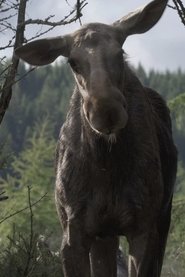
When director and ethnologist Hana Nováková encountered an elk, it changed her life. And she wasn't the first. For centuries, people across continents and cultures have been fascinated by this ancient totem animal, one of the largest mammals in the northern hemisphere. Whereas in the past they wanted to conquer it, today they tend to listen to it. The director's cinematic odyssey is the result of several years of searching for the secrets of the moose. It leads from Czech forests through a Russian domestication station to the territory of the indigenous peoples of Canada. A collage of stories told from personal, spiritual, and scientific perspectives shows the moose as a guide between worlds, a symbol of balance and renewal, and a possible answer to the question of how we can heal our relationship with nature.Amira's Children
2025
Amira's Children
2025
This 10- year documentary follows the Alhariri family, as they integrate into Czech society, despite their different faith, culture, and traditions. While Amira becomes the cultural anchor of the family, her husband, Abdul, works hard in a small kebab shop. Their eldest son, Kenan, is scarred by his experiences of war, and struggles to find new values. His younger brother, Montaser, on the other hand, is clear about his inherited values. Son Adnan and daughter Zaina fit in perfectly with their Czech classmates from the first grade, while the youngest children, Hamud and Kamar, still have time to find their way. Amira knows what life in Europe has to offer, but she never stops believing in a return to her homeland.