New Documentary Movies on Amazon Video - Page 420
All Services
Free Services
 Netflix
 Amazon Prime Video
 Apple iTunes
 Apple TV Plus
 Disney Plus
 Google Play Movies
 Paramount Plus
 Hulu
Hulu
 HBO Max
 YouTube
 fuboTV
 Peacock
 Peacock Premium
 Amazon Video
 The Roku Channel
 AMC+
AMC on Demand
AMC+
AMC on Demand
 Kocowa
 Hoopla
 The CW
 Vudu
Vudu
 Starz
Starz
 Showtime
 PBS
PBS
 Pantaflix
 FXNow
FXNow
 Tubi TV
 Kanopy
 Comedy Central
 Crunchyroll
 Microsoft Store
 Redbox
 Sun Nxt
 ABC
ABC
 DIRECTV
 Crackle
 Fandor
 Plex
Plex
Netflix
Amazon Prime Video
Apple iTunes
Apple TV Plus
Disney Plus
Google Play Movies
Paramount Plus
Hulu
HBO Max
YouTube
fuboTV
Peacock
Peacock Premium
Amazon Video
The Roku Channel
AMC+
AMC on Demand
Kocowa
Hoopla
The CW
Vudu
Starz
Showtime
PBS
Pantaflix
FXNow
Tubi TV
Kanopy
Comedy Central
Crunchyroll
Microsoft Store
Redbox
Sun Nxt
ABC
DIRECTV
Crackle
Fandor
Plex

Great White Lies
2015
Great White Lies
2015
Focusing on the Western Australian Government's decision in January 2014 to hunt and kill the protected great white shark, filmmaker Skyler Thomas visits Australia, South Africa, and New Zealand to learn more about the shark culling practices in each of those locations. Interviewing scientists, politicians, surfers, and activists, Great White Lies thoroughly examines the history of shark culling.Twinsters
2015
Twinsters
2015
star 7.3Adopted from South Korea, raised on different continents & connected through social media, Samantha & Anaïs believe that they are twin sisters separated at birth.Famous Nathan
2015
Famous Nathan
2015
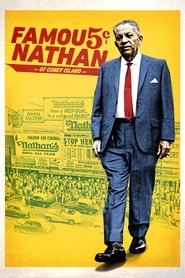
star 5.8A Coney Island-inspired, densely-layered visually dynamic documentary portrait of the life and times of the original Nathan's Famous, created in 1916 by filmmaker Lloyd Handwerker's grandparents, Nathan and Ida Handwerker. 30 years in the making, Famous Nathan interweaves decades-spanning archival footage, family photos and home movies, an eclectic soundtrack and never-before-heard audio from Nathan: his only interview, ever as well as compelling, intimate and hilarious interviews with the dedicated band of workers, not at all shy at offering opinions, memories and the occasional tall tale.Chasing Pluto
2015
Chasing Pluto
2015
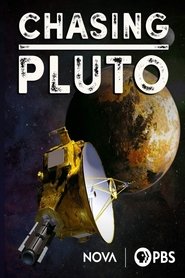
star 5NOVA captures New Horizons' historic flyby of Pluto, the culmination of the spacecraft's nine-year, three-billion-mile journey to reveal the first ever detailed images of this strange, icy world at the very edge of our solar system.Beavers: Patagonia invaders
2015
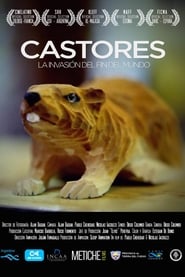
star 8.7In 1940 twenty Canadian Beavers were brought to 'Tierra del Fuego' island in southern Patagonia for commercial fur production. However, beavers having no natural predators, quickly spread throughout the island, causing massive destruction of trees threatening the entire Patagonian forests rivers and species. Why wildlife conservationist are convinced that 150.000 beavers must be killed? Why some of the most recognized specialist are convinced that an eradication is not possible? Meanwhile truism is capitalizing on the situation: a man dressed as a beaver passes out flyers promoting a famous sky resort: 'Cerro Castor' - Beaver Hill. Hunters claim for subsidies, scientists are researching, rangers do what they can and restaurants tray to offer beaver meat to tourist.Damiana Kryygi
2015
Damiana Kryygi
2015
star 5.2The year is 1896. In the dense jungle of Paraguay a three years old Ache girl survives a slaughter perpetrated by white settlers. The girl is named Damiana by her captors. Anthropologists from the La Plata Museum of Natural Sciences in Argentina take her as an object of scientific interest in the context of their racial studies. Later she is handed over to a family where she grows up as a maid. In 1907, at the age of 14, she is committed to a mental institution. There she is photographed naked just two months before her death from tuberculosis. Once dead her body is studied in La Plata and in Berlin. One hundred years later, an anthropology student identifies part of her remains in the La Plata museum. Her head is found soon after at Charite Hospital in Berlin.By Sidney Lumet
2015
By Sidney Lumet
2015
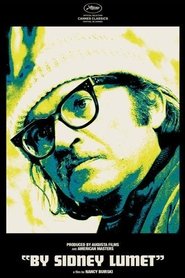
star 6.9An analysis of director Sidney Lumet's work (12 Angry Men, Dog Day Afternoon, Before The Devil Knows You're Dead) in his own words, based on a five-day interview recorded shortly before his death.Marilyn Monroe Declassified
2015
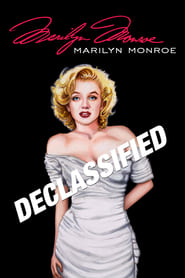
star 6.9Declassified FBI and CIA documents help director Paul Davids unravel the puzzle of Marilyn Monroe's demise, which was officially ruled a "probable suicide," while providing detailed evidence supporting the conclusion that Marilyn was murdered.Morgan Spurlock Presents Freedom! The Movie
2015
star 5Comedian Billy Wayne Davis crosses the country to find Americans exercising their freedom s, and to see if people can be as free as can be in today's America.Bridget Everett: Gynecological Wonder
2015
star 2.5A mix of cabaret and standup recorded at Joe's Pub in New York.Mapping the Future: The Power of Algorithms
2015
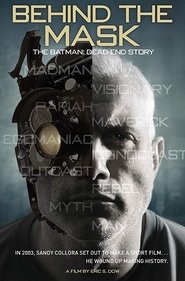
In the last few years, the data stream flowing through the internet has turned into a tsunami: Ninety percent of the information sitting on the world's servers was created in the last two years. This total digitization opens up completely new possibilities. Suddenly, our entire lives can be modeled mathematically - and become predictable.Behind the Mask: The Batman Dead End Story
2015
star 7.8Director and Writer Eric Dow ("Honor in the Valley of Tears") brings us his second documentary as he goes behind the scenes of the fan fiction short film, "Batman: Dead End." In the winter of 2003 commercial director Sandy Collora and some of his friends set out to make a low-budget short film for his demo reel. What they wound up actually doing was making one of the most elaborate, most watched, most talked about and most controversial short films ever made: Batman Dead End. Considering the amount of press and admiration Batman: Dead End garnered,Tap World
2015
Poverty, Inc.
2015
Poverty, Inc.
2015
star 7.2Poverty, Inc. explores the hidden side of doing good. From disaster relief to TOMs Shoes, from adoptions to agricultural subsidies, Poverty, Inc. follows the butterfly effect of our most well-intentioned efforts and pulls back the curtain on the poverty industrial complex - the multi-billion dollar market of NGOs, multilateral agencies, and for-profit aid contractors. Are we catalyzing development or are we propagating a system in which the poor stay poor while the rich get hipper?Do I Sound Gay?
2015
Do I Sound Gay?
2015
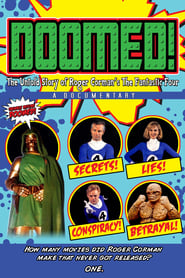
star 5.5What makes a voice “gay”? A breakup with his boyfriend sets journalist David Thorpe on a quest to unravel a linguistic mystery.Doomed! The Untold Story of Roger Corman's The Fantastic Four
2015
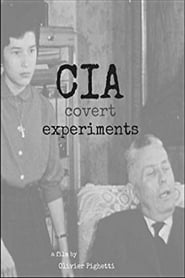
star 6.7A history of the ill-fated 1994 production of “The Fantastic Four” that was executive produced by Roger Corman.CIA Covert Experiments
2015
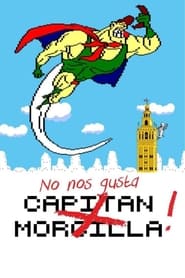
star 7.3It is August 1951 and an entire French village goes crazy. People are screaming in the streets and throwing themselves out of windows. 300 people are affected and 7 end up dead. Wild theories start circulating to explain the tragedy. 60 years later declassified documents from the United States reveal that the CIA conducted experiments on unsuspecting citizens.We Don't Like Captain Sausage!
2015
star 6A journey back to the 80’s, to the origins of the video games industry, through the story of a group of teenagers in their quest to create the most original game ever.The Heat Is Back On: The Remaking of Miss Saigon
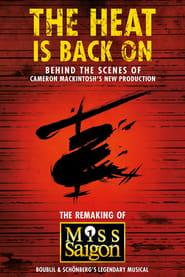
2015
star 6.3Last seen in the West End 15 years ago, Miss Saigon has become one of the most successful musicals in history, seen by 40 million people worldwide. From the process of casting 40 actors from 18 different countries, to the reinvention of the staging, including the famous helicopter scene, The Heat is Back On takes us on a journey through rehearsals right up to the star-studded opening night. Featuring interviews with legendary producer Cameron Mackintosh, authors Alain Boublil and Claude-Michel Schönberg and many of the award-winning cast and creative team.People's Train of Culture
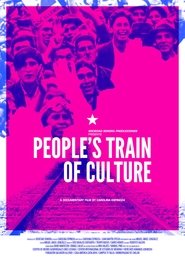
2015
Documentary film which tells the story of an initiative of the government of Salvador Allende, President of Chile from 1970 to 1973, the objective of which was to bring culture closer to those who had no access to it. The People’s Train of Culture was part of the 40th measure of Allende’s programme of government which aimed to create a National Institute of Arts and Culture and colleges of art in all the country’s provinces.