New Documentary Movies on Apple iTunes - Page 445
All Services
Free Services
 Netflix
 Amazon Prime Video
 Apple iTunes
 Apple TV Plus
 Disney Plus
 Google Play Movies
 Paramount Plus
 Hulu
Hulu
 HBO Max
 YouTube
 fuboTV
 Peacock
 Peacock Premium
 Amazon Video
 The Roku Channel
 AMC+
AMC on Demand
AMC+
AMC on Demand
 Kocowa
 Hoopla
 The CW
 Vudu
Vudu
 Starz
Starz
 Showtime
 PBS
PBS
 Pantaflix
 FXNow
FXNow
 Tubi TV
 Kanopy
 Comedy Central
 Crunchyroll
 Microsoft Store
 Redbox
 Sun Nxt
 ABC
ABC
 DIRECTV
 Crackle
 Fandor
 Plex
Plex
Netflix
Amazon Prime Video
Apple iTunes
Apple TV Plus
Disney Plus
Google Play Movies
Paramount Plus
Hulu
HBO Max
YouTube
fuboTV
Peacock
Peacock Premium
Amazon Video
The Roku Channel
AMC+
AMC on Demand
Kocowa
Hoopla
The CW
Vudu
Starz
Showtime
PBS
Pantaflix
FXNow
Tubi TV
Kanopy
Comedy Central
Crunchyroll
Microsoft Store
Redbox
Sun Nxt
ABC
DIRECTV
Crackle
Fandor
Plex

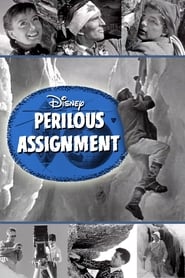
Perilous Assignment
1959
Perilous Assignment
1959
star 10"Perilous Assignment" is an episode of ABC's Walt Disney Presents. Disney loved to show viewers behind the scenes of the daring shoots of its theatrically released or TV shows. The theme of the episode is the making of his next film, The Third Man on the Mountain, an adaptation of James Ramsey Ullman's novel Banner in the Sky, based on the true story of the first ascent of the Matterhorn. Walt Disney will not be limited to a simple promotional making-of. He offers to meet exceptional people, including the French mountain guide Gaston Rébuffat. The latter will show climbing techniques and then reveal breathtaking images of his ascents of steep cliffs with a client for the ascent of Mont-Blanc, filmed for the occasion. In 1958, Walt Disney will therefore offer him to be deputy director on the high mountain scenes of the film "The Third Man on the Mountain".I Captured the King of the Leprechauns
1959
star 9Behind the scenes of Darby O'Gill and the Little People.Night and Fog
1959
Night and Fog
1959
star 8.2Filmmaker Alain Resnais documents the atrocities behind the walls of Hitler's concentration camps.White Wilderness
1958
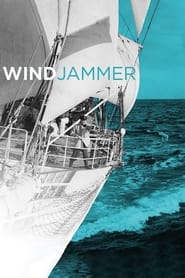
Windjammer: The Voyage of the Christian Radich
1958
star 6.2Windjammer, the first presentation in CINEMIRACLE, is the record of a training cruise of the full-rigged S/S Christian Radich from Oslo across the Atlantic, through the Caribbean, to New York and back home again.Fun in the Big Country
1958
Behind-the-scenes look during the filming of William Wyler's 1958 western, "The Big Country."Tricks of Our Trade
1957
Tricks of Our Trade
1957
With examples from Disney feature-length films, Walt Disney gives a behind-the-scenes look at the improvements in animation made by his studio's in-house training and research that studied real-life motion and made technical innovations.White Vertigo
1956
Secrets of Life
1956
Secrets of Life
1956
star 7.1A feature-length documentary showing the changing world of nature, the sky, the sea, the sun, planets, insects and volcanic action. A story of nature's strange and intricate designs for survival and her many methods of perpetuating life.The Plausible Impossible
1956
star 7.2Walt Disney explains some of the techniques of animation, and includes for the first time the pencil test footage of the "Soup Eating Sequence" from Snow White and the Seven Dwarfs. Walt references a book called "The Art of Animation" which shows a technique that is used in animated cartoons that dates back to the ancient Egyptians and Greeks.The Mystery of Picasso
1956
star 7.3Using a specially designed transparent 'canvas' to provide an unobstructed view, Picasso creates as the camera rolls. He begins with simple works that take shape after only a single brush stroke. He then progresses to more complex paintings, in which he repeatedly adds and removes elements, transforming the entire scene at will, until at last the work is complete.Zanzabuku
1956
Zanzabuku
1956
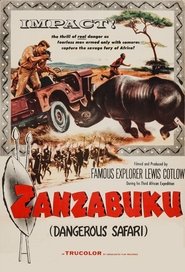
star 1Famed explorer Lewis Cotlow leads a hunting and archaeological expedition into Africa.The Story of the Animated Drawing
1955
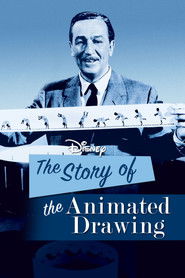
star 7.4Walt Disney discusses the history of animation, beginning with J. Stuart Blackton and his Humorous Phases of Funny Faces in 1906, and including Gertie the Dinosaur.The African Lion
1955
The African Lion
1955
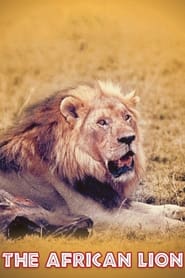
star 7Part of Disney's True-Life Adventures series, this film focuses on the lives of lions in Africa.Operation Undersea
1954
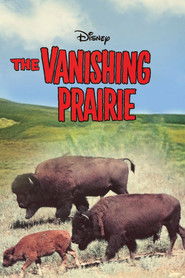
The Vanishing Prairie
1954
star 7.2Story of the American Prairie as it was when vast herds of bison and elk grazed.The Living Desert
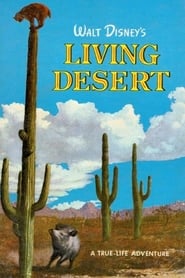
1953
The Living Desert
1953
star 7.1Although first glance reveals little more than stones and sand, the desert is alive. Witness moving rocks, spitting mud pots, gorgeous flowers and the never-ending battle for survival between desert creatures of every shape, size and description.This Is Cinerama
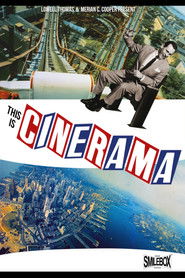
1952
This Is Cinerama
1952
star 5.7Designed to introduce the then-new widescreen process Cinerama, audiences experience the roller coaster at Rockaways' Playland, the temple dance from Aida, Niagara Falls, a Viennese choir, the canals of Venice, a military tattoo in Edinburgh, a bullfight, and more. The film concludes with a view from the nose of a low-flying B-25 while America the Beautiful plays.Un homme est mort
1951
Un homme est mort
1951
Film about the death of the worker Édouard Mazé, killed in Brest by the mobile guards, during the demonstrations and strikes of 1951.Kon-Tiki
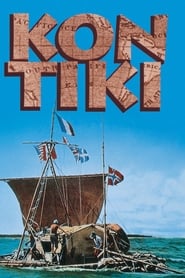
1950
Kon-Tiki
1950
star 7.4"Kon-Tiki" was the name of a wooden raft used by six Scandinavian scientists, led by Thor Heyerdahl, to make a 101-day journey from South America to the Polynesian Islands. The purpose of the expedition was to prove Heyerdal's theory that the Polynesian Islands were populated from the east- specifically Peru- rather than from the west (Asia) as had been the theory for hundreds of years. Heyerdahl made a study of the winds and tides in the Pacific, and by simulating conditions as closely as possible to those he theorized the Peruvians encountered, set out on the voyage.