New Documentary Movies on Kanopy - Page 274
All Services
Free Services
 Netflix
 Amazon Prime Video
 Apple iTunes
 Apple TV Plus
 Disney Plus
 Google Play Movies
 Paramount Plus
 Hulu
Hulu
 HBO Max
 YouTube
 fuboTV
 Peacock
 Peacock Premium
 Amazon Video
 The Roku Channel
 AMC+
AMC on Demand
AMC+
AMC on Demand
 Kocowa
 Hoopla
 The CW
 Vudu
Vudu
 Starz
Starz
 Showtime
 PBS
PBS
 Pantaflix
 FXNow
FXNow
 Tubi TV
 Kanopy
 Comedy Central
 Crunchyroll
 Microsoft Store
 Redbox
 Sun Nxt
 ABC
ABC
 DIRECTV
 Crackle
 Fandor
 Plex
Plex
Netflix
Amazon Prime Video
Apple iTunes
Apple TV Plus
Disney Plus
Google Play Movies
Paramount Plus
Hulu
HBO Max
YouTube
fuboTV
Peacock
Peacock Premium
Amazon Video
The Roku Channel
AMC+
AMC on Demand
Kocowa
Hoopla
The CW
Vudu
Starz
Showtime
PBS
Pantaflix
FXNow
Tubi TV
Kanopy
Comedy Central
Crunchyroll
Microsoft Store
Redbox
Sun Nxt
ABC
DIRECTV
Crackle
Fandor
Plex

Robinson in Space
1997
Robinson in Space
1997
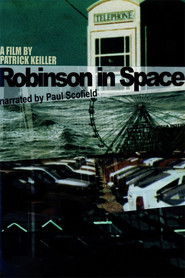
star 7Robinson is commissioned to investigate the unspecified "problem of England." The narrator describes his seven excursions, with the unseen Robinson, around the country. They mainly concentrate on ports, power stations, prisons, and manufacturing plants, but they also bring in various literary connections, as well as a few conventional landscapes.The Last of the Nomads
1997
Like an antipodean version of Romeo and Juliet, it emerges that Warri and Yatungka became the last nomads because they had married outside their tribal laws and eloped to the most inaccessible of regions. In 1977 the land was stricken by a severe drought and their tribal elders mounted a search for them with the help of a party of white men led by Dr Bill Peasley and one of their own number, a childhood friend named Mudjon. The film takes Dr Peasley back into the desert to relive his momentous journey with Mudjon and culminates with poignant archival footage of the elderly couple found naked and starving.Mel Bochner: Thoughts Made Visible
1997
Filmed at the Yale University Art Gallery, "Mel Bochner: Thoughts Made Visible", approaches a major retrospective exhibition of the artist's early work while providing an opportunity to experience his notable, site-specific installations. Known for his use of common material, Bochner's elements are easily understandable yet his art is founded on the unexpected questioning of how simple things hold the ability to reveal eye-opening complexities. A relationship established through language, Bochner's work takes the form of a dialogue between practice and theory, defining his subject as "the contradiction between physical space and mental space." Bochner uses that contradiction to create visual think pieces, locating his own intention- and thus emotion- through his process, his sites, and the mind of his viewer.Hogarth's Progress
1997
Hogarth's Progress
1997
Satirical, critical, talented – William Hogarth was one of the most original British artists of the 18th Century. The son of a poor schoolmaster made a name for himself as a portraitist and became best known for his satirical etchings. In strange and graphic tales, such as A Harlot's Progress, he denounced the social and political injustices of his time. Often pirated, Hogarth fought for the first image copyright law. Together with illustrators and writers from today, Andrew Graham-Dixon explores Hogarth's birth city London and recounts the life and work of a man who is regarded as the forerunner of modern caricature.David Hockney: Pleasures of the Eye
1997
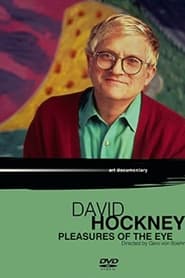
Pleasures of the eye, David Hockney’s work has shown him to be one of the most versatile and influential artists of our time. The British artist invites the observer to take a visual stroll through his paintings and explore the dimensions of time and space. In communicating a new sense of the spacetime continuum, he injects the medium of photography with entirely new and living components. His sensuous theatre sets make us hear music with our eyes and see colours with our ears. The documentary filmmaker Gero von Böhm paints a memorable portrait of a fascinating artist, whose work allows all of us to see the magic in the small and seemingly insignificant details of everyday life.Inagina: The Last House of Iron
1997
Swiss archaeologist Eric Huysecom and cameraman Bernard Augustoni work with 13 master smelters to recreate the building of a traditional furnace for smelting iron in Mali. There has not been any traditional iron smelting in Africa since the 1960's, in part due to the importing of cheaper substitutes. The building of the furnaces and the work involved in the actual production is deeply entwined with ritual, symbolism and gender. This film describes in great detail every aspect of the event, from the selection of the site of the reconstruction - which is the oldest remaining furnace site in the region, last active in 1961 - to the final result.Weaving the Future
1997
Weaving the Future
1997
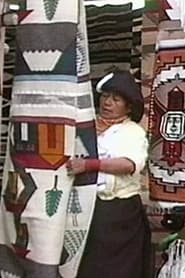
Weaving the Future is a video portrait of a unique indigenous community living in the Andean highlands of northern Ecuador. The story of the Otavalo Indians is not a stereotypical tale of "isolated people struggling to survive." Just the opposite. The people of Otavalo have successfully adapted their traditions of weaving and crafts to the international marketplace. Selling their textiles in the U.S., Europe and even in Japan, the Otavalos are by any measure the most prosperous Native people in South America. Theirs is a fascinating story of economic success and social change.We Know How to Do These Things: Birth In a Newar Village
1997
For these villagers, giving birth is a family affair; while a young girl is in labor, the birth attendant, mother and mother-in-law alternate between lending a hand and storytelling. Barbara Johnson studied documentary film and photography with Jerry Liebling and Elaine Mayes at Hampshire College from 1970-1974. She began working for the Smithsonian's newly formed National Anthropological Film Center in 1975. She was sent to Nepal to document early childhood socialization and daily life in a large farming village in the Kathmandu Valley.Burma Diary
1997
Burma Diary
1997
This acclaimed documentary explores the revolutionary movement fighting for democracy in Burma and depicts how young people, in particular, are affected by the human rights abuses of Burma’s military government. Burma Diary focuses on the story of Tint Aung, a young Burmese man who was actively involved in the protest movement while in college. He is forced to flee from his home and take refuge in the jungles of the Burmese-Thailand border along with his wife and his two young daughters. As the film chronicles four harsh years of Tint Aung’s struggle to survive, it provides a passionate and at times heartbreaking study of the hopes of and the obstacles facing the Burmese democracy movement.Stuart Hall: Representation & the Media
1997
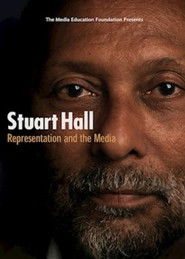
star 8Cultural theorist Stuart Hall offers an extended meditation on representation. Moving beyond the accuracy or inaccuracy of specific representations, Hall argues that the process of representation itself constitutes the very world it aims to represent, and explores how the shared language of a culture, its signs and images, provides a conceptual roadmap that gives meaning to the world rather than simply reflecting it. Hall's concern throughout is the centrality of culture to the shaping of our collective perceptions, and how the dynamics of media representation reproduce forms of symbolic power.Robert Rauschenberg: Man at Work
1997
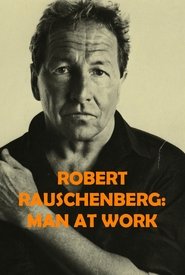
From the 1950s until his death in 2008, Robert Rauschenberg's groundbreaking mixed-media pieces mesmerized the art world. This 1998 documentary takes viewers inside Rauschenberg's Florida studio to explore his remarkable life and work. The film examines Rauschenberg's use of unique materials and includes a behind-the-scenes look at The 1/4 Mile or 2 Furlong Piece, a massive autobiographical undertaking that Rauschenberg began work on in 1981.Mahalia Jackson: The Power and the Glory
1997
star 10Documentary narrated by Paul Winfield, this documentary follows the course of Mahalia Jackson's extraordinary life - from her humble beginnings as a sickly child singing in New Orleans churches to her breakthrough with Columbia Records and her ascendancy to Carnegie Hall and Europe's great stages. Her story's told through archival footage and interviews with those who knew her best.Dial H-I-S-T-O-R-Y
1997
Dial H-I-S-T-O-R-Y
1997
star 6.9An acclaimed hijacking documentary that eerily foreshadowed 9/11. We meet the romantic skyjackers who fought their revolutions and won airtime on the passenger planes of the 1960s and '70s. By the 1990s, such characters were apparently no more, replaced on our TV screens by stories of anonymous bombs in suitcases. Director Johan Grimonprez investigates the politics behind this change, at the same time unwrapping our own complicity in the urge for ultimate disaster.Tupac Shakur: Thug Immortal
1997
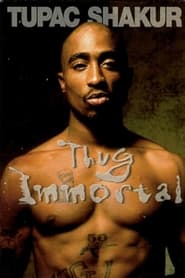
star 2THUG IMMORTAL is an intimate look at Tupac's life told through never-before-seen footage and interviews with his close friends, revealing an artist who grew up a thug, but one who soon tired of that lifestyle and its trappings, revealing a Tupac far different from the one most of America knows.Ancestors in the Americas: Coolies, Sailors, Settlers
1996
Explores how people from the Philippines, China and India first arrived on the shores of North and South America, their survival amid harsh conditions, re-migrations and settlement in the Americas. The film travels across oceans and centuries of time to trace the globally interlocking story of East and West. Ancestors in the Americas is a two-part series that presents the history, challenges, and lasting impact of early Asian immigrants to the Americas, from the 1700s to the 1900s. The series follows their little-known journeys and stories, reveals their pioneering struggle against racial hatred and for basic rights, and depicts their lasting cultural, legal and economic contributions to the building of the Americas. Using a "documemoir" approach, ANCESTORS IN THE AMERICAS brings to life this largely undocumented past and invites a new understanding of American history.Tell the Truth and Run: George Seldes and the American Press
1996
star 7.7This documentary examines the 80 year career of journalist George Seldes, his encounters with Lenin and J. Edgar Hoover, his long battle against press censorship, the tobacco lobby, and his eventual blacklisting.With Ben Bagdikian, Jeff Cohen, Daliel Ellsberg, Ralph Nader, and Marian SeldesJack Lemmon: America's Everyman
1996
star 7.5Jack Lemmon made over 60 films and received numerous awards, including eight Academy Award Nominations and two Oscars. Later in life, his achievement was enriched by new challenges in which he exposed the vulnerability and emotion of the later years as few had dared. He reveled in his ongoing screen partnerships with directors like Billy Wilder and stars like Walter Matthau. Narrated on-camera by Jack Lemmon, this documentary includes interviews with Lemmon's son, the actor Chris Lemmon. Also appearing are such legends as Jack's life-long friend, the writer and director Billy Wilder, writer-director Garson Kanin, drama teacher Uta Hagen and actor Gregory Peck.Marn Grook
1996
Marn Grook
1996
MARN GROOK explores the history, achievements and struggles of Aboriginal sportsmen involved in our National game, 'Aussie Rules'.Champagne
1996
Champagne
1996
The true story of a young teenage girl whose mother is incarcerated for murder. Living in a Catholic Children's home run by an order of nuns, she provides poignant commentary about her mother, her own situation and her outlook for the future.