New History Movies on Kanopy - Page 18
All Services
Free Services
 Netflix
 Amazon Prime Video
 Apple iTunes
 Apple TV Plus
 Disney Plus
 Google Play Movies
 Paramount Plus
 Hulu
Hulu
 HBO Max
 YouTube
 fuboTV
 Peacock
 Peacock Premium
 Amazon Video
 The Roku Channel
 AMC+
AMC on Demand
AMC+
AMC on Demand
 Kocowa
 Hoopla
 The CW
 Vudu
Vudu
 Starz
Starz
 Showtime
 PBS
PBS
 Pantaflix
 FXNow
FXNow
 Tubi TV
 Kanopy
 Comedy Central
 Crunchyroll
 Microsoft Store
 Redbox
 Sun Nxt
 ABC
ABC
 DIRECTV
 Crackle
 Fandor
 Plex
Plex
Netflix
Amazon Prime Video
Apple iTunes
Apple TV Plus
Disney Plus
Google Play Movies
Paramount Plus
Hulu
HBO Max
YouTube
fuboTV
Peacock
Peacock Premium
Amazon Video
The Roku Channel
AMC+
AMC on Demand
Kocowa
Hoopla
The CW
Vudu
Starz
Showtime
PBS
Pantaflix
FXNow
Tubi TV
Kanopy
Comedy Central
Crunchyroll
Microsoft Store
Redbox
Sun Nxt
ABC
DIRECTV
Crackle
Fandor
Plex

Water and Sugar – Carlo Di Palma: The Colours of Life
2017
star 5.2An account of the life and work of legendary cinematographer and director Carlo Di Palma (1925-2004) and an emotional journey through the great moments of cinema, from Italian neorealism to the masterpieces of Woody Allen.Django
2017
Django
2017
star 6.3The story of Django Reinhardt, famous guitarist and composer, and his flight from German-occupied Paris in 1943.Acorn and the Firestorm
2017
star 5For 40 years, the community-organizing group ACORN advocated for America’s poorest communities, while its detractors accused it of promoting the worst of liberal policies. Riding high on the momentum of Barack Obama’s presidential victory in 2008, ACORN was at its political zenith when a hidden-camera video sparked a national scandal and brought it crashing down. The story involves voter fraud, a fake prostitute, and the rise of Breitbart.com.Grand Coulee Dam
2017
Grand Coulee Dam
2017
star 6During the darkest days of the Depression when construction was started on Grand Coulee Dam, everything about it was described in superlatives. It would be the "Biggest Thing on Earth," the salvation of the common man, a dam and irrigation project that would make the desert bloom, a source of cheap power that would boost an entire region of the country. Of the many public works projects of the New Deal, Grand Coulee Dam loomed largest in America's imagination, promising to fulfill President Franklin Roosevelt's vision for a "planned promised land" where hard-working farm families would finally be free from the drought and dislocation caused by the elements.Amazon Adventure
2017
Amazon Adventure
2017
star 4This film follows scientist Henry Bates as he explores the Amazon for proof of natural selection.Mad to Be Normal
2017
Mad to Be Normal
2017
star 5.9The story of Scottish psychiatrist RD Laing and his unique community at Kingsley Hall, East London in the 1960s.The Chinese Exclusion Act
2017
star 8A sweeping chronicle of the entire exclusion era - the latter part of the 1800s, when anti-Chinese agitation led to federal laws targeting Chinese abroad and those already in the country. Go far beyond the legislation with the survival and growth of Chinese American communities in the face of prejudice and outright violence, the “paper” sons and daughters who emigrated despite the seemingly impassable barriers, and the legal challenges that produced some of the most momentous decisions in Supreme Court history.Bet on Revenge
2017
Bet on Revenge
2017
star 6.7The new owner of a brilliant race horse finds love while carrying out his revenge on the man who murdered his father.In Exile: A Family Movie
2017
star 5.5The life stories of Juan Francisco's grandparents and parents, who arrived in Mexico in 1939 as refugees at the end of the Spanish Civil War (1936-1939). A family saga, from the beginning of the twentieth century to the present day.Dateline: Saigon
2017
Dateline: Saigon
2017
star 8How does a nation slip into war? Dateline-Saigon profiles the controversial reporting of five Pulitzer Prize-winning journalists -The New York Times' David Halberstam, the Associated Press' Malcolm Browne, Peter Arnett, and legendary photojournalist Horst Faas, and UPI's Neil Sheehan -- during the early years of the Vietnam War as President John F. Kennedy is secretly committing US troops to what is initially dismissed by some as 'a nice little war in a land of tigers and elephants.' 'When the government is telling the truth, reporters become a relatively unimportant conduit to what is happening,' Halberstam tells us. 'But when the government doesn't tell the truth, begins to twist the truth, hide the truth, then the journalist becomes involuntarily infinitely more important.'Viceroy's House
2017
Viceroy's House
2017
star 6.6In 1947, Lord Mountbatten assumes the post of last Viceroy, charged with handing India back to its people, living upstairs at the house which was the home of British rulers, whilst 500 Hindu, Muslim and Sikh servants lived downstairs.The Young Karl Marx
2017
The Young Karl Marx
2017
star 6.826 year-old Karl Marx embarks with his wife, Jenny, on the road to exile. In 1844 in Paris, he meets Friedrich Engels, an industrialist’s son, who has been investigating the sordid birth of the British working class. Engels, the dandy, provides the last piece of the puzzle to the young Karl Marx’s new vision of the world. Together, between censorship and the police’s repression, riots and political upheavals, they will lead the labor movement during its development into a modern era.Hitler's Hollywood
2017
Hitler's Hollywood
2017
star 6.4Film journalist and critic Rüdiger Suchsland examines German cinema from 1933, when the Nazis came into power, until 1945, when the Third Reich collapsed. (A sequel to From Caligari to Hitler, 2015.)The Jesus Strand: A Search for DNA
2017
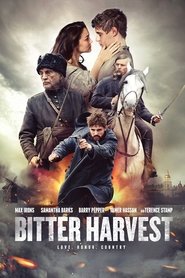
star 5Geneticist George Busby and biblical scholar pastor Joe Basile travel the globe extracting and analyzing samples from the most famous religious relics from history in search of the DNA of the most famous figure in history; Jesus Christ.Bitter Harvest
2017
Bitter Harvest
2017
star 6Set between the two World Wars and based on true historical events, Bitter Harvest conveys the untold story of the Holodomor, the genocidal famine engineered by the tyrant Joseph Stalin. The film displays a powerful tale of love, honour, rebellion and survival at a time when Ukraine was forced to adjust to the horrifying territorial ambitions of the burgeoning Soviet Union.Alive and Kicking
2017
Alive and Kicking
2017
star 6.9Alive and Kicking gives the audience an intimate, insider’s view into the culture of the current swing dance world while shedding light on issues facing modern American society.German Concentration Camps Factual Survey
2017
star 7.3On the 29th September 1945, the incomplete rough cut of a brilliant documentary about concentration camps was viewed at the MOI in London. For five months, Sidney Bernstein had led a small team – which included Stewart McAllister, Richard Crossman and Alfred Hitchcock – to complete the film from hours of shocking footage. Unfortunately, this ambitious Allied project to create a feature-length visual report that would damn the Nazi regime and shame the German people into acceptance of Allied occupation had missed its moment. Even in its incomplete form (available since 1984) the film was immensely powerful, generating an awed hush among audiences. But now, complete to six reels, this faithfully restored and definitive version produced by IWM, is being compared with Alain Resnais’ Night and Fog (1955).Nazi Art Thieves
2017
Nazi Art Thieves
2017
star 7This film examines the mechanisms of Nazi extortion during World War II, and is interspersed with current issues surrounding restitutions. It retraces the incredible stories of 3 major works having belonged to Jewish collectors. From their plundering by the Nazis to their final restitution: Man with a Guitar by Georges Braque, Herbstsonne by Egon Schiele and Sitting Woman by Henri Matisse.Banking on Bitcoin
2016
Banking on Bitcoin
2016
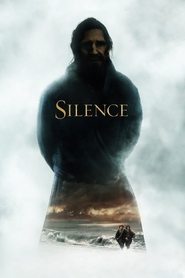
star 6.3Not since the invention of the Internet has there been such a disruptive technology as Bitcoin. Bitcoin's early pioneers sought to blur the lines of sovereignty and the financial status quo. After years of underground development Bitcoin grabbed the attention of a curious public, and the ire of the regulators the technology had subverted. After landmark arrests of prominent cyber criminals Bitcoin faces its most severe adversary yet, the very banks it was built to destroy.Silence
2016
Silence
2016
star 7.1In the 17th century, two Portuguese Jesuit priests travel to Japan in an attempt to locate their mentor, who is rumored to have committed apostasy, and to propagate Catholicism.