New History Movies on Kanopy - Page 22
All Services
Free Services
 Netflix
 Amazon Prime Video
 Apple iTunes
 Apple TV Plus
 Disney Plus
 Google Play Movies
 Paramount Plus
 Hulu
Hulu
 HBO Max
 YouTube
 fuboTV
 Peacock
 Peacock Premium
 Amazon Video
 The Roku Channel
 AMC+
AMC on Demand
AMC+
AMC on Demand
 Kocowa
 Hoopla
 The CW
 Vudu
Vudu
 Starz
Starz
 Showtime
 PBS
PBS
 Pantaflix
 FXNow
FXNow
 Tubi TV
 Kanopy
 Comedy Central
 Crunchyroll
 Microsoft Store
 Redbox
 Sun Nxt
 ABC
ABC
 DIRECTV
 Crackle
 Fandor
 Plex
Plex
Netflix
Amazon Prime Video
Apple iTunes
Apple TV Plus
Disney Plus
Google Play Movies
Paramount Plus
Hulu
HBO Max
YouTube
fuboTV
Peacock
Peacock Premium
Amazon Video
The Roku Channel
AMC+
AMC on Demand
Kocowa
Hoopla
The CW
Vudu
Starz
Showtime
PBS
Pantaflix
FXNow
Tubi TV
Kanopy
Comedy Central
Crunchyroll
Microsoft Store
Redbox
Sun Nxt
ABC
DIRECTV
Crackle
Fandor
Plex

Queen of the Desert
2015
Queen of the Desert
2015
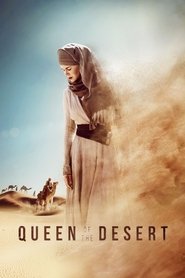
star 5.9A chronicle of Gertrude Bell's life, a traveler, writer, archaeologist, explorer, cartographer, and political attaché for the British Empire in the Near and Middle East at the dawn of the twentieth century. Her knowledge of the tribal leaders is used by the British to establish the Kingdoms of Iraq, Jordan and Saudi Arabia.The Assassin
2015
The Assassin
2015
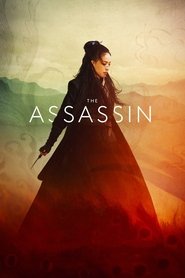
star 6.49th century China. Ten year old general’s daughter Nie Yinniang is abducted by a nun who initiates her into the martial arts, transforming her into an exceptional assassin charged with eliminating cruel and corrupt local governors. One day, having failed in a task, she is sent back by her mistress to the land of her birth, with orders to kill the man to whom she was promised – a cousin who now leads the largest military region in North China. After 13 years of exile, the young woman must confront her parents, her memories and her long-repressed feelings.Cold War Secrets: Stealing the Atomic Bomb
2015
star 8.5On the 29th of August 1949, the USSR set off their first atomic bomb, just four years after the Americans. The speed with which they achieved this surprised the world. What nobody knew was that it was the result of espionage. At the centre of the operation was a very unusual female spy, Elizabeth Zaroubin, in a story worthy of the best spy novels ever written.JFK & LBJ: A Time for Greatness
2015
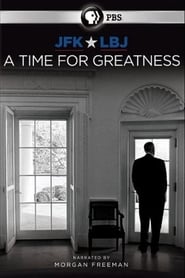
star 6How U.S. President Lyndon B. Johnson used his political prowess to make the Civil Rights Act of 1964 and the Voting Rights Act of 1965 happen. The story is told using rarely-seen footage, interviews and secret White House tapes.Best of Enemies
2015
Best of Enemies
2015
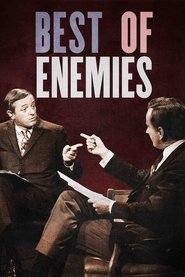
star 7.2A documentary about the legendary series of nationally televised debates in 1968 between two great public intellectuals, the liberal Gore Vidal and the conservative William F. Buckley Jr. Intended as commentary on the issues of their day, these vitriolic and explosive encounters came to define the modern era of public discourse in the media, marking the big bang moment of our contemporary media landscape when spectacle trumped content and argument replaced substance. Best of Enemies delves into the entangled biographies of these two great thinkers, and luxuriates in the language and the theater of their debates, begging the question, "What has television done to the way we discuss politics in our democracy today?"The Bomb
2015
The Bomb
2015
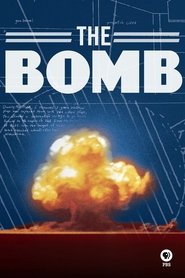
star 6.8Using masterfully restored footage from recently declassified images, The Bomb tells a powerful story of the most destructive invention in human history. From the earliest testing stages to its use as the ultimate chess piece in global politics, the program outlines how America developed the bomb, how it changed the world and how it continues to loom large in our lives. The show also includes interviews with prominent historians and government insiders, along with men and women who helped build the weapon piece by piece.Another Country
2015
Another Country
2015
star 5.8In this documentary companion to CHARLIE'S COUNTRY, Australian actor David Gulpilil tells the story of when his people's way of life was derailed by ours.The Stanford Prison Experiment
2015
star 6.8In 1971, Stanford's Professor Philip Zimbardo conducts a controversial psychology experiment in which college students pretend to be either prisoners or guards, but the proceedings soon get out of hand. Based on a true story.CIA Covert Experiments
2015
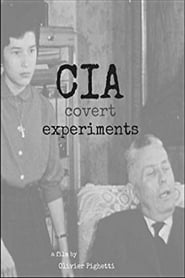
star 7.3It is August 1951 and an entire French village goes crazy. People are screaming in the streets and throwing themselves out of windows. 300 people are affected and 7 end up dead. Wild theories start circulating to explain the tragedy. 60 years later declassified documents from the United States reveal that the CIA conducted experiments on unsuspecting citizens.Vita Activa: The Spirit of Hannah Arendt
2015
star 7.4The life and work of German political philosopher of Jewish descent Hannah Arendt (1906-75), who caused a stir when she coined a subversive concept, the banality of evil, in her 1963 book on the trial of Nazi war criminal Adolph Eichmann (1906-62), held in Israel in 1961, which she covered for the New Yorker magazine.Fresh Dressed
2015
Fresh Dressed
2015
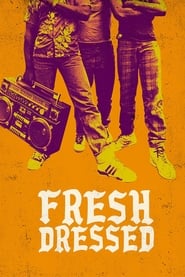
star 6.4The history of Hip-Hop / Urban fashion and its rise from southern cotton plantations to the gangs of 1970s in the South Bronx, to corporate America, and everywhere in-between. Supported by rich archival materials and in-depth interviews with individuals crucial to the evolution of a way of life--and the outsiders who studied and admired them – Fresh Dressed goes to the core of where style was born on the black and brown side of town.Colonia
2015
Colonia
2015
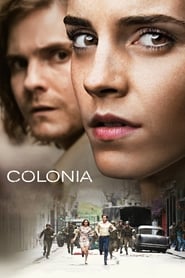
star 7.3A young woman's desperate search for her abducted boyfriend draws her into the infamous Colonia Dignidad, a sect nobody ever escaped from.A German Youth
2015
A German Youth
2015
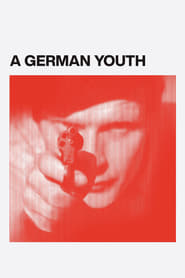
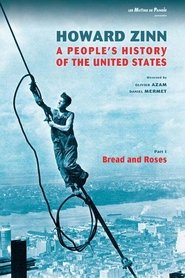
star 7.1At the end of the 1960s the post-war generation began to revolt against their parents. This was a generation disillusioned by anti-communist capitalism and a state apparatus in which they believed they saw fascist tendencies. This generation included journalist Ulrike Meinhof, lawyer Horst Mahler, filmmaker Holger Meins as well as students Gudrun Ensslin and Andreas Baader.Howard Zinn: A People's History of the United States
2015
star 6.9Between 1900 and 1920 more than 14 million immigrants arrived in the US, like Howard Zinn's parents. They came fleeing poverty or war, or racism, or religious persecution. They dreamed of a promised land, of wealth, or simply of a better life.Tehlirian on Trial: Armenia's Avenger
2015
star 8On 15 March 1921, Talat Pasha, a high-ranking Turkish dignitary, was shot dead in a Berlin street by a young Armenian. A few months later, Soghomon Tehlirian, his assassin, appeared before a German court. He faced the death penalty. Yet, during the trial, the victim gradually changed into the guilty party, and the accused was finally acquitted.Karski & The Lords of Humanity
2015
star 6The film tells the story of a member of the Polish underground who acted as a courier during World War II and whose most prominent mission was to inform the Allied powers of Nazi crimes against the Jews of Europe in an effort to prevent the Holocaust.The Birth of Saké
2015
The Birth of Saké
2015
star 7.1Through the unrelenting winter in the north of Japan, a small group of workers must brave unusual working conditions to bring to life a 2,000-year-old tradition known as sake. A cinematic documentary, The Birth of Sake is a visually immersive experience of an almost-secret world in which large sacrifices must be made for the survival of a time-honored brew.Friend
2015
Friend
2015
star 7.3The friendship of two boys is tested to its limits as they battle for survival during the Kosovo war.Streit's: Matzo and the American Dream
2015
On New York's rapidly gentrifying Lower East Side sits the Streit's Matzo factory. When its doors opened in 1925, it sat at the heart of the nation's largest Jewish immigrant community.We Like It Like That
2015
We Like It Like That
2015
Latin boogaloo is New York City. It is a product of the melting pot, a colorful expression of 1960s Latino soul, straight from the streets of El Barrio, the South Bronx and Brooklyn. Starring Latin boogaloo legends like Joe Bataan, Johnny Colon and Pete Rodriguez, We Like It Like That explores this lesser-known, but pivotal moment in Latin music history, through original interviews, music recordings, live performances, dancing and rare archival footage and images. From its origins to its recent resurgence in popularity, We Like It Like That tells the story of a sound that redefined a generation and was too funky to keep down.