New War Movies on Pantaflix - Page 274
All Services
Free Services
 Netflix
 Amazon Prime Video
 Apple iTunes
 Apple TV Plus
 Disney Plus
 Google Play Movies
 Paramount Plus
 Hulu
Hulu
 HBO Max
 YouTube
 fuboTV
 Peacock
 Peacock Premium
 Amazon Video
 The Roku Channel
 AMC+
AMC on Demand
AMC+
AMC on Demand
 Kocowa
 Hoopla
 The CW
 Vudu
Vudu
 Starz
Starz
 Showtime
 PBS
PBS
 Pantaflix
 FXNow
FXNow
 Tubi TV
 Kanopy
 Comedy Central
 Crunchyroll
 Microsoft Store
 Redbox
 Sun Nxt
 ABC
ABC
 DIRECTV
 Crackle
 Fandor
 Plex
Plex
Netflix
Amazon Prime Video
Apple iTunes
Apple TV Plus
Disney Plus
Google Play Movies
Paramount Plus
Hulu
HBO Max
YouTube
fuboTV
Peacock
Peacock Premium
Amazon Video
The Roku Channel
AMC+
AMC on Demand
Kocowa
Hoopla
The CW
Vudu
Starz
Showtime
PBS
Pantaflix
FXNow
Tubi TV
Kanopy
Comedy Central
Crunchyroll
Microsoft Store
Redbox
Sun Nxt
ABC
DIRECTV
Crackle
Fandor
Plex

Vietnam
1995
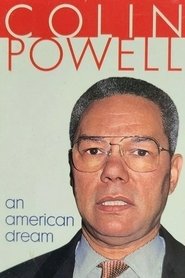
Colin Powell: An American Dream
1995
A biographical documentary on the life and career of U.S. Army General Colin Powell.Crackerjack
1995
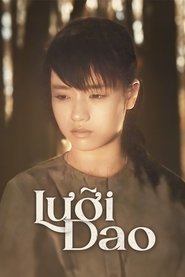
The Blade
1995
The Blade
1995
Nguyet is an orphaned child living with her grandma in a seaside village of devout Catholics. When the village becomes a battlefield, the grandma, enraged by the fact her son died due to Vietcong mine traps, begins throwing grenades against the winning Vietcong soldiers. To ensure a strategical victory, Dung, a young combatant, is deployed to gun down the old woman.生死千里
1995
生死千里
1995
60 Hours of the Maikop Brigade
1995
A two-part documentary about the Russian Army's disastrous assault on Grozny on New Year's Eve, 1994....und es ist zu vollstrecken
1995
The year is 1945. The final battle for Vienna has begun. Hitler declares the capital of the "Ostmark", as Austria was called then, a stand-off of the Third Reich against the Red Army; a last attempt to turn the tables yet. A group of Austrian resistance fighters recognize the impossibility and enable the Russians to occupy the city - this action was known as the "Radetzky Operation" - and with it Vienna was saved from complete destruction by the Allies. The operation was headed by Carl Szokoll.Flying Tigers
1995
Flying Tigers
1995
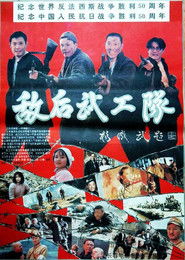
star 6.5Before the breakout of the Sino-Japanese War, Hong, Wang, and Peng were best friends. Hong and Wang secretly joined the local guerrillas after the Japanese began invading China. Hong ran a small business and Wang worked as a courier for a Japanese trading firm, hiding their true identities in order to collect intelligence on the Japanese for the Eight Route Army, and established a railway guerrilla unit. Wang soon found out that the trading firm he was working for was indeed an intelligence unit of the Japanese. They infiltrated the Japanese special forces and eliminated many Japanese. Suspicions arise from the Japanese as to the real identity of the individuals suspected of being part of the railway guerrilla forces, so called Flying Tigers unit, so the Japanese began to form a counter-spying operation and other under-handed means by recruiting Chinese traitors to uncover and eliminate them all.Unknown Soldier
1995
Unknown Soldier
1995
star 6In 1943, a group of Italian and Allied soldiers find themselves trapped inside an abandoned villa. When they discover that they are in fact dead and that the villa is the starting point of their journey into afterlife, each character tells his life story, united in the belief that they have died unjustly in a senseless war. The youngest, whose wife is expecting a child, wants to return to the world.There Was No War in '72
1995
star 3.3Somewhat autobiographical, the film opens right after the 6 day war, when Israelis euphoric with victory and the kids dress up as the captured Western Wall in Jerusalem. Now it is 1972. The film centers on a young boy, who is failing in school, and grounded from going on Passover trips with his classmates. Instead he must visit private academies (including military school) with his parents, who want him to do better in school. Foreshadowing to the coming war in 1973 and the defeat of euphoria.The Sorrow of Brook Steppe
1995
star 6Tells the tragic story of Mongolian herders in defense of their homeland against the invaders.七七事变
1995
七七事变
1995
Eclipse
1995
Eclipse
1995
star 6In ECLIPSE a child survivor wanders barefoot across a stunningly evocative landscape. Director Jason Ruscio expresses the profound loneliness of a decimated world through richly textured images that bring to mind the films of Andrei Tarkovsky – burned out interiors, hands grasping to hold each other, time-worn photographs and faceless soldiers in the snow. ECLIPSE is a remarkable meditation on the effects of war. Preserved by the Academy Film Archive in partnership with New York University Tisch School of the Arts Graduate Film & Television in 2016.The Boy on the White Horse
1995
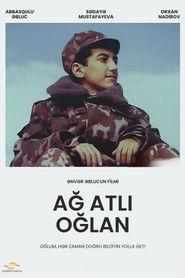
At the end of the Garabagh war, a young Azeri man, who has been witness to the martyrdom of many people and the dispatch of his friends and relatives to the war front, mounts a white horse and without informing his family sets out for the front, He joins the relief work group in spite of the objections of the commander of the forces, until...The Hope
1995
The Hope
1995
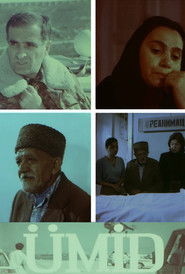
The film is about war in Garabagh and when we look at wounded solider we see our son, brother or father.The Scent of Joseph's Shirt
1995
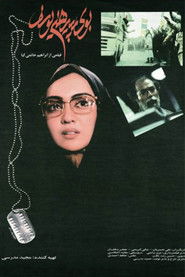
star 5.2َA father, Daei Ghafur, does not accept his son's death during 1980-1988 conflict between Iran and Iraq, and believes he is alive despite all evidence indicating otherwise. One day he meets a young lady, Shirin, at the airport who has travelled from Europe to Iran looking for his brother, Khosrow, a missing soldier at war. Both start searching their loved ones...See You
1995
See You
1995
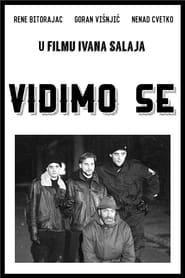
star 5In the war-driven Balkans in 1991, four friends meet to pay respect to a dead friend...Executed Dawns
1995
Executed Dawns
1995
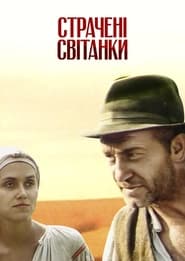
star 8Bolsheviks aim to set their rules on the lands of the Western Ukraine repeatedly occupied by them. UPA - the partisan army - resists their policy. The civilian population becomes a hostage of this war "without rules", and above all – relatives of the insurgents. Invaders and their allies cruelly torture the Ukrainian people, but the struggle continues. Irritated, "bolshevists" start evicting people to Siberia. UPA tries to prevent this action, but the forces are not equal. Insurgents can only take revenge and punish the executioners.Playback
1995
Playback
1995
The film documents a debate about early 20th century films, mainly 1910 to 1920, from short news reels to excerpts from full-length movies. At Amsterdam's Film Museum, film directors, students, and film researchers and archivists look at the moving images and discuss their meaning, in the social and technical contexts. Moody live music was added to the edited film.