New War Movies on Pantaflix - Page 451
All Services
Free Services
 Netflix
 Amazon Prime Video
 Apple iTunes
 Apple TV Plus
 Disney Plus
 Google Play Movies
 Paramount Plus
 Hulu
Hulu
 HBO Max
 YouTube
 fuboTV
 Peacock
 Peacock Premium
 Amazon Video
 The Roku Channel
 AMC+
AMC on Demand
AMC+
AMC on Demand
 Kocowa
 Hoopla
 The CW
 Vudu
Vudu
 Starz
Starz
 Showtime
 PBS
PBS
 Pantaflix
 FXNow
FXNow
 Tubi TV
 Kanopy
 Comedy Central
 Crunchyroll
 Microsoft Store
 Redbox
 Sun Nxt
 ABC
ABC
 DIRECTV
 Crackle
 Fandor
 Plex
Plex
Netflix
Amazon Prime Video
Apple iTunes
Apple TV Plus
Disney Plus
Google Play Movies
Paramount Plus
Hulu
HBO Max
YouTube
fuboTV
Peacock
Peacock Premium
Amazon Video
The Roku Channel
AMC+
AMC on Demand
Kocowa
Hoopla
The CW
Vudu
Starz
Showtime
PBS
Pantaflix
FXNow
Tubi TV
Kanopy
Comedy Central
Crunchyroll
Microsoft Store
Redbox
Sun Nxt
ABC
DIRECTV
Crackle
Fandor
Plex

Sandesaya
1960
Sandesaya
1960
Sandesaya (Sinhalese language word meaning The Message) is a 1960 film. The film based on the war between the Sinhalese people and the Portuguese invaders in Sri Lanka. It was directed by Sri Lankan film director Lester James Peries. It was produced by K. Gunaratnam on behalf of the Cinemas Company on the request of Raj Kapoor.Also People
1960
Also People
1960
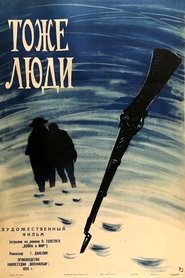
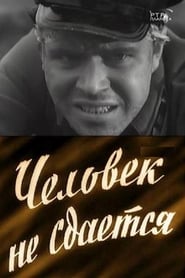
Based on an excerpt from the novel by L.N.Tolstoy "War and Peace." The war of 1812. The defeated Napoleonic army is retreating. Three Russian soldiers settled in a snowy forest near a fire: a young (Zaletayev), an elderly and a middle-aged one. Zaletayev fantasizes — as if he had captured Napoleon. The soldiers laugh good-naturedly at him. After dinner, they fall asleep... Two Frenchmen go to the clearing — an officer and a soldier. Russian soldiers wake up and, seeing that the officer is barely standing on his feet from cold and hunger, take him to the colonel. The French soldier sits down to the fire. The Russians give him porridge and vodka. The soldier, encouraged, sings a french song. Zaletayev echoes him. A tired Frenchman falls asleep on Zaletayev’s shoulder. The soldiers carefully shelter him. “Also people,” an elderly soldier says with a sigh.Five Branded Women
1960
Five Branded Women
1960
star 6Five Yugoslav women who consorted with the German occupiers are publicly humiliated and banished by the Yugoslav partisans but they take up arms to fend for themselves.Frihedens pris
1960
Frihedens pris
1960
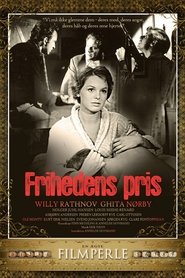
star 3.6The young sailor Morten returns home from his travels in the midst of the general strike of 1944, where he is confronted with the occupation. He joins a resistance group and actively participates in the struggle. There is no time for relaxation. He must always be on guard. Only with the sweet and charming young Lise can he relax a little and be himself. During a factory sabotage, the group is captured by the Germans.Foxhole in Cairo
1960
Foxhole in Cairo
1960
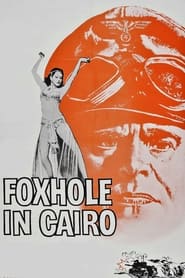
star 5.5A German spy in Cairo must report back to Rommel with information on British positions.North Rainbow
1960
Darkness Fell on Gotenhafen
1960
star 5.5The film depicts the first month of 1945 when the Russian Red Army broke into the eastern part of Germany and forced millions of civilians to flee in the coldest of winter. While the Russians invaded Ostpreussen hundred of thousands of civilians were evacuated by ships. Gotenhafen was the last open port and ships left the town almost by the minute, overloaded by refugees. One of the last ships to leave Gotenhafen was the 'Wilhelm Gustloff', a former 'Kraft durch Freude' pleasure cruiser designed for 1000 passengers. Until today it is unknown how many people were on board but it is said to be around 10.000. The ship sunk without a trace and only a handful of people survived this hellish nightmare.Normandy - Neman
1960
Normandy - Neman
1960
star 4.9A certain number of French fighter pilots who will not accept the Second Armistice at Compiègne nor Vichy's orders decide to join the USSR. Once they have reached Moscow they resume training and form a squadron they call "Normandie". Reinforced in 1944, the squadron wins many victories. Following the acts of valor displayed by its pilots during the Battle of the Nieman River, it becomes the "Normandie-Niemen" squadron for the rest of times...Nameless Island
1960
Nameless Island
1960
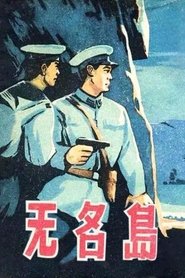
In 1958, during Chiang Kai-shek’s threats to retake the mainland, the Kuomintang navy attacked Fujian Province’s coast. The landing ship “Dacheng” was sunk by our torpedo boats, and Captain Wu John led troops to an unnamed island. Naval political instructor Wang Yongzhi and others, who fell into the water after a collision, also drifted there. They launched a political offensive against the enemy, who, unaware of our capabilities, awaited rescue. Prisoner Sun Gui swam back to his comrades, witnessed the cook’s beating, and returned to our side. Wang Yongzhi, seeing the enemy’s wait for rescue, forced them to reveal themselves. The enemy tried a fake negotiation to delay time. At night, Cai Dage brought reinforcements, eliminating the enemy on the island and their rescue ship.Sergeant X of the Foreign Legion
1960
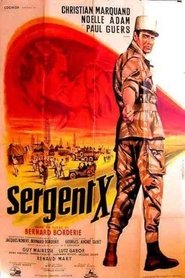
A remake and rewriting by director Bernard Borderie and scripters of a well-made 1932 film, this routine French drama seems a little outdated. The story has changed from a Russian officer who returns home from the war to find his wife has remarried, to a former paratrooper who tries to drive a stolen truck back from Morocco and suffers an accident -- and the same fate as the Russian. As a result of his injuries and the subsequent delay, the ex-military man is unable to get home as scheduled, and the woman he loves decides that he has left her. Once she "realizes" that supposed truth, she decides to marry her boss. As in the earlier film, one of the protagonists ends up in the French Foreign Legion and all three head toward a fateful meeting in a North African desert.Punishment Battalion
1960
Punishment Battalion
1960
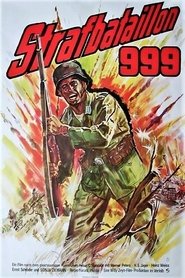
star 6The film focuses on life in a World War II German penal battalion camp somewhere in Russia. The convicts include a heroic doctor unjustly convicted of avoiding military service, an officer who retreated against orders, and common criminals. It shows their life in the camp, clearing mines, living in trenches on the front line.Sink the Bismarck!
1960
Sink the Bismarck!
1960
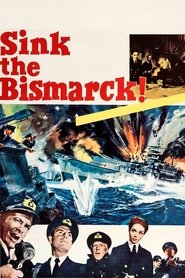
star 6.8The story of the breakout of the German battleship Bismarck—accompanied by the heavy cruiser Prinz Eugen—during the early days of World War II. The Bismarck and her sister ship, Tirpitz, were the most powerful battleships in the European theater of World War II. The British Navy must find and destroy Bismarck before it can escape into the convoy lanes to inflict severe damage on the cargo shipping which was the lifeblood of the British Isles. With eight 15 inch guns, it was capable of destroying every ship in a convoy while remaining beyond the range of all Royal Navy warships.赤峰号
1960
赤峰号
1960
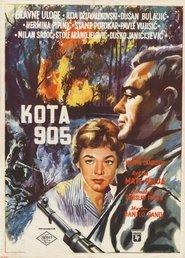
Point 905
1960
Point 905
1960
star 5After the war, a Yugoslav army captain, Vladimir, is in charge of suppressing armed supporters of the former king's regime, led by major Momir. After Vladimir's best friend is killed, he joins the rebels pretending to be one of the king's supporters. However, one of Momir's supporters, a man who harbors rebels, has an attractive daughter who is engaged to marry Momir. She knows that Vladimir is an officer of the Yugoslav army, because she has seen him wearing a Yugoslav uniform. Vladimir fears that she might betray him.Carthage in Flames
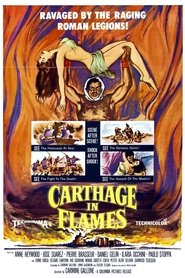
1960
Carthage in Flames
1960
star 5.1Historical drama depicting the last of the Punic Wars between the Roman Republic and Carthage.The Wandering Princess
1960
star 6.7Pu Zhe, the younger brother of the Emperor of Manchukuo, marries Ryuko the daughter of an aristocratic family. To the surprise of all, a deep love between Pu Zhe and Ryuko develops and is put to the test when Japan loses the war.La fiel infanteria
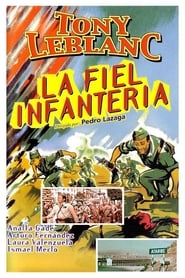
1960
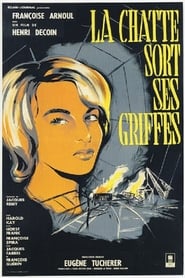
The Cat Shows Her Claws
1960
star 5.2France under the Occupation. Executed for treason against the Resistance, Cora, code-named "La Chatte", was left for dead. Recovered and cared for by the Germans, Dr. von Hollwitz brainwashed her to control her and use her as a counter-espionage. In the spring of 1944, her escape was faked so that she could resume contact with the Resistance. She has to scupper the mission of Charles, an engineer with the SNCF, to blow up a train loaded with V1s intended to power the launch pads set up on the French coast to bomb London. But at the last moment, La Chatte regains her lucidity.Raid on the White Tiger Regiment
1960
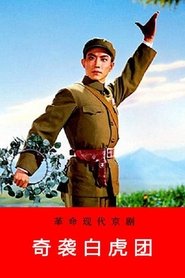
star 5This classic revolutionary model opera is based on a true story during the relatively short-term military conflict in which South Korea's best elite troop the White Tiger Regiment, that was a mechanized force fully equipped by the United States and boasted of being invincible (in a typical South Korean manner of bragging and fabricating), was destroyed in a raid.