New War Movies on Pantaflix - Page 452
All Services
Free Services
 Netflix
 Amazon Prime Video
 Apple iTunes
 Apple TV Plus
 Disney Plus
 Google Play Movies
 Paramount Plus
 Hulu
Hulu
 HBO Max
 YouTube
 fuboTV
 Peacock
 Peacock Premium
 Amazon Video
 The Roku Channel
 AMC+
AMC on Demand
AMC+
AMC on Demand
 Kocowa
 Hoopla
 The CW
 Vudu
Vudu
 Starz
Starz
 Showtime
 PBS
PBS
 Pantaflix
 FXNow
FXNow
 Tubi TV
 Kanopy
 Comedy Central
 Crunchyroll
 Microsoft Store
 Redbox
 Sun Nxt
 ABC
ABC
 DIRECTV
 Crackle
 Fandor
 Plex
Plex
Netflix
Amazon Prime Video
Apple iTunes
Apple TV Plus
Disney Plus
Google Play Movies
Paramount Plus
Hulu
HBO Max
YouTube
fuboTV
Peacock
Peacock Premium
Amazon Video
The Roku Channel
AMC+
AMC on Demand
Kocowa
Hoopla
The CW
Vudu
Starz
Showtime
PBS
Pantaflix
FXNow
Tubi TV
Kanopy
Comedy Central
Crunchyroll
Microsoft Store
Redbox
Sun Nxt
ABC
DIRECTV
Crackle
Fandor
Plex

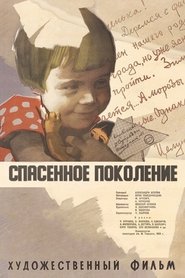
The Rescued Generation
1960
star 5Antonina Vasilyevna, as a member of the bureau of the district committee of the party, was instructed to save the Leningrad children, whom the war overtook in the suburban camps. She took them to the Kirov region. After twelve days of hard travel, the children arrived in the village of Supryadki...Female Slave Ship
1960
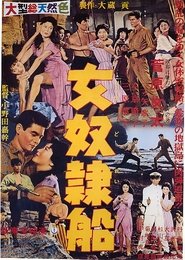
Female Slave Ship
1960
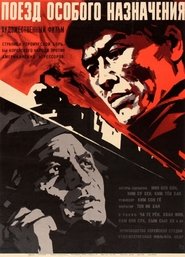
star 6The year is 1945, months prior to Japan's ultimate defeat in WW2, and military lieutenant Sugawa is sent on a critical mission to deliver micro-fiche war plans to Tokyo from his base in Malaysia. But while flying over Chinese waters his plane is shot down and he is taken aboard a ship bound for Shanghai to deliver its merchandise - a ship filled with Female Slaves kidnapped from Japan. Will he abandon the women to pursue his main objective? Or will he fight foes, spies and pirates to save these women against all odds?Qi xi
1960
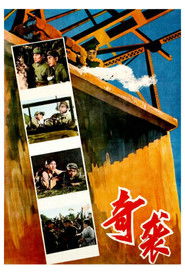
Qi xi
1960
star 5To help the Koreans against the imperialist Americans, Feng Yang, a scout for the Chinese army, must take a crack platoon to blow up the Kangping bridge in order to cut off the American retreat/reinforcement and make possible a major assault on American positions.Smrť sa volá Engelchen
1960
The television film based on the novel of the same name by Ladislav Mňaček draws on the period of World War II and the Slovak National Uprising. The film's story is composed of two intertwining time lines. In the images of the present that frame the entire narrative, the young partisan Voloďa - a hero with autobiographical features - recovers from a serious injury. In feverish reminiscences and in conversations with his nurse Eliška, he recapitulates the eventful events of his time in the partisan group in the village of Ploština, which the partisans abandoned under the pressure of events and left to the mercy of the German commando. Voloďa is haunted by visions of the burning Ploština, remorse and responsibility for the tragedy. In feverish reminiscences, he relives the meetings of the partisan detachment with the German commando. Memories of the mysterious Jewish girl Marta, a partisan liaison with whom Pavol had a passionate love affair, also return to him.Dongmei
1960
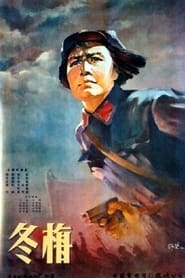
Dongmei
1960
Despite being pregnant, A female commissar continues to resist the Japanese invasion and forward the communist cause.In The Name of Revolution
1960
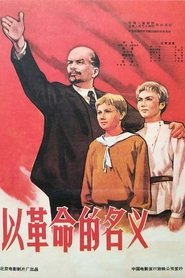
In 1918, shortly after the Soviet Socialist Revolution in October, the Red Army soldier Savelyev went to Moscow and was assassinated by counter-revolutionaries at a small station. The sons Vasya and Misha have just lost their mothers, and now they have lost their fathers, and they have no choice but to wander into Moscow. Lenin and Dzerzhinsky met the two children and took them in and took care of them.Ateşten Damla
1960
Ateşten Damla
1960
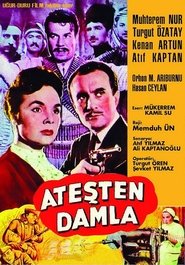
The film tells the story of Serap and Ahmet, who fall in love during the War of Independence. Emine commits suicide after giving birth to a baby girl. Osman Müfit, the village teacher, takes the girl under his wing and names her Serap. When Serap graduates from the Girls' Teacher Training College in Istanbul, Anatolia is under occupation. The situation in Balıkesir is no different. On one side is Rıza Bey, the village chief who collaborates with Anzavur, and on the other is Osman Müfit, the leader of the National Forces. Rıza Bey's son Ahmet also joins the national forces and fights against his father. Serap returns to Balıkesir from Istanbul. Serap and Ahmet meet in the midst of the war. These difficult days for the country will bring them even closer together.A Loaf of Bread
1960
A Loaf of Bread
1960
star 6.6By the end of the second World War, three prisoners wish to escape from the train carrying them from one concentration camp to another. To make it happen, they need to get food first.The Struggle
1960
The Struggle
1960
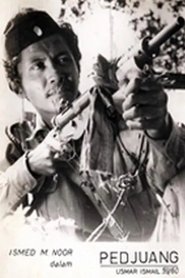
star 5Devoted to the heroes who fought for their homeland’s freedom in the 1947 Indonesian war of liberation.On the 38th Parallel
1960
On the 38th Parallel
1960
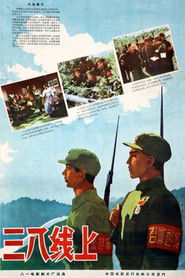
star 5A group of Chinese and North Korean soldiers defend their homeland against American spies who are trying to sneak over the border to gather intelligence.On The Railway
1960
On The Railway
1960
star 5.2Having been arrested by the American forces, a Korean engineer tries to save a North-Korean engine from the possession of the enemy by pretending he is working for them.The Island of the Brave
1960
star 6.8An officer in the Greek army arrives in Crete, immediately after the fall in the hands of the Germans. In collaboration with rebels and allies saboteurs involved in sabotage installations of the Germans. The old favorite will ensure some secret documents, which will steal from the German commander, but then betrayal will be revealed and will be led to the firing squad. The young officer would punish will escape in Cairo.Surrounded
1960
Surrounded
1960
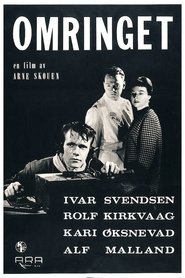
star 4The film describes how resistance fighter Knut Magne Haugland operated an illegal telegraph station on the roof of the National Hospital in 1944 during World War II.Wir Kellerkinder
1960
Wir Kellerkinder
1960
star 5.9During the Third Reich, Macke played the drums for the Hitler Youth, but also had a "dangerous" penchant for jazz. After the war, he came under ideological fire in the Soviet zone. Finally in West Germany, he ends up in an institution.Pineapple Butai
1959
Pineapple Butai
1959
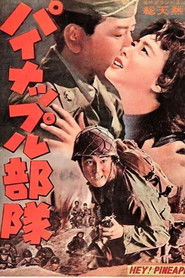
The story of the role played by Japanese-American soldiers from Hawaii in the Korean War of the 1950s.Cuban Rebel Girls
1959
Cuban Rebel Girls
1959
star 1.9Errol Flynn, playing himself as a war correspondent, reports the dangerous goings-on of a band of Cuban rebels- Two of which are misguided teenage girls from America. The film was shot with Castro's cooperation while he was still fighting Batista's forces.Octopus Cafe
1959
Octopus Cafe
1959
star 6.7Comic stories of Varsovians living under the Nazi occupation and struggling with the enemy.Without Trumpet or Drum
1959
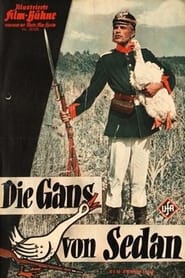
Summer 1870. Following the French defeat at Sedan. Léon, a soldier in a detachment isolated in the Ardennes forest, is sent in search of water. When he discovers the most peaceful of rivers, he decides to undress and bathe in it. At bend of the river he catches sight of another naked swimmer. It's a Prussian! Both men start bickering a bit: aren't they supposed to be arch enemies? But they soon fraternize. Unfortunately the patrol has not vanished in the haze and they hear it coming. Each man gets hold of his uniform and runs away in two opposite directions. The only trouble is that Fritz the Prussian has donned the French uniform and Leon the Prussian one!Thirst
1959
Thirst
1959
star 3.8Based on real events. Vyacheslav Tikhonov, in the first of his spy roles, portrays a scout in an operation to free an Odessa water plant from the Nazis.The Cow and I
1959
The Cow and I
1959
star 6.7In 1942, a French prisonner of war in Germany decide to escape to France using a cow hold by a lunge as a decoy. He cross all Germany in this way.