New Documentary Movies on The Roku Channel - Page 130
All Services
Free Services
 Netflix
 Amazon Prime Video
 Apple iTunes
 Apple TV Plus
 Disney Plus
 Google Play Movies
 Paramount Plus
 Hulu
Hulu
 HBO Max
 YouTube
 fuboTV
 Peacock
 Peacock Premium
 Amazon Video
 The Roku Channel
 AMC+
AMC on Demand
AMC+
AMC on Demand
 Kocowa
 Hoopla
 The CW
 Vudu
Vudu
 Starz
Starz
 Showtime
 PBS
PBS
 Pantaflix
 FXNow
FXNow
 Tubi TV
 Kanopy
 Comedy Central
 Crunchyroll
 Microsoft Store
 Redbox
 Sun Nxt
 ABC
ABC
 DIRECTV
 Crackle
 Fandor
 Plex
Plex
Netflix
Amazon Prime Video
Apple iTunes
Apple TV Plus
Disney Plus
Google Play Movies
Paramount Plus
Hulu
HBO Max
YouTube
fuboTV
Peacock
Peacock Premium
Amazon Video
The Roku Channel
AMC+
AMC on Demand
Kocowa
Hoopla
The CW
Vudu
Starz
Showtime
PBS
Pantaflix
FXNow
Tubi TV
Kanopy
Comedy Central
Crunchyroll
Microsoft Store
Redbox
Sun Nxt
ABC
DIRECTV
Crackle
Fandor
Plex

Is the Crown at war with us?
2003
star 6.5In the summer of 2000, federal fishery officers appeared to wage war on the Mi'gmaq fishermen of Burnt Church, New Brunswick. Why would officials of the Canadian government attack citizens for exercising rights that had been affirmed by the highest court in the land? Alanis Obomsawin casts her nets into history to provide a context for the events on Miramichi Bay.Game Over: Kasparov and the Machine
2003
star 6.4Garry Kasparov is possibly the greatest chess player who has ever lived. In 1997, he played a match against the greatest chess computer: IBM's Deep Blue. He lost. This film depicts the drama that happened away from the chess board from Kasparov's perspective. It explores the psychological aspects of the game and the paranoia surrounding IBM's ultimate chess machine.Hey! Is Dee Dee Home?
2003
star 5.6Punk rock devotees will welcome director Lech Kowalski's reflective video portrait of late bassist Dee Dee Ramone and his life as a music industry icon -- including his self-destructive bouts with heroin. The centerpiece of the hourlong documentary -- which is peppered with vintage performance clips -- is a 1991 interview with a clean Dee Dee, who talks at length about his storied career and penchant for living on the edge.Plaster Caster
2003
Plaster Caster
2003
star 6Portrait of legendary artist and groupie Cynthia Plaster Caster famous for plaster casting the penises of rock stars.The White Stripes: Candy Coloured Blues
2003
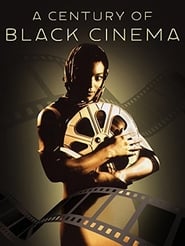
star 6.5On 'Candy Coloured Blues' we go behind the music to get the inside track on the making of this unique band. Packed with interviews, this in-depth documentary film takes you where the cameras never previously preyed ...A Century of Black Cinema
2003
This film highlights moments in the long and rich African American cinema history in relation to social and political events, and how it affected Black viewers of the time.Overnight
2003
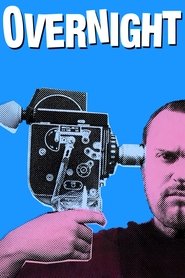
Overnight
2003
star 6.3Alternately hilarious and horrifying, Overnight chronicles one man's misadventures of making a Hollywood movie. It starts out as a rags to riches story as Troy Duffy, a Boston-bred bartender, sells his first screenplay for The Boondock Saints.Link Wray: The Rumble Man
2003
The Rumble Man was recorded and filmed during Link Wray's UK tour of March 1996 and is a mix of footage and documentary, featuring an extensive interview with the man himself. This is a piece of rock 'n' roll history. In his own words and music, you are about to witness one of the greatest guitar players this planet has ever seen. So, sit back, hit that volume control to distortion and listen to The Rumble Man.Faster
2003
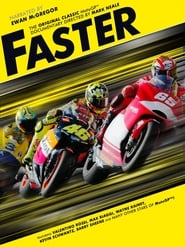
Faster
2003
star 7.7Faster is an electrifying tribute to the white-knuckle world of MotoGP™ — the fastest sport on two wheels — where the world’s top riders go wheel to wheel at over 200mph and crash at over 100mph. Narrated by Ewan McGregor, Faster chases two seasons’ worth of the world championship, featuring revealing interviews with riders, mechanics, doctors, commentators and fans. If you want high octane, adrenaline fuelled thrills, Faster will take you on a nerve shredding journey through the most exciting sport on the planet!Prisoner of Paradise
2003
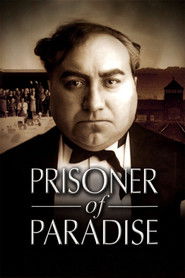
Prisoner of Paradise
2003
star 6.3The film tells the true story of Kurt Gerron, a German-Jewish cabaret and film actor in the 1920s and 1930s who was sent to the Theresienstadt concentration camp where he was commanded to write and direct a Nazi propaganda film.Ocean Wonderland 3D
2003
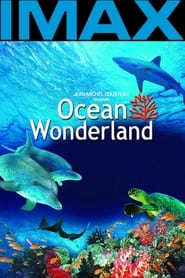
Ocean Wonderland 3D
2003
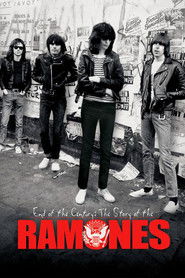
star 5.8Shot on the Great Barrier Reef in Australia and in the Bahamas, Ocean Wonderland brings to you the amazing beauty of the many varieties of coral and the immense diversity of the marine life thriving there.End of the Century: The Story of the Ramones
2003
star 7.6A years-in-the-making documentary on the legendary punk band the Ramones. Through a mixture of archival footage, archival and new interviews with all members of the band's various lineups, and new interviews with a number of their contemporaries, the film traces the peaks and valleys the band experienced over the course of its 20-plus year career before disbanding in 1995.Blue Collar Comedy Tour: The Movie
2003
star 5.9The comedic stylings of four sort-of famous funnymen are brought to the big screen courtesy of this 2002 documentary.Táncrend
2003
Táncrend
2003
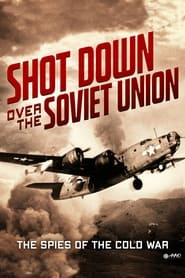
Once a week, the dance teacher rolls into a small Hungarian village at the end of the world in his yellow Citroën and, like a magician, gives lessons to women and men: how to rise elegantly into the air and fly to the melody of the music. The film is about how the blue bird of happiness flutters around us here.Shot down over the Soviet Union
2003
The reconnaissance flights of the Americans into East Block airspace were more numerous and more dangerous than originally claimed. From the sky, the Cold War was waged in earnest - with cameras, aerial canons and rockets. There were countless weapons launched, prisoners taken and fatalities suffered. During the secret aerial war the superpowers forced patently western aircraft into Soviet airspace; Western Germany was a sort of base for America's espionage activities. The film discloses a multitude of heretofore unknown actions, elucidated by impressive, often emotional commentary by the actual participants. The contemporary witnesses discuss operations including the dropping of agents during night flights, and top-secret actions undertaken to detect potential bases for nuclear attacks.Alpine Lakes - Quiet Beauty
2003
The film retraces the water's journey - from the glacier down into the valley, through the mountains to its source, illustrating the beauty of natural, smaller lakes in Austria with their fascinating world of flora and fauna and tells the story of enchanted cliffs, a spectacular underwater world, dragons, ancient species of fish, as well as of speleologists and modern science.Elvis: The Journey
2003
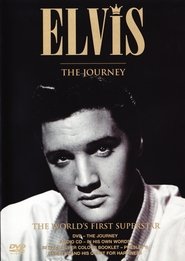
Elvis: The Journey
2003
An in-depth look at the boy and the man who was born to be a legend. Together with rare unseen footage we chart his progress from his poor beginnings, through his teenage years to the eventual meteoric rise of a star.Civil War: Shot to Pieces
2002
Mark Bussler's film Civil War Life: Shot to Pieces chronicles the life of Harvard student William F. Bartlett, who leaves school to sign up with the Union Army. After losing a leg to Southern gunfire, he begins a relationship with Agnes Pomeroy. William eventually rejoins the war effort, but is captured by enemy forces. He attempts to survive his squalid conditions as a POW because of his love for Agnes.Vertical Frontier
2002
Vertical Frontier
2002
star 10From John Muir in the 1860s to today's super-athletes, Vertical Frontier tells the rich and captivating saga of these free-spirited climbers whose contributions to the techniques, equipment, and ethics of mountaineering enabled them to be the first to conquer Yosemite's legendary big walls. Illustrated with spectacular footage, both old and new, shot on these granite walls, the story is told by the climbers whose artistry and relentless determination helped launch a sport now enjoyed by millions around the world, including David Brower, Warren Harding, Royal Robbins, Yvon Chouinard, Tom Frost, Jim Bridwell, Lynn Hill, Hans Florine, Dean Potter, and many others. Their epic feats range from the first ascent of El Capitan, which took 45 days over a year and a half, to today's speed climbers who complete the same route in under three hours.Amandla! A Revolution in Four-Part Harmony
2002
star 6.4The struggle to eradicate apartheid in South Africa has been chronicled over time, but no one has addressed the vital role music plays in this challenge. This documentary by Lee Hirsch recounts a fascinating and little-known part of South Africa's political history through archival footage, interviews and, of course, several mesmerizing musical performances.