New Documentary Movies on Tub Tv - Page 11
All Services
Free Services
 Netflix
 Amazon Prime Video
 Apple iTunes
 Apple TV Plus
 Disney Plus
 Google Play Movies
 Paramount Plus
 Hulu
Hulu
 HBO Max
 YouTube
 fuboTV
 Peacock
 Peacock Premium
 Amazon Video
 The Roku Channel
 AMC+
AMC on Demand
AMC+
AMC on Demand
 Kocowa
 Hoopla
 The CW
 Vudu
Vudu
 Starz
Starz
 Showtime
 PBS
PBS
 Pantaflix
 FXNow
FXNow
 Tubi TV
 Kanopy
 Comedy Central
 Crunchyroll
 Microsoft Store
 Redbox
 Sun Nxt
 ABC
ABC
 DIRECTV
 Crackle
 Fandor
 Plex
Plex
Netflix
Amazon Prime Video
Apple iTunes
Apple TV Plus
Disney Plus
Google Play Movies
Paramount Plus
Hulu
HBO Max
YouTube
fuboTV
Peacock
Peacock Premium
Amazon Video
The Roku Channel
AMC+
AMC on Demand
Kocowa
Hoopla
The CW
Vudu
Starz
Showtime
PBS
Pantaflix
FXNow
Tubi TV
Kanopy
Comedy Central
Crunchyroll
Microsoft Store
Redbox
Sun Nxt
ABC
DIRECTV
Crackle
Fandor
Plex

Eoin's Lost Footage
2025
Eoin's Lost Footage
2025
A documentary pieced together from the huge number of tapes left behind by the late Eoin Coffey, an aspiring filmmaker from the city of Derry.Louvre Heist: Minute by Minute
2025
star 6.5Dive into a real-time investigation of the shocking daylight robbery at Paris' Louvre Museum. Former thieves, security staff, eyewitnesses and investigators piece together the crime and ongoing chase to recover France's crown jewels before it's too late.Balar en Silencio
2025
Balar en Silencio
2025
To Live and Survive
2025
To Live and Survive
2025
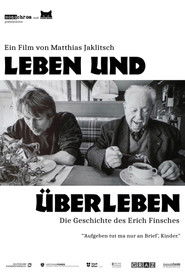
The documentary portrays Erich Finsches, a true Viennese original and Holocaust survivor. Based on over six years of collected material by director Matthias Jaklitsch, who supported Erich on his travels, the film shows him as a positive, humorous, but also argumentative and unique personality in all his humanity. At 97, Erich continues to tirelessly advocate for remembrance of the past, attending memorial ceremonies and schools to spread his message of "Never Again." Instead of a traditional "eyewitness narrative," the film not only documents Erich's life, his youth during Nazi persecution, and his rebuilding of a new life after the war, but also the relationship between the director and the protagonist.The Stone That Remembers
2025
The Stone That Remembers interprets the Durga Mahisas-uramardini statue’s journey from its home, the Singhasari Temple, to the hands of colonizers, and various museums. The film follow the patriarchal displacement of a woman that represents the Durga, exploring the parallels between the fate of the statue and many women today.Who But When, How
2025
Who But When, How
2025
Who But When, How is an autobiographical work that traces the director’s return to Israel in the midst of its traumatic moment and horrific acts in Gaza. As his aging father suffers the onset of dementia, Sharim’s poetic meditations on loss are juxtaposed against the conflicted, agonizing histories of Palestine and Israel, and a destabilized future.To be someone in life
2025
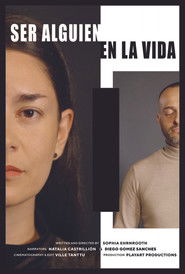
In a world of uncertainty, two narrators lend their voice to the dreams, fears, and hopes of Latin American youth. Who has the right to dream and at what cost do we lose our dreams of the future?The La Pastoril Massacre
2025
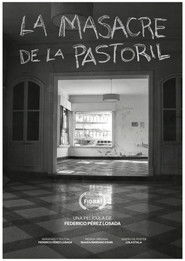
How to capture the violence that remains on the walls? How to address absence, more than forty years after the events occurred? Memory that seeks its place amidst the blood and broken glass.Machines of the night
2025
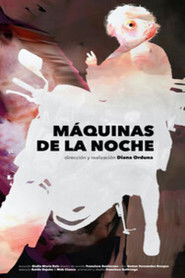
A drift between two cities: Berlin and Quito. A sensitive voice challenges the boundaries of reason through questions born from the everyday: Have you ever thought about how many calculations you make in a day? Prices, distances, inflation, schedules. Do you see your breasts beneath the blue robe? Why did they leave me the necklace but take my underwear? The audiovisual narrative seeks to reach the point where the meaning of hegemonic logic fractures, blending the documentary code with rhetorical elements characteristic of science fiction.Debajo de Esas Galeras
2025
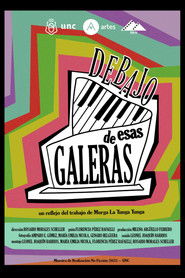
La Tunga Tunga is a murga that is committed to a creative, collaborative, and community-based process, organizing itself to take part in Carnival with the aim of giving voice to collective grievances. In 2025, the national and local government are questioning cultural practices and artistic collectives. In this context, they are defunding culture and, in particular, the neighborhood carnival parades (corsos). La Tunga Tunga resists through humor and dance, asserting celebration as a right and public spaces as territories of struggle.PESA
2025
PESA
2025
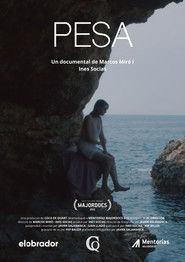
Paula is a 20-year-old girl who has received comments about her body since she was a child. As she has grown up, these comments, combined with other factors, have caused her to develop an eating disorder. Marcos A. Miró and Ines Socias have decided to tell her story. In the documentary, we listen to Paula to better understand this disorder and teach society that it is not just about “stopping eating.” Throughout the documentary, we observe overcoming, accepting, and living with an eating disorder.You're Not My Mom
2025
You're Not My Mom
2025
The director's candid confession offers an unusually honest look at foster parenting. It reveals the difficult journey she and her adopted daughter have been through, and together with other foster parents, she searches for answers that would help her understand the sudden separation on the threshold of her daughter's adulthood.Wînipêk
2025
Wînipêk
2025
This documentary explores Indigeneity in prairie settings, highlighting feelings of disconnection and the desire for kinship with the Land. Through contrasting experiences and landscapes, it reflects on cultural dispossession and the ongoing journey to reconnect with one’s roots.Solastalgie
2025
Solastalgie
2025
A region’s beauty gradually reveals an oppressive visual and auditory human presence and the scars inflicted by destructive exploitation. What if this reality wasn't the end?Idak-Idak-Idak
2025
Idak-Idak-Idak
2025
Idak-Idak-Idak is a hybrid-documentary relating the stolen Lombok Treasures with the Sasak diaspora through three generations of women: a daughter, her mother, and her grandmother. Blending full-spectrum cinematography with personal footage, this film moves between Indonesia and the Netherlands to examine colonial legacies, displacement and healing the heart of home. In Sasak, "Idak" can be interpreted as both “heart” and “absence”, becoming a container for memory, loss, and the unseen layers of the self between generations.El coloso
2025
El coloso
2025
“El Coloso” tells the story of the life and legacy of Freddy Rincón, a giant of Colombian soccer who conquered Brazil with his strength and talent, filled stadiums in Spain, and gave his country one of its most unforgettable goals against Germany. From his roots in Buenaventura to becoming a symbol of national pride, Rincón transcended the soccer field to inspire an entire generation. More than just a soccer player, he was a beacon of hope, whose greatness lives on in the memory of Colombians.Old Man's Journeys
2025
Old Man's Journeys
2025
Legendary film actor Juozas Budraitis turns 85. Over his career, he has appeared in more than 120 films not only in Eastern and Central Europe but also in Switzerland and Italy. Film sets brought him close friendships and moments of joyful creativity. Yet today, many of his colleagues are gone, and the actor is increasingly visited by the regret of unfinished work. The Old Man’s Journey is shaped not by the structure of a traditional biographical film but by the fragmentary nature of memory. The roles he has embodied remain etched in his recollection no less vividly than the key events of his life, and so the film guides the viewer between Budraitis’s youthful memories and his most significant cinematic experiences, weaving them into a single, nostalgic stream of remembrance.Someone's Dream
2025
Someone's Dream
2025