New Documentary Movies on Tub Tv - Page 304
All Services
Free Services
 Netflix
 Amazon Prime Video
 Apple iTunes
 Apple TV Plus
 Disney Plus
 Google Play Movies
 Paramount Plus
 Hulu
Hulu
 HBO Max
 YouTube
 fuboTV
 Peacock
 Peacock Premium
 Amazon Video
 The Roku Channel
 AMC+
AMC on Demand
AMC+
AMC on Demand
 Kocowa
 Hoopla
 The CW
 Vudu
Vudu
 Starz
Starz
 Showtime
 PBS
PBS
 Pantaflix
 FXNow
FXNow
 Tubi TV
 Kanopy
 Comedy Central
 Crunchyroll
 Microsoft Store
 Redbox
 Sun Nxt
 ABC
ABC
 DIRECTV
 Crackle
 Fandor
 Plex
Plex
Netflix
Amazon Prime Video
Apple iTunes
Apple TV Plus
Disney Plus
Google Play Movies
Paramount Plus
Hulu
HBO Max
YouTube
fuboTV
Peacock
Peacock Premium
Amazon Video
The Roku Channel
AMC+
AMC on Demand
Kocowa
Hoopla
The CW
Vudu
Starz
Showtime
PBS
Pantaflix
FXNow
Tubi TV
Kanopy
Comedy Central
Crunchyroll
Microsoft Store
Redbox
Sun Nxt
ABC
DIRECTV
Crackle
Fandor
Plex

Beyond Eden
2025
Beyond Eden
2025
In the 1970’s, lesbians across the United States moved out to wild, untamed landscapes to build a world without men. Some of them never left. 50 years on, Beyond Eden follows some of the original Land Dykes as they grapple with ageing, mortality and the legacy of the Women’s Lands they dedicated their lives to building.Becoming a Film Director
2025
Zhou Xiaoting tried to use film as a love letter to say goodbye to her mother, while Han Xia wanted to prove her perfectionism. Each person has their own intentions and meaning when making a film, but they all face different challenges on their journey to becoming a director.Hidden in the Leaves
2025
Hidden in the Leaves
2025
People accustomed to living in urban areas gradually lost touch with the primordial and in the reduced presence of civilization began to feel a certain anxiety. Darkness occupied the spaces, changing their content and essence, leaving the exposed observer completely alone. The atmosphere of the film creates a feeling of alienation that insists on the discomfort caused by the mere presence of darkness. The boundaries between the external world and inner fear are erased, and darkness becomes all-encompassing.Nice Girls Don't Ask
2025
Nice Girls Don't Ask
2025
In the 1950s, thousands of “social guidance” films were shown to shape behavior according to traditional gender norms. “Nice Girls Don’t Ask” excavates footage from vintage educational films to cast a subversive but humorous lens on the proffered rules and expectations. What was the cost of this behavioral straitjacket for a generation of women? Is the pendulum creeping back?What Does the Mud Whisper?
2025
In a land where mud holds memory, a little girl named Tako embarks us through myth and imagination, crafting new stories from ancient echoes.As Long As They Don’t Find Us
2025
A found footage documentary about one of the first female directing students at the Film School in Łódź – Stefania Świeca.Two Cigarettes
2025
Two Cigarettes
2025
Unable to come to terms with his father’s death, Rafał meets his murderer, 21-year-old Daniel, recently released from a juvenile detention center. As Daniel tries to rebuild his life, he teeters on the edge of homelessness and crime.On My Own Terms
2025
On My Own Terms
2025
Paweł, a young boxer, and his half‑sister Julia inherit a flat, offering hope to leave the orphanage for their first real home. Their quest for stability tests their bond and confronts adult challenges.THERE ARE OTHERS LIKE ME
2025
MAZOHA, a lonely artist, shares thoughts and moments from his everyday life to show us that this is the way to achieve your dreams. What is this way? By always chasing them, dedicated to what you are truly pursuing. To express yourself.Girliefriends
2025
Girliefriends
2025
Mrs. Ritsa, recently widowed, now lives in an empty house and the only reason she wakes up early in the morning is to go to KIFI. KIFI (Day Care Center for the Elderly) is a place where many elderly women gather for sous-vide, coffee and -most importantly- to keep each other company.Greetings from the Secretariat
2025
On a paradise island, not everything is as perfect as it seems. A found footage film made out of crime scene photographs discovered in a deserted police station in Croatia.FELIZ 200!
2025
FELIZ 200!
2025
the salt keeper's house
2025
Amidst the serene landscape of the Angelohori lagoon, “To Spiti tou Fylaka tis Alykis" ("The Salt Keeper’s House") is a meeting point where the sounds of nature and music intertwine, revealing the inherent bond between nature, art and people.Siegfried & Roy: The Original Tiger Kings
2025
Exploring the fame of groundbreaking magicians Siegfried and Roy, globally renowned for blending magic and big cats.Thank God for Smart People, or Else I Would Be Dumb 2
2025
star 10The smart people are the reason there are dumb people.“The Four Seasons” in Venice
2025
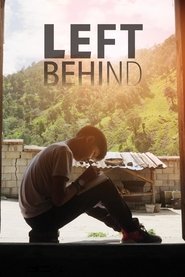
To mark the 300th anniversary of the publication of Antonio Vivaldi's “Four Seasons,” violinist Théotime Langlois de Swarte and the ensemble Le Consort perform his most famous work in four iconic venues in Venice.Left Behind
2025
Left Behind
2025
In China, over 69 million children have been left behind by their parents in their home villages while they migrate to big cities to survive. Qui Che (14) was left by his mother with his grandparents. He was 4 years old when his father tragically took his own life due to their financial situation. He grew up lonely with unbearable burdens to help his grandparents with farm work. He vents his difficulties by writing diaries that provide a glimpse into his inner world. His story reveals a personal journey filled with emotional, familial, and societal challenges, especially the absence of his mother, who returns home once in three years. The film is a microcosm of the universal migration tendencies around the world.KCW: Kaiju FIGHT
2025
papingerenger
2025
papingerenger
2025
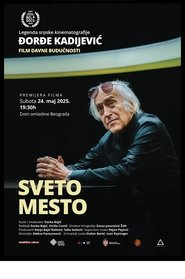
Holy Place Đorđe Kadijević
2025
star 9Đorđe Kadijević is an art historian, art critic, professor and one of the most important Yugoslav and Serbian film directors. He is a member of the "Black Wave", the most important film direction in Yugoslav cinematography. The film "Butterfly" is considered the first and most important horror film in Eastern Europe. And the TV series "Vuk Karadžić" received the highest award of European film directors, which was awarded to Kadijević by Umberto Eco