New History Movies on Tub Tv - Page 442
All Services
Free Services
 Netflix
 Amazon Prime Video
 Apple iTunes
 Apple TV Plus
 Disney Plus
 Google Play Movies
 Paramount Plus
 Hulu
Hulu
 HBO Max
 YouTube
 fuboTV
 Peacock
 Peacock Premium
 Amazon Video
 The Roku Channel
 AMC+
AMC on Demand
AMC+
AMC on Demand
 Kocowa
 Hoopla
 The CW
 Vudu
Vudu
 Starz
Starz
 Showtime
 PBS
PBS
 Pantaflix
 FXNow
FXNow
 Tubi TV
 Kanopy
 Comedy Central
 Crunchyroll
 Microsoft Store
 Redbox
 Sun Nxt
 ABC
ABC
 DIRECTV
 Crackle
 Fandor
 Plex
Plex
Netflix
Amazon Prime Video
Apple iTunes
Apple TV Plus
Disney Plus
Google Play Movies
Paramount Plus
Hulu
HBO Max
YouTube
fuboTV
Peacock
Peacock Premium
Amazon Video
The Roku Channel
AMC+
AMC on Demand
Kocowa
Hoopla
The CW
Vudu
Starz
Showtime
PBS
Pantaflix
FXNow
Tubi TV
Kanopy
Comedy Central
Crunchyroll
Microsoft Store
Redbox
Sun Nxt
ABC
DIRECTV
Crackle
Fandor
Plex

SOS: The Titanic Inquiry
2012
star 6.4The true story of the official Inquiry into the Titanic disaster. Was a ship called The Californian close enough to have saved them?Waking The Titanic
2012
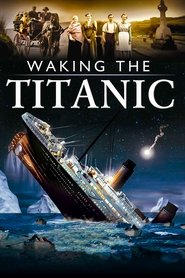
Waking The Titanic
2012
star 6This documentary is no mere retelling of the Titanic story. This is a unique story of hope and the loss suffered by the people of a tiny west of Ireland village whose sons and daughters went in search of a better life only to be subsumed by the tragic destiny of the world’s greatest ship.The Bus
2012
The Bus
2012
‘The Bus’ playfully explores how a post-WWII German utility vehicle evolved into a cultural icon that represents freedom and the open road; defining and connecting generations of fun lovers everywhere. Beginning in Germany with the vehicle’s creation, into a wild ride that changes the world forever, ‘The Bus’ is an adventure from beginning to end. From Wolfsburg to Hollywood, Burning Man to Baja, people from all walks of life share their stories and passion in ‘The Bus’.La Joconde dévoilée
2012
La Joconde dévoilée
2012
Nazi Titanic
2012
Nazi Titanic
2012
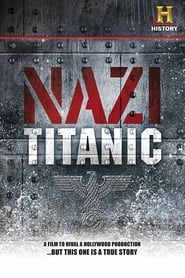
star 6.7During a bizarre chapter of WWII, Nazi propaganda minister Joseph Goebbels decided to make a movie based on the sinking of the Titanic. This epic film was so large in scale that the Nazis were forced to divert men, material and ships from the war effort in order to complete it. Titanic was filmed aboard cruise ship SS Cap Arcona in the Baltic Sea. The movie’s director Herbert Selpin was arrested by the Gestapo over comments he made about the ship’s crew and he was questioned by Goebbels. Selpin was found dead the next day in his cell. The Gestapo’s verdict was suicide. Titanic never received the impressive premiere that Goebbels intended, being first shown in Nazi-occupied Paris in 1943. We reveal this little known but fascinating story by looking at the making of the film, as well as the fate of the German ship Cap Arcona.Diaz - Don't Clean Up This Blood
2012
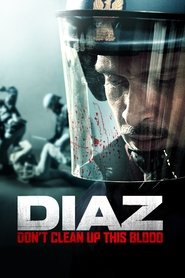
star 7.1On July 19–21, 2001, over 200,000 people took to the streets of Genoa to protest against the ongoing G8 summit. Anti-globalization activists clashed with the police, with 23-year-old protester Carlo Giuliani shot dead after confronting a police vehicle. In the aftermath, the police organized a night raid on the Diaz high school, where around a hundred people between unarmed protesters—mostly students—and independent reporters who documented the police brutality during the protests had took shelter. What happened next was called by Amnesty International "the most serious breach of civil liberties in a democratic Western country since World War II."Mondo Sacramento
2012
Mondo Sacramento
2012
Three tales from Sacramento's lurid past. The Vampire of Sacramento, The Batgirl and Palm Sundae.Akerbeltz: The Witches and the Inquisitor
2012
The gloomy dungeon of the Santo Oficio gaol in Logroño, northern Spain, is packed with prisoners accused of witchcraft. The sound of mystical chanting drifts out through the bars. It is a desperate cry for help that travels through valleys and mountains until it reaches the hamlet of Zugarramurdi. A young boy wakes up suddenly in the middle of the night...Something From Nothing: A Conversation with Richard Dawkins and Lawrence Krauss
2012
star 1Join critically-acclaimed author and evolutionary biologist Richard Dawkins and world-renowned theoretical physicist and author Lawrence Krauss as they discuss biology, cosmology, religion, and a host of other topics.Sex in the Stone Age
2012
Sex in the Stone Age
2012
star 6A fragment of a pinky bone and a tooth twice the size of today's average molar are the only remnants of a species we now know lived at the same time and place as modern humans—and interbred with them. They are a part of us we never knew existed. What did these "people" look like? And how do they fit into what we thought we knew about our biological development as a species?The Story of the Turban
2012
In September 2011, Sikhs from all over Britain gathered in Parliament Square to protest. The focus of their concern was the turban. Since the terrorist attacks of the 21st century Sikhs believe their turbans have singled them out for discrimination. In a case of mistaken identity the Sikhs claim they've been wrongly regarded as religious terrorists and subjected to increased airport security searches. This documentary traces the history of the turban in the Sikh religion, from its roots in Moghul India, through the battlefields of Europe, to the fight for British Sikhs to wear it without fear. It reveals that the turban is a crucial symbol of the Sikh faith - one that Sikhs will even risk their lives for.Life? or Theatre?
2012
Life? or Theatre?
2012
A stunningly-crafted documentary that brings to life German-Jewish artist Charlotte Salomon in all her yearning for love and creative expression, her struggle to come to terms with her family history, and whose passion for beauty came face-to-face with the harsh reality of 1940s Europe. The title of this film comes from her remarkable 700-page painted life story in which she asks, “Where does life stop and art begin?” Director Franz Weisz masterfully weaves together interviews with people who knew her, family photographs, excerpts from a 1980 biopic, images of Charlotte’s vibrant paintings and a previously-unknown letter containing a shocking revelation.John Adams: Nixon in China
2012
star 72012 telecast production of John Adams's opera Nixon in China, recorded at the Théâtre du Châtelet in Paris, France.Save the Titanic With Bob Ballard
2012
star 7Robert Ballard has been living and breathing the Titanic since he was part of the team that discovered it in 1985. In Save the Titanic With Bob Ballard, he revisits the iconic ship in an entirely different way—from the perspective of those who set sail on it some 100 years ago. Ballard travels to the shipyards of Northern Ireland to retrace the path of the doomed ship from its very incarnation. Throughout his journey, Ballard is driven by one personal question—will the Titanic survive another 100 years? As evidence mounts that the ship is under siege by natural forces, careless visitors, and even rogue salvage operators, the man who found it teams with the families of victims and survivors to protect the legacy of history’s most famous ship.Titanic: The Final Word with James Cameron
2012
star 7.5James Cameron brings together some the world's leading Titanic experts, including engineers, naval architects, artists and historians, to solve the lingering mysteries of why and how the 'unsinkable' ship sank.Xingu
2012
Xingu
2012
star 7.4In the '40s, three brothers decide to live a great adventure and enlisting in the Roncador-Xingu Expedition, which has a mission to tame the Central Brazil. The Villas Boas brothers: Orlando, 27, Claudius, 25, and Leonardo, 23, engage in a fantastic and incredible saga. Soon start to lead the expedition that opens new paths 1,500 km, navigates over 1,000 miles of unspoilt rivers, opens 19 airfields for airplanes Army, gives rise to the creation of 43 towns and 14 make contact with wild Indian tribes, unknown, as the Xavante, courageous and feared warriors, no casualties on both sides. This adventure allows the Villas Boas brothers the creation of the Xingu National Park, the first major Amerindian reservation in Brazil, the size of Belgium, transforming them into true contemporary heroes.Search for the Head of John the Baptist
2012
It is potentially one of the greatest archaeological discoveries in the history of Christianity., the ruins of one of the oldest monasteries in Europe. Here, under the location where the altar once stood, scientists have dug up an exquisite marble box holding what they believe to be the bones of John the Baptist, the man who baptized Jesus. If the date of the bones lines up with the Bible's profile of John, could it finally solve the mystery of what happened to his remains after his beheading, 2,000 years ago?Shiloh: Fiery Trial
2012
Shiloh: Fiery Trial
2012
The official National Park Service orientation film on the April 1862 Civil War Battle of Shiloh.