New History Movies on Tub Tv - Page 447
All Services
Free Services
 Netflix
 Amazon Prime Video
 Apple iTunes
 Apple TV Plus
 Disney Plus
 Google Play Movies
 Paramount Plus
 Hulu
Hulu
 HBO Max
 YouTube
 fuboTV
 Peacock
 Peacock Premium
 Amazon Video
 The Roku Channel
 AMC+
AMC on Demand
AMC+
AMC on Demand
 Kocowa
 Hoopla
 The CW
 Vudu
Vudu
 Starz
Starz
 Showtime
 PBS
PBS
 Pantaflix
 FXNow
FXNow
 Tubi TV
 Kanopy
 Comedy Central
 Crunchyroll
 Microsoft Store
 Redbox
 Sun Nxt
 ABC
ABC
 DIRECTV
 Crackle
 Fandor
 Plex
Plex
Netflix
Amazon Prime Video
Apple iTunes
Apple TV Plus
Disney Plus
Google Play Movies
Paramount Plus
Hulu
HBO Max
YouTube
fuboTV
Peacock
Peacock Premium
Amazon Video
The Roku Channel
AMC+
AMC on Demand
Kocowa
Hoopla
The CW
Vudu
Starz
Showtime
PBS
Pantaflix
FXNow
Tubi TV
Kanopy
Comedy Central
Crunchyroll
Microsoft Store
Redbox
Sun Nxt
ABC
DIRECTV
Crackle
Fandor
Plex

Son of Heaven
2012
Son of Heaven
2012
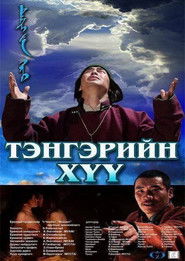
A young boy named Tulga is lost in a yak herd during the migration and raised in a wolf's den. A hunter finds the boy while searching for food from a wolf's den in the spring. As the boy grows up, he learns how to inherit the customs of his Mongolian people and how to improve his way of life.Cine/Sine: Spanish Beginnings of Philippine Cinema
2012
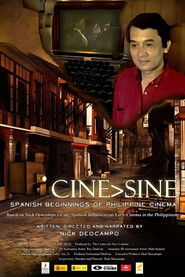
Based on Nick Deocampo's award-winning book, Cine: Spanish Influences on Early Cinema in the Philippines, this digital documentary traces the beginning of cinema in the Philippines in 1897 when two Spaniards showed the first moving pictures in Escolta. Against the backdrop of war and revolution, film developed to become the emerging Filipinos' dominant form of public entertainment. The documentary further explores the elements of Spanish culture found in Filipino films as evidenced through the classic films made by three National Artists - Eddie Romero, Lino Brocka, and Ishmael Bernal. This is Deocampo's homage both to Philippine cinema and the Filipino nation that is its twin.Otome Nadeshiko Koi Techou
2012
The story follows a 16-year-old girl who is experiencing her first love during Japan's Taisho period (1912-1926).Afrika Korps
2012
Afrika Korps
2012
WWII in 3D
2012
WWII in 3D
2012
star 6.2For the first time, you will see dramatic moments of WWII that were captured in 3D with stereographs and then shuttered away in secret archives and attics, until now. This stunning collection of color 3D photos includes Allied reconnaissance photos, a trove of images that documents the rise and fall of the Third Reich, and photos secretly taken by a civilian in occupied France. WWII IN 3D also features an actual 3D motion picture film shot by the Nazis in 1943 and creates a fully immersive, three dimensional portrait of history's largest and bloodiest conflict.Just for Fun
2012
Just for Fun
2012
A Century in The Sun: Henry Flagler & The Making of Modern Florida
2012
A one-hour documentary that tells the story of how Standard Oil magnate Henry Flagler came to Florida in the late 1800s, built a railroad and hotel empire on the last American frontier, and launched a population boom that lasts a hundred years.The Pruitt-Igoe Myth
2012
The Pruitt-Igoe Myth
2012
star 6.7Destroyed in a dramatic and highly-publicized implosion, the Pruitt-Igoe public housing complex has become a widespread symbol of failure amongst architects, politicians and policy makers. The Pruitt-Igoe Myth explores the social, economic and legislative issues that led to the decline of conventional public housing in America, and the city centers in which they resided, while tracing the personal and poignant narratives of several of the project's residents. In the post-War years, the American city changed in ways that made it unrecognizable from a generation earlier, privileging some and leaving others in its wake. The next time the city changes, remember Pruitt-Igoe.Red Tails
2012
Red Tails
2012
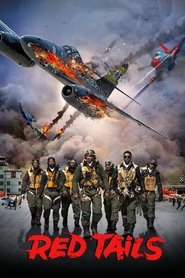
star 6.6The story of the Tuskegee Airmen, the first African-American pilots to fly in a combat squadron during World War II.Here Below
2012
Here Below
2012
star 5The true story of a nun who betrayed a network of Resistance fighters after having a passionate but doomed love affair with a priest during the Second World War.Duch, Master of the Forges of Hell
2012
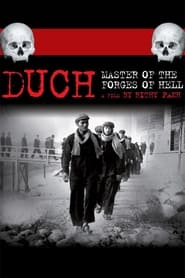
star 6.8Under the Khmer Rouge regime, Kaing Guek Eav, known as Duch, directed the M13 prison for four years, before becoming the head of S21, the terrifying death machine that eliminated Khmer Rouge opponents. Some 12,280 Cambodians met their deaths here. In July 2010, Duch was the first Khmer leader to appear before an international court, which sentenced him to 35 years in prison. He appealed the sentence. While Duch waited for his new trial, Rithy Panh questioned him in depth.The Green Wave
2012
The Green Wave
2012
star 7.7Green was the symbol of recognition among the supporters of Iranian presidential candidate Mir-Hossein Mousavi. This documentary-collage illustrates with animated blogs and tweets the story of democracy under fire and the dramatic events before and after the 2009 presidential elections in Iran.Custer's Last Stand
2012
Custer's Last Stand
2012
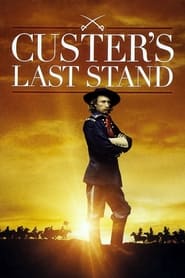
star 7Follow General George Armstrong Custer from his memorable, wild charge at Gettysburg to his lonely, untimely death on the windswept Plains of the West. On June 26, 1876, Custer, a reputation for fearless and often reckless courage ordered his soldiers to drive back a large army of Lakota and Cheyenne warriors. By day's end, Custer and nearly a third of his army were dead.Advise & Dissent
2012
Advise & Dissent
2012
Behind the lines in the Supreme Court confirmation wars... where justice and politics collide.The Horde
2012
The Horde
2012
star 5.6It is the word "horde" that had meant, for many countries and nations, bloody raids and being under humilating contribution for centuries - a strange and scary world with its own rules and customs. To be or not to be for Rus (Ruthenia), that is the price of the one-man mission as he is departing to this world to accomplish a feat. The film tells the story of how Saint Alexius, the Metropolitan of Moscow and Wonderworker of All Russia, healed the Tatar Queen Taidula, Jani-Beg's mother, from blindness, in 1357.Girls of the Rain
2012
Girls of the Rain
2012
Girls of the Rain concludes Alida Dimitriou’s filmtrilogy on the contribution of women to political struggles in Greece during the twentieth century. The film is about women imprisoned and tortured during the Colonels’ dictatorship of 1967-1974. At the time, these womenwere in their twenties. Fifty women offer their testimonials. They all share the ethos of the women who took part in the National Resistance, and pursue the establishment of human dignity just as persistently. The “Girls of the Rain” consider themselves successors of those women. One of them said:“...we are their successors, just like the youth of today are our successors”. Remarkably, these are the words of a woman deprived by her torturers of the ability to have children.Die Verführerin Adele Spitzeder
2012
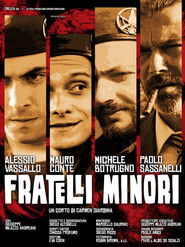
star 6Adele Spitzeder, an actress of medium talent, finds the role of her life as a dazzling financial genius, but in truth the operator of a gigantic pyramid scheme. With a brilliant appearance and empty promises, she serves the hopes and greed of her fellow human beings with virtuosity. With the help of a never-ending stream of money, she buys her way out of situations that would have landed others in prison long ago. Her enemies are just waiting for the pyramid to collapse and bury Adele - and countless small investors with her.FRATELLI MINORI
2012
Surgeon during the Algerian War
2012
Has everything really been said about the Algerian war? Although the archives are opening up, almost fifty years after the signing of the Evian Agreements (March 18, 1962), direct witnesses are beginning to disappear. They are, however, unique bearers of history, often the only ones able to illustrate the harsh reality of a long-hidden period. Gérard Zwang, surgeon of the contingent between May 1956 and June 1958, is one of these essential witnesses who help us discover an original history of the Algerian War. During his service, in charge of treating the most atrocious wounds of his fellow soldiers, he sees the war from the side of its victims. He did not fight with a machine pistol in his hand, but behind the closed doors of an operating room where life gives way to death in a matter of seconds.