Popular History Movies - Page 313
All Services
Free Services
 Netflix
 Amazon Prime Video
 Apple iTunes
 Apple TV Plus
 Disney Plus
 Google Play Movies
 Paramount Plus
 Hulu
Hulu
 HBO Max
 YouTube
 fuboTV
 Peacock
 Peacock Premium
 Amazon Video
 The Roku Channel
 AMC+
AMC on Demand
AMC+
AMC on Demand
 Kocowa
 Hoopla
 The CW
 Vudu
Vudu
 Starz
Starz
 Showtime
 PBS
PBS
 Pantaflix
 FXNow
FXNow
 Tubi TV
 Kanopy
 Comedy Central
 Crunchyroll
 Microsoft Store
 Redbox
 Sun Nxt
 ABC
ABC
 DIRECTV
 Crackle
 Fandor
 Plex
Plex
Netflix
Amazon Prime Video
Apple iTunes
Apple TV Plus
Disney Plus
Google Play Movies
Paramount Plus
Hulu
HBO Max
YouTube
fuboTV
Peacock
Peacock Premium
Amazon Video
The Roku Channel
AMC+
AMC on Demand
Kocowa
Hoopla
The CW
Vudu
Starz
Showtime
PBS
Pantaflix
FXNow
Tubi TV
Kanopy
Comedy Central
Crunchyroll
Microsoft Store
Redbox
Sun Nxt
ABC
DIRECTV
Crackle
Fandor
Plex

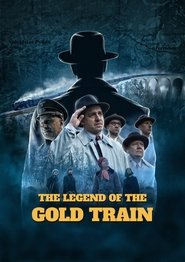
The Legend of the Gold Train
2022
In the endgame of WWII a few hundred bank employees and their family members rescued Hungary's entire gold reserves on a train from the Soviet army and were hiding it in a small Austrian village until the end of the war.Twenty Two
2017
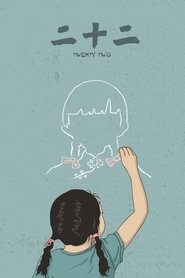
Twenty Two
2017
star 7.7Follow the lives of the elderly survivors who were forced into sex slavery as “Comfort Women” by the Japanese during World War II. At the time of filming, only 22 of these women were still alive to tell their story. Through their own personal histories and perspectives, they tell a tale that should never be forgotten to generations unaware of the brutalization that occurred.Number 55
2014
Number 55
2014
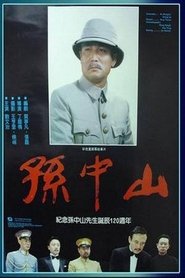
star 6.8In the autumn of 1991, a small group of Croatian soldiers go on patrol in an improvised armored vehicle. Soon after that they would get ambushed and their vehicle would get destroyed, in that situation they were forced to hide in a nearby house. Whilst stationed in that house they would get attacked by rebel Serbs, Serbian Special Forces and the JNA (Yugoslav People's Army, also reffered to as Yugoslavian National Army). Their resistance to the attackers would last 24 hours whilst their fellow combatants would attempt to try and get them out of there. The movie and story is based on true events which happened during the Croatian War of Independence.Dr. Sun Yat-sen
1986
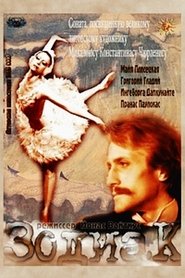
M.K.C. Zodiakas
1985
M.K.C. Zodiakas
1985
star 6The plot is based on the fate of the artist, reflected in art, which always accompanies people's lives, as well as dreams, pain or joy...Jai Jagannath
2007
Jai Jagannath
2007
star 10When Bhagwan Shri Jagannath and his brother, Bhagwan Shri Balabhadra, refuse to partake offerings from a lower-caste woman, Shriya. Devi Maa Lakshmi is offended and puts a curse on both of them. The duo, hungry and homeless, go from village to village, house to house in search of food. What they don't realize is that Devi Maa, in collusion with Vayu Dev, Agni Dev, and Pawan Dev is determined to teach both of them a lesson they will never forget.Illyricvm
2022
Illyricvm
2022
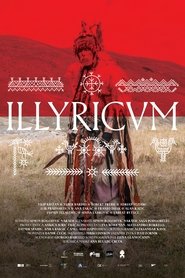
star 6.3The year is 37 BC. A young Liburnian Volsus is taken by a Roman unit to help in what at first seems a simple task of collecting taxes, but the encounters with local Illyrian tribes soon lead to unexpected turns of events, as they show more resilience to subjugation than meets the eye. We see their archaic, emotional world of quaint and brutal laws and traditions through the eyes of this youngster, regarded by the Romans as a primitive barbarian, and gradually come to understand that their world is not all that different from our own.Lost Tombs of the Pyramids
2020
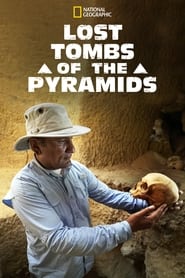
star 6.6In the shadow of the pyramids, an elite team of archaeologists embark on an extraordinary excavation. Could this secret site reveal startling new evidence about the great pharaohs who built these majestic monuments?China, My Sorrow
1989
China, My Sorrow
1989
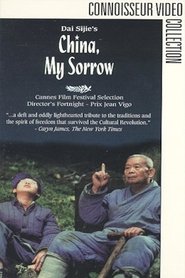
star 6.2In August 1966, the Cultural Revolution in full swing, 13-year-old Tian Ben is arrested for playing a pop record; he's sent to a remote mountain camp in Niu-Peng. There he's called "Four Eyes" and, with about 16 other older boys and men, he's made to carry muck up a mountainside, make bricks, saw logs, and sing daily to Chairman Mao of his faults. There's camaraderie among the five youths, especially with a young pickpocket named Baimao, and Tian is also drawn to a silent monk who cares for him when he falls ill and the others expect him to die. The camp is remote, so there are no fences or walls. Tian longs to escape.Workers Leaving the Lumière Factory
1895
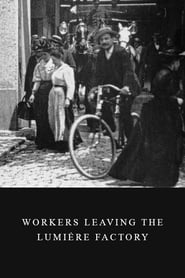
star 6.7Working men and women leave through the main gate of the Lumière factory in Lyon, France. Filmed on 22 March 1895, it is often referred to as the first real motion picture ever made, although Louis Le Prince's 1888 Roundhay Garden Scene pre-dated it by seven years. Three separate versions of this film exist, which differ from one another in numerous ways. The first version features a carriage drawn by one horse, while in the second version the carriage is drawn by two horses, and there is no carriage at all in the third version. The clothing style is also different between the three versions, demonstrating the different seasons in which each was filmed. This film was made in the 35 mm format with an aspect ratio of 1.33:1, and at a speed of 16 frames per second. At that rate, the 17 meters of film length provided a duration of 46 seconds, holding a total of 800 frames.Partition: The Day India Burned
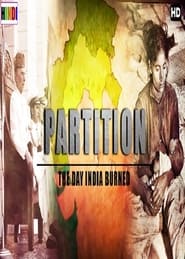
2007
Documentary about the effects of Britain's withdrawal from India in 1947 which triggered one of the biggest migrations in history. 15 million were displaced and more than a million lost their lives. The story is told through the testimony of people who lived together for centuries, but were forced out of their homes as one of the largest and most ethnically diverse nations in the world was divided. Dramatised reconstructions evoke some of the mistrust, violence and upheaval that ensuedMartín Fierro
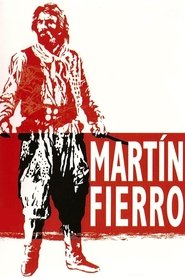
1968
Martín Fierro
1968
star 5.4The story of rebel gaucho Martin Fierro, his people, and their life in the Argentine Pampas. Based on José Hernández's epic poem.The Mexican American War
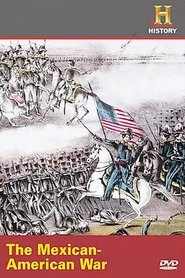
2006
star 8.5One of the most controversial conflicts in U.S. history, the Mexican-American War erupted as President James K. Polk sought to extend the borders of the nation to the Pacific, taking by force whatever territory stood in the way. This special, produced by The History Channel and hosted by Oscar de la Hoya, looks at the war from the perspective of both countries, and chronicles the fighting from its inception to its conclusion with the Treaty of Guadalupe Hidalgo.Whitney Houston: I Wanna Dance with Somebody
2022
star 7The joyous, emotional, heartbreaking celebration of the life and music of Whitney Houston, the greatest female R&B pop vocalist of all time. Tracking her journey from obscurity to musical superstardom.Nehru
1984
Nehru
1984
star 4Divided into three parts — The Awakening, The Struggle, and Freedom — this is a biographical film on Pandit Jawaharlal Nehru, the first Prime Minister of independent India. Relying on Nehru's writings and speeches, the film traces the evolution of Nehru from his birth through his life. It also deals with the effect of history on Nehru and in turn his impact on the world.The Night Is Afraid of the Sun
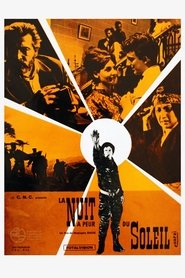
1965
star 10Historical film in four scenes which retrace the returns, the progress and the outcome of the war of liberation in Algeria. The first painting, “The land was thirsty” describes aspects of injustice and colonial oppression. The second “The Paths to the Prison” recounts the sufferings of the people engaged in combat. The last two are the stories of two lives.Slaves of Babylon
1953
Slaves of Babylon
1953
star 4.7The Jews are taken from Jerusalem and made slaves by King Nebuchadnezzar. In the meantime Cyrus, king of the Persians, who has been living as a shepherd, is proclaimed king and defeats Nebuchadnezzar.Na Terra do Sol
2005
Na Terra do Sol
2005
Inspired in "Os Sertões" by Euclides da Cunha, this film tells the saga of the last survivors of the Canudos war.Lenin v Praze
1951
Lenin v Praze
1951
At Full Gallop
1996
At Full Gallop
1996
star 5.8Zanussi has described the film as his most autobiographical work. A young boy in post-World War II, Communist-dominated Poland, whose father's decision to remain in Britain after the war has made his family politically-suspect with the local Party authorities, is sent by his mother to stay with an "aunt" (in reality an old family friend) in Warsaw.