Popular History Movies - Page 377
All Services
Free Services
 Netflix
 Amazon Prime Video
 Apple iTunes
 Apple TV Plus
 Disney Plus
 Google Play Movies
 Paramount Plus
 Hulu
Hulu
 HBO Max
 YouTube
 fuboTV
 Peacock
 Peacock Premium
 Amazon Video
 The Roku Channel
 AMC+
AMC on Demand
AMC+
AMC on Demand
 Kocowa
 Hoopla
 The CW
 Vudu
Vudu
 Starz
Starz
 Showtime
 PBS
PBS
 Pantaflix
 FXNow
FXNow
 Tubi TV
 Kanopy
 Comedy Central
 Crunchyroll
 Microsoft Store
 Redbox
 Sun Nxt
 ABC
ABC
 DIRECTV
 Crackle
 Fandor
 Plex
Plex
Netflix
Amazon Prime Video
Apple iTunes
Apple TV Plus
Disney Plus
Google Play Movies
Paramount Plus
Hulu
HBO Max
YouTube
fuboTV
Peacock
Peacock Premium
Amazon Video
The Roku Channel
AMC+
AMC on Demand
Kocowa
Hoopla
The CW
Vudu
Starz
Showtime
PBS
Pantaflix
FXNow
Tubi TV
Kanopy
Comedy Central
Crunchyroll
Microsoft Store
Redbox
Sun Nxt
ABC
DIRECTV
Crackle
Fandor
Plex

1000 Years: A Swedish History
2007
star 5A documentary that tells the history of Sweden through the eyes of the people and showing their living conditions for the past 1000 years.Царицын. Поход Ворошилова
1942
The film takes us back to the summer of 1918 and tells the story of how Voroshilov, under the noses of a 300,000-strong German corps, pulled 80 trains loaded with valuable cargo, materials, ammunition, and equipment out of Donbass. With a 15,000-strong army and 50,000 refugees from Ukraine, occupied by Germany, in Tsaritsyn. It was an unprecedented campaign, unparalleled in world military history, because it involved marching 500 km through territory occupied by the White Cossacks, under the command of some of the most capable tsarist cavalry generals, Mamontov and Fitzhelaurov.The Magnificent Adventurer
1963
star 6Benvenuto Cellini knows no obstacles when it comes to creating a work of art or conquering the heart of a woman.Notches For Memory
1973
Notches For Memory
1973
A difficult historical period in the life of the Moldovan people, who fought in the 1930s against the yoke of royal Romania and for reunification with the Soviet Union.Dodger Special: Bad Egg
2023
When a heist goes wrong, Dodger is given his harshest punishment yet - school!Tamerlane: Rise of the Last Conquerer
2026
Searching for stability and justice, Timur "The Lame" becomes a world conqueror in order to unify all people, nations, and tribes under one banner.The Heroic Elegy of Confucius
1996
star 10Born in the Chinese state of Lu in 551 B.C., Confucius is raised by his mother after his father dies when he is only three. He marries at 19 and enters the service of the local nobility. At 32, he becomes tutor to the Prince of Lu's children, eventually becoming a politician at 51. His career peaks are the roles of Lu's justice minister and eventually prime minister. The land prospers for four years, but Confucius grows disenchanted with court intrigues. For the following 12 years, he wanders the neighboring states, offering advice to their rulers.Jai Jagannath
2007
Jai Jagannath
2007
star 10When Bhagwan Shri Jagannath and his brother, Bhagwan Shri Balabhadra, refuse to partake offerings from a lower-caste woman, Shriya. Devi Maa Lakshmi is offended and puts a curse on both of them. The duo, hungry and homeless, go from village to village, house to house in search of food. What they don't realize is that Devi Maa, in collusion with Vayu Dev, Agni Dev, and Pawan Dev is determined to teach both of them a lesson they will never forget.Sampoorna Ramayanam
1958
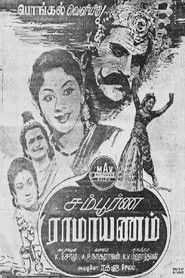
Sampoorna Ramayanam
1958
star 8The story of the complete Ramayana, from the birth of Lord Rama to his Pattabhisheka after completing his exile.The Ponzán Network
2022
The Ponzán Network
2022
star 6During the Spanish Civil War (1936-1939) and the Second World War (1939-1945), around three thousand people managed to elude their pursuers, and probably also avoided being killed, thanks to the heroic and very efficient efforts of the Ponzán Team, a brave group of people — mountain guides, forgers, safe house keepers and many others —, led by Francisco Ponzán Vidal, who managed to save their lives, both on one side and the other of the border between Spain and France.Reunion in Travers
1989
Reunion in Travers
1989
The time is the French Revolution; the place is the village of Travers, ensconsed in neutral Switzerland. Prussian aesthete Herman Beyer is on the verge of divorcing wife Corinna Harfouch. Radical writer Uwe Kokisch, Corinna's lover, hopes to find a way of smoothing out animosities. What follows, however, is a nonstop drinking binge. The film subliminally addresses the then-prevalent issue of a divided Germany. Whether or not it succeeds is unimportant; Treffen in Travers (Reunion in Travers) has proven to be a crowd pleaser wherever it has been shown.The Gorgeous Hussy
1936
The Gorgeous Hussy
1936
star 5.3It's the early nineteenth century Washington. Young adult Margaret O'Neal, Peggy to most that know her, is the daughter of Major William O'Neal, who is the innkeeper of the establishment where most out-of-town politicians and military men stay when they're in Washington. Peggy is pretty and politically aware. She is courted by several of those politicians and military men who all want to marry her, except for the one with who she is truly in love.The 47 Ronin
1941
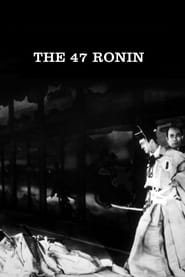
The 47 Ronin
1941
star 6.9In 1701, Lord Takuminokami Asano has a feud with Lord Kira and he tries to kill Kira in the corridors of the Shogun's palace. The Shogun sentences Lord Asano to commit suppuku and deprives the palace and lands from his clan, but does not punish Lord Kira. Lord Asano's vassals leave the land and his samurais become ronin and want to seek revenge against the dishonor of their Lord. But their leader Kuranosuke Oishi asks the Shogun to restore the Asano clan with his brother Daigaku Asano. One year later, the Shogun refuses his request and Oishi and forty-six ronin revenge their Lord.Prabhat Nagari - Film 1
0000
A reflection on celluloid dreams, fathers and sons, and the cyclical universe presented as a portrait of the erstwhile Prabhat Studio through the reunion of some of its oldest workers.Scars Of Nanking
2017
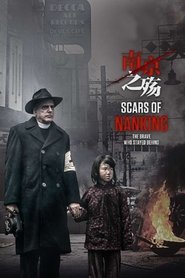
Scars Of Nanking
2017
star 6During the brutal invasion of China in 1937 by Imperial Japanese forces, tens of thousands of civilians and prisoners of war are murdered and women raped in what is known simply as "The Rape of Nanking." This docudrama is a stirring account of a small band of courageous American missionaries who choose to stay in Nanking to try and protect a quarter million vulnerable Chinese civilians who are trapped in a city ruled by a savage, out of control army. Their stories are brought vividly to life through actual real-time letters and diaries as they bear witness to one of the worst wartime atrocities in history.Patterns of Evidence: The Exodus
2015
star 7A debate rages over the credibility of the Bible. Most archaeologists today have concluded that there's no evidence that the Exodus of Israelite slaves from Egypt ever happened. Filmmaker Timothy Mahoney faces a crisis of faith: "Is this foundation event of the Bible really just a myth?" He embarks on a 12-year journey around the world to search for answers. The Exodus unlocks the mystery of this ancient saga, combining a scientific investigation with a retelling of the Exodus story to reveal an amazing pattern of evidence matching the biblical account that may challenge our understanding of history.The Last Confederate: The Story of Robert Adams
2005
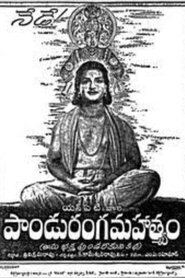
star 5.3Amid the bitter divisiveness of the Civil War, Confederate Capt. Robert Adams (Julian Adams) feels the rift within his soul. Steadfastly loyal to the South, Adams also holds an unshakable love for his Northerner wife, Eveline McCord (Gwendolyn Edwards). Based on the true story of Robert Adams and produced by his descendents, this stirring historical drama -- a film festival favorite -- delves into the themes of honor, patriotism and love.Panduranga Mahatyam
1957
Panduranga Mahatyam
1957
star 1Panduranga Mahatyam is a 1957 Telugu film directed by Kamalakara Kameswara Rao and starring N. T. Rama Rao playing the role of Pundarika. The Lyrics written by Samudrala Ramanujacharya are excellent. The songs of Ghantasala Venkateswara Rao particularly Jaya Krishna Mukunda Murari and Amma Ani Pilichina are ever remembered as the best film songs expresses the human feelings of devotion and sorrow.The Oath
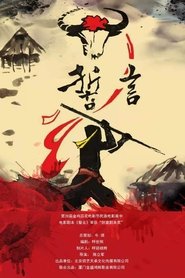
2022
The Oath
2022
The story of the first anniversary of the founding of the new China, the central delegation went to Yunnan ethnic areas to research, at the same time, in the name of Chairman Mao Zedong, invited representatives of the 26 ethnic minorities in the southwest to Beijing to participate in the National Day ceremonies, the representatives returned to Yunnan and swore to set up a monument. Built on New Year's Day in 1951, the "Pu'er Monument of National Unity Pledge" is unique in the country and is a monument of revolution, history and ethnicity, a vivid manifestation of national unity and the "First Monument of National Unity in New China" and the "First Monument of National Unity in New China". It is a vivid embodiment of great national unity, the "first monument of national unity in new China" and "the first monument of national work in new China", and has been hailed as "the only monument in the history of human nationalities".Lara jonggrang (Candi Prambanan)
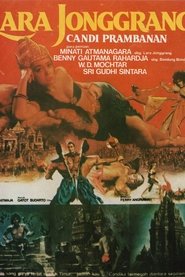
1983
Legend about Loro Jonggrang's love story with Bandung Bondowoso. When he was newly appointed as Senopati Baka, he was assigned to attack the Pengging Kingdom. However, while he was there, he was recognized as the crown prince of Pengging, who had apparently been kidnapped by the Baka people when he was still a child. The angry King Baka personally led an attack on Pengging and was killed by Bandung Bondowoso. The son of the Baka king, Loro Jonggrang saw his father die and held a grudge against Bandung Bondowoso. When Bandung Bondowoso was about to propose, Loro Jonggrang also put forward a condition to build a thousand temples. When there was one less temple, Loro Jonggrang made the cock crow as if it was morning. Bandung, knowing that Loro Jonggrang was cheating, cursed it, making it the thousandth and largest temple.