Popular History Movies - Page 379
All Services
Free Services
 Netflix
 Amazon Prime Video
 Apple iTunes
 Apple TV Plus
 Disney Plus
 Google Play Movies
 Paramount Plus
 Hulu
Hulu
 HBO Max
 YouTube
 fuboTV
 Peacock
 Peacock Premium
 Amazon Video
 The Roku Channel
 AMC+
AMC on Demand
AMC+
AMC on Demand
 Kocowa
 Hoopla
 The CW
 Vudu
Vudu
 Starz
Starz
 Showtime
 PBS
PBS
 Pantaflix
 FXNow
FXNow
 Tubi TV
 Kanopy
 Comedy Central
 Crunchyroll
 Microsoft Store
 Redbox
 Sun Nxt
 ABC
ABC
 DIRECTV
 Crackle
 Fandor
 Plex
Plex
Netflix
Amazon Prime Video
Apple iTunes
Apple TV Plus
Disney Plus
Google Play Movies
Paramount Plus
Hulu
HBO Max
YouTube
fuboTV
Peacock
Peacock Premium
Amazon Video
The Roku Channel
AMC+
AMC on Demand
Kocowa
Hoopla
The CW
Vudu
Starz
Showtime
PBS
Pantaflix
FXNow
Tubi TV
Kanopy
Comedy Central
Crunchyroll
Microsoft Store
Redbox
Sun Nxt
ABC
DIRECTV
Crackle
Fandor
Plex

Born of the Storm
1958
Born of the Storm
1958
German troops leave a small town located on the border of Western Ukraine and Poland. The Pilsudians seize power in the city. Bolshevik, who returned from prison, heads the underground revolutionary committee.Verbotene Liebe - Queere Opfer der NS-Diktatur
2024
Sexual minorities were oppressed, imprisoned and murdered by the Nazis. Paragraph 175 criminalized homosexual men during the Nazi era – but the Nazis also discriminated against lesbians and trans people. They should be excluded from the national community. More than 50,000 queer people have been proven to have been persecuted. The documentary highlights three poignant fates in the context of Nazi terror.Golden Horseshoe, Golden Pen, Golden Hair
1998
The biographical story of Pavel Emanuel Dobšinský - a television film about the life and knowledge of a man who managed to stay true to himself, his people and his ideas despite the times. The story begins at the end of the great storyteller's life, when through his own memories, captured by his hand and in book form, he returns to his childhood, the time he entered the Levoč grammar school, to 1840. In this film, author Peter Glocko, a trusted expert on Dobšinský's work and life, guides us through all the personal and historical vicissitudes of the hero's life, reveals the influences that marked his ability to squeeze into his stories the wisdom of knowledge and knowledge of the people from which he came, as well as the basic life principles that the reader - young or old - still draws from his tales.Upon This Rock
1970
Upon This Rock
1970
Drama describing the story of the building of Saint Peter's Cathedral, Vatican, Rome.Bashi-Achuki
1956
Bashi-Achuki
1956
star 5.3The 17th century rebellion in Kakheti masterminded by Bidzina Cholokashvili gets about the whole Georgia. An Imeretian youth nicknamed as Bashi-Achuk is a real exterminator of the Persians. He attacks the Persian escort and sets free the Georgian women who were supposed to be locked up in the Shah’s harem. Bashi-Achuk’s twin sisters are among the rescued captives. Abdushahil, a Persian warrior who was defeated by Bashi-Achuk in wrestling, falls in love with Mzisa, Bashi-achuk’s sister. Mzisa brings Abdushahil to the camp of the Georgian rebels. Abdushahil learns that he is a Georgian too. As a child he was kidnapped and brought up in Persia. Abdushahil’s army gives up and the Georgians win the battle.Strength in Devotion
1979
Strength in Devotion
1979
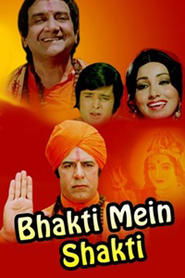
The epic saga of Sherawali Mata's devotee, Dhyanu Bhagat, and his trials, tribulations, and triumphs. Also features the historic and memorable visit of Akbar Badshah, who traveled barefoot to pay homage to Sherawali Mata, and provide a golden "Chatra" (umbrella) for her temple, an example that is cited even today to promote Muslim and Hindu unity. Jai Mata Di!Maya Underworld: The Real Doomsday
2012
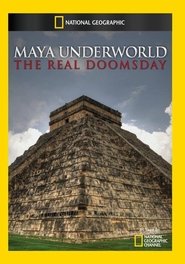
star 7Venturing into vast underwater graveyards of Maya human sacrifices, journalist and host of NGC’s Don’t Tell My Mother Diego Buñuel searches through a watery maze to unearth new revelations about the most infamous date in the Maya calendar: December 21, 2012 – doomsday.Long Live Henry IV... Long Live Love!
1961
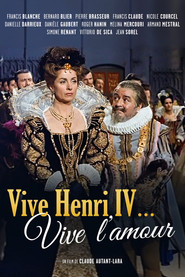
star 5.2Henri IV falls in love with the young Charlotte de Montmorency, 40 years his junior. The king decided to marry her off to his nephew, Henri de Condé, so that he could later make her his mistress.A Star Named Wormwood
1965
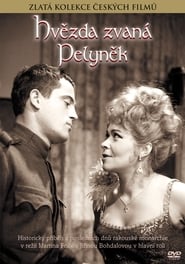
At the end of May 1918, released prisoners return to the Rumburk garrison from Russian captivity, hoping that the war is over for them. The only thing they want is to get their withheld ...The Horseman
2003
The Horseman
2003
star 6.5The movie takes place in the early 18th century on the borders between Bosnia and Dalmatia, the crossroad between the Ottoman Empire and the Republic of Venice. It deals with issues relating to the region's native Croats as they struggle between to live between two empires and two faiths: Catholicism and Islam.La Commune (Paris, 1871)
2003
star 7.7We are in the year 1871. A journalist for Versailles Television broadcasts a soothing and official view of events while a Commune television is set up to provide the perspectives of the Paris rebels. On a stage-like set, more than 200 actors interpret characters of the Commune, especially the Popincourt neighborhood in the XIth arrondissement. They voice their thoughts and feelings concerning the social and political reforms.Hitler's Disastrous Desert War
2021
star 7.5When the British army looks set to defeat Mussolini’s Italian forces, Hitler sends reinforcements; the Afrika Korps led by General Rommel. The Desert Fox is on winning form until Montgomery, the British commander, sets up a plan to crush his opponent. After the American landing in North Africa, the Axis armies have no choice but to surrender and put an end to the Desert War.Peter the First, Part I
1937
star 4.7This, the first Soviet depiction of Peter the Great, set the stage for what would become the post-Revolutionary line concerning the early Romanovs. Rulers like Ivan the Terrible and Peter the Great were widely admired for their dedication to Russia and their absolute determination to enhance her position in the world. But praise for the hated later Romanovs conflicted too heavily with the very beliefs that had brought about the Revolution in 1917.Traces: The Kabul Museum 1988
2003
The Kabul National Museum, once known as the "face of Afghanistan," was destroyed in 1993. We filmed the most important cultural treasures of the still-intact museum in 1988: ancient Greco-Roman art and antiquitied of Hellenistic civilization, as well as Buddhist sculpture that was said to have mythology--the art of Gandhara, Bamiyan, and Shotorak among them. After the fall of the Democratic Republic of Afghanistan in 1992, some seventy percent of the contents of the museum was destroyed, stolen, or smuggled overseas to Japan and other countries. The movement to return these items is also touched upon. The footage in this video represents that only film documentation of the Kabul Museum ever made.Gal - from Tropicalism to the Present Day
2006
star 7The film has Gal's career as its guiding principle, drawing a parallel with the movement of which the singer was the muse and one of the main interpreters, and reaching the present day.De Gaulle - Partie 1 : La France Libre
0000
Part one of a two-part biopic following French army officer Charles De Gaulle's life and political commitment between 1940 and 1945, and trace his development towards a political career.Martin Luther: The Idea that Changed the World
2017
star 7The year 2017 marks the 500th anniversary of one on the most important events in Western civilization: the birth of an idea that continues to shape the life of every American today. In 1517, power was in the hands of the few, thought was controlled by the chosen, and common people lived lives without hope. On October 31 of that year, a penniless monk named Martin Luther sparked the revolution that would change everything. He had no army. In fact, he preached nonviolence so powerfully that — 400 years later — Michael King would change his name to Martin Luther King to show solidarity with the original movement. This movement, the Protestant Reformation, changed Western culture at its core, sparking the drive toward individualism, freedom of religion, women's rights, separation of church and state, and even free public education. Without the Reformation, there would have been no pilgrims, no Puritans, and no America in the way we know it.Elcano & Magellan: The First Voyage Around the World
2019
star 5.6The first journey around the world began under the command of Ferdinand Magellan and was concluded by Juan Sebastián Elcano. Five boats left Seville on September 20, 1519. Storms, famine, tribes… Three years later, only one made it back. An incredible adventure around the planet whose roundness was finally proven.Operation "Wedding"
2017
Operation "Wedding"
2017
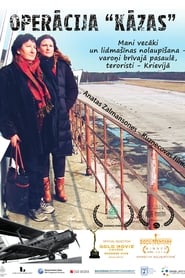
star 8Leningrad, 1970. A group of young Jewish dissidents plot to hijack an empty plane and escape the USSR. Caught by the KGB a few steps from boarding, they were sentenced to years in the gulag and two were sentenced to death; they never got on a plane. 45 years later, filmmaker Anat Zalmanson-Kuznetsov reveals the compelling story of her parents, leaders of the group, "heroes" in the West but "terrorists" in Russia, even today.Bombshells and Dollies
2020
star 4Female Empowerment Documentary on the Contemporary Pinup Lifestyle & The Miss Viva Las Vegas Pinup Contest - 'Celebrating every woman's right to total body acceptance, to be self-confident and to be gorgeous!'