Popular History Movies - Page 495
All Services
Free Services
 Netflix
 Amazon Prime Video
 Apple iTunes
 Apple TV Plus
 Disney Plus
 Google Play Movies
 Paramount Plus
 Hulu
Hulu
 HBO Max
 YouTube
 fuboTV
 Peacock
 Peacock Premium
 Amazon Video
 The Roku Channel
 AMC+
AMC on Demand
AMC+
AMC on Demand
 Kocowa
 Hoopla
 The CW
 Vudu
Vudu
 Starz
Starz
 Showtime
 PBS
PBS
 Pantaflix
 FXNow
FXNow
 Tubi TV
 Kanopy
 Comedy Central
 Crunchyroll
 Microsoft Store
 Redbox
 Sun Nxt
 ABC
ABC
 DIRECTV
 Crackle
 Fandor
 Plex
Plex
Netflix
Amazon Prime Video
Apple iTunes
Apple TV Plus
Disney Plus
Google Play Movies
Paramount Plus
Hulu
HBO Max
YouTube
fuboTV
Peacock
Peacock Premium
Amazon Video
The Roku Channel
AMC+
AMC on Demand
Kocowa
Hoopla
The CW
Vudu
Starz
Showtime
PBS
Pantaflix
FXNow
Tubi TV
Kanopy
Comedy Central
Crunchyroll
Microsoft Store
Redbox
Sun Nxt
ABC
DIRECTV
Crackle
Fandor
Plex

The Shooting of 319
2019
The Shooting of 319
2019
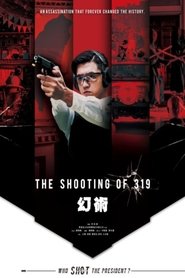
star 5The movie revisits the shooting of then-president Chen Shui-bian and vice president Annette LU on the eve of the presidential election in 2004. After the shooting, the two won the presidential election. Moreover, the crime suspect was drowned in a near port days after the incident. The assassination case has been investigated by the authority for 15 years; however, several questions surrounding the "319 Shooting" remain unanswered to this day. The movie approaches a dark period of Taiwan history and shows the mechanics of power - in a witty and creative way.Les Misérables: The Story of Jean Valjean
2025
star 5.9Jean Valjean is released from prison after nineteen years of hard labor, violence, and suffering. Filled with anger and a deep sense of injustice, he has become a dangerous man who trusts no one and nothing. When he arrives in a small village in Provence, he is repeatedly turned away. Desperate, he unknowingly finds refuge at the house of Bishop Bienvenu, who lives simply, with his sister and a single servant. There, he is surprised by their warm welcome, and his inner demons start to waver. But the temptation to be what society sees in him still haunts him, and he steals the Bishop’s silverware. When the police ultimately catches him, the Bishop forgives him and gifts him the candlesticks. This acts becomes the starting point of Jean Valjean’ transformation into a new man who reclaims his humanity.China, My Sorrow
1989
China, My Sorrow
1989
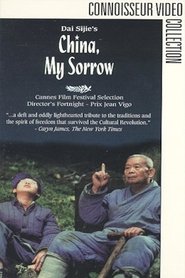
star 6.2In August 1966, the Cultural Revolution in full swing, 13-year-old Tian Ben is arrested for playing a pop record; he's sent to a remote mountain camp in Niu-Peng. There he's called "Four Eyes" and, with about 16 other older boys and men, he's made to carry muck up a mountainside, make bricks, saw logs, and sing daily to Chairman Mao of his faults. There's camaraderie among the five youths, especially with a young pickpocket named Baimao, and Tian is also drawn to a silent monk who cares for him when he falls ill and the others expect him to die. The camp is remote, so there are no fences or walls. Tian longs to escape.Sex in the Stone Age
2012
Sex in the Stone Age
2012
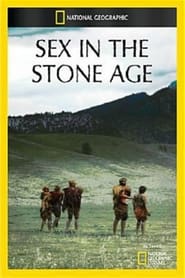
star 6A fragment of a pinky bone and a tooth twice the size of today's average molar are the only remnants of a species we now know lived at the same time and place as modern humans—and interbred with them. They are a part of us we never knew existed. What did these "people" look like? And how do they fit into what we thought we knew about our biological development as a species?Little Hero of the Reed Marsh
1977
During the War of Resistance Against Japan, there was a boy named Maverick in the northern countryside who, under the leadership of the Party, participated in the struggle against the enemy. Once, Uncle Ma, a traffic officer of the Eighth Route Army, sent information to the guerrillas and encountered devils and puppet soldiers on the way. Maverick tactfully diverted the enemy away and made Uncle Ma out of danger.Only a Stonecutter
2008
Only a Stonecutter
2008
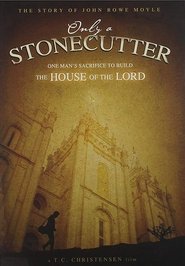
John Rowe Moyle walked the 22 miles from Alpine, Utah to Salt Lake City to fulfill his calling.La Moglie di Claudio
1918
La Moglie di Claudio
1918
star 5.8Claudio is married to Cesarina, a frivolous and unfaithful woman. After the death of their only son their marriage is cold. While his wife lives her free life, Claudio is dedicated to the development of sophisticated weapons, elaborating the project of a new cannon; but smitten by the virtuous Jew Rebecca he can not surrender to his feelings because his religion prevents him from getting a divorce.Friends, Comrades
1990
Friends, Comrades
1990
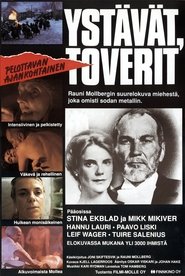
star 5The boisterous good humor of Jurmala, the nickel-mine owner, is, if anything, only barely dented by the raging battles in Finland before, during and after World War Two. In fact, everywhere he goes, he meets prospective customers on all sides of the conflict with his all-inclusive greeting "Friends, Comrades." Indeed, the resource he is wrenching from the earth's bowels is necessary to all forms of industrial activity, and is especially necessary for military applications. Thus, he has no reason to fear that he will ever run out of customers. This doesn't prevent him from using every possible means to entice them. At home, his relationship with his wife is not so prosperous, and they resort to some extraordinary means to try and keep on an even keel.Legacy of a Superpower: 30 Years After the Collapse of the USSR
2021
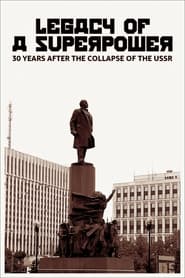
Thirty years ago, in 1991, the Soviet Union, founded in 1922, disappeared, giving birth to fifteen new states, located between the Baltic Sea and the Pamir mountain range, which went their own way. How many of these republics have succeeded? How much real influence does Moscow exert over them? What role do NATO and the European Union play in this very complicated economic and political maze?Blondie
0000
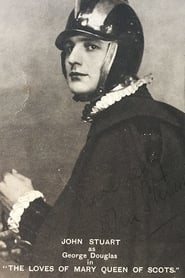
The Loves of Mary, Queen of Scots
1924
The Dauphin's widow weds a lord and is executed for plotting against the queen.Riot or Revolution? The Eureka Stockade 1854
2006
star 7The Eureka Stockade was a civilian revolt against the gold licence. Drawings and archival photographs depict the events that lead to the battle between gold miners and authorities at the Eureka Stockade. It describes the emergence of Peter Lalor as the leader of the Stockade and how the diggers used the Southern Cross flag.Propaganda
1999
Propaganda
1999
star 6.6Based on a true story set in 1948, customs officer Mehti is faced with the duty of formally setting up the border between Turkey and Syria, dividing his hometown. He is unaware of the pain that will eminently unfold, as families, languages, cultures and lovers are both ripped apart and clash head on in a village once united.Mocha Dick: La ballena mapuche
2016
The sea chronicles speak of Mocha Dick, the Mapuche whale that lived on the coasts of southern Chile and that would have served as a source of inspiration for Herman Melville to write "Moby Dick", the character of his most famous novelTalking Feet
1987
Talking Feet
1987
Talking Feet is the first documentary to feature flatfoot, buck, hoedown, and rural tap dancing, the styles of solo Southern dancing which are a companion to traditional old-time music and on which modern clog dancing is based. Featuring 24 traditional dancers videotaped on location in West Virginia, Kentucky, Virginia, and North Carolina.Sultan Beybars
1989
Sultan Beybars
1989
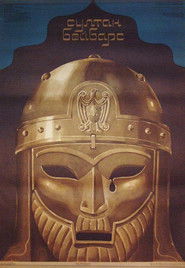
The second part of a historical film dilogy based on the story “Emshan” by Maurice Simashko. XIII century. Equal to God, Sultan Beybars — the ruler of Egypt, who has the largest fleet in the Mediterranean, crushed the Crusader troops and countless hordes of Genghis Khan's descendant – recalls the life path he passed before ascending to the throne of the ruler.From the Life of Ostap Vyshnya
1991
Biographical film of the most dramatic period in the life of the famous Ukrainian writer Ostap Vyshnya, who in the 1930s was repressed by the Russian authorities and exiled to Siberia. Faithful wife and assistant Varvara Maslyuchenko shared his fate and followed her husband into exile.1874, The Birth of Impressionism
2024
star 8April 15, 1874, boulevard des Capucines, Paris: a group of young feverish painters shunned by the official Salon and mocked by the classical masters, chose to come together to exhibit their paintings freely, in the studio of photographer Nadar. At the end of a teeming century, when modernity was emerging, this group of rebellious artists, revolutionized the world of art.King of the Hill: A 70th Anniversary Retrospective of Cincinnati’s King Records
2014
star 4.6James Brown was the jewel in the crown, but the throne of Cincinnati’s King Records always belonged to its irascible founder, Syd Nathan. This is the 70th anniversary of the legendary record label and studio. It closed shop nearly 40 years ago, in a now long-neglected warehouse on the neighborhood border of Evanston and Walnut Hills, but its impact still reverberates across today’s music.The Legend Is Born: Ip Man
2010
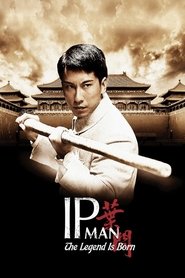
star 6.8The remarkable true story of the early life of Ip Man, the formidable kung fu genius who would become Bruce Lee's mentor; beginning at the start of his journey from his initial training through to the ultimate battle to become supreme master of the art of Wing Chun.