Popular History Movies - Page 496
All Services
Free Services
 Netflix
 Amazon Prime Video
 Apple iTunes
 Apple TV Plus
 Disney Plus
 Google Play Movies
 Paramount Plus
 Hulu
Hulu
 HBO Max
 YouTube
 fuboTV
 Peacock
 Peacock Premium
 Amazon Video
 The Roku Channel
 AMC+
AMC on Demand
AMC+
AMC on Demand
 Kocowa
 Hoopla
 The CW
 Vudu
Vudu
 Starz
Starz
 Showtime
 PBS
PBS
 Pantaflix
 FXNow
FXNow
 Tubi TV
 Kanopy
 Comedy Central
 Crunchyroll
 Microsoft Store
 Redbox
 Sun Nxt
 ABC
ABC
 DIRECTV
 Crackle
 Fandor
 Plex
Plex
Netflix
Amazon Prime Video
Apple iTunes
Apple TV Plus
Disney Plus
Google Play Movies
Paramount Plus
Hulu
HBO Max
YouTube
fuboTV
Peacock
Peacock Premium
Amazon Video
The Roku Channel
AMC+
AMC on Demand
Kocowa
Hoopla
The CW
Vudu
Starz
Showtime
PBS
Pantaflix
FXNow
Tubi TV
Kanopy
Comedy Central
Crunchyroll
Microsoft Store
Redbox
Sun Nxt
ABC
DIRECTV
Crackle
Fandor
Plex

Shakunthala
1965
Al-Barouni
0000
Al-Barouni
0000
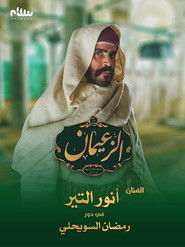
Al-Baroni's film deals with part of the life of the well-known Libyan freedom fighter (Suleiman Pasha Al-Baroni), better known as "The Leader", who was born in 1870 in the city of Kabao in the Nafusa Mountains of Libya. He was famous for combining science, religion, politics, poetry and literature, so he became one of the most important freedom fighters in the history of Libya. Libya and contributed to the establishment of the first Arab republic, the Tripolitan Republic, which he participated in establishing in 1918. He was one of the first fighters against the Italian occupation, who confronted him with politics and weapons. He paid a high price for his struggle and was exiled outside his homeland until he passed away in 1940 in Muscat, Oman.Terra de canons
2000
Nani Ma
2022
Nani Ma
2022
star 10Musamoni Panigrahi (1920s–2017), fondly called “Nani Ma” by her neighbours, appears in the centre of this first film in the Baleswari dialect of India's Odia language. The story revolves around folklore and folk songs narrated by Nani Ma. Born in the 1920s in pre-independent rural India in a coastal village in the Balasore district of Odisha, she never got to go beyond the first few days of school. The film is an alternate history of a society broken through colonization, Brahminical patriarchy and a post-famine (Orissa famine of 1866, killing nearly 5 million people, one-third of the population), and the dominance of formal writing over spoken tongues. Three academics -- Damayanti Beshra, PhD (recipient of India’s fourth civilian award, “Padma Shri”), Panchanan Mohanty, PhD (noted linguist), and Laxmikanta Tripathy, PhD, DLitt (anthropologist and author) -- also appear in the film to provide contextual commentary on patriarchy, oral history and the sociolinguistic diversity.Mezarımı Taştan Oyun
1951
Mezarımı Taştan Oyun
1951
The film tells the story of Abdo, a man who loves fun and romance, who is sent to prison for a murder he did not commit. Abdo's only goal is to clear his name, reunite with his beloved, and take revenge.The Colchian Ballad
1974
The Colchian Ballad
1974
The events of the film take place in a remote part of Georgia in the early 19th century. It tells the story of the Georgian peasantry's struggle against local feudal lords and their henchmen.The Movie Orgy
1968
The Movie Orgy
1968
star 6.4Clips from assorted television programs, B-movies, commercials, music performances, newsreels, bloopers, satirical short films and promotional and government films of the 1950s and 1960s are intercut together to tell a single story of various creatures and societal ills attacking American cities.31st October
2016
31st October
2016
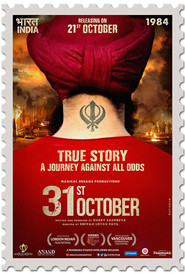
star 7On 31st October 1984, Prime Minister of India gets assassinated by her Sikh Security Guards. Politicians use this incident to spark public hatred towards the Sikhs labeling them as traitors. Devender Singh and his family are stuck in their house as their city plummets. In 24 hours of uncertain oscillations, helplessness and with their relatives dying and neighbors turning hostile, Devender's family seek help from their Hindu friends who live across town. As Pal, Tilak, and Yogesh travel to save Devender's family, they come face-to-face with the destruction of humanity. They witness the carnage and the moral corruption that makes men turn into savages. In their attempt at ferrying Devender's family to safety, Pal, Tilak, and Yogesh must face their own demons first.Banal o Makasalanan?
1955
Banal o Makasalanan?
1955
star 6Salome, a seductive and alluring daughter of Herodias and stepdaughter to King Herodes, discovers faith and Christianity through her love for a Roman centurion named Cornelius.WWII in 3D
2012
WWII in 3D
2012
star 6.2For the first time, you will see dramatic moments of WWII that were captured in 3D with stereographs and then shuttered away in secret archives and attics, until now. This stunning collection of color 3D photos includes Allied reconnaissance photos, a trove of images that documents the rise and fall of the Third Reich, and photos secretly taken by a civilian in occupied France. WWII IN 3D also features an actual 3D motion picture film shot by the Nazis in 1943 and creates a fully immersive, three dimensional portrait of history's largest and bloodiest conflict.Crossing Jinshajiang River In 1936
2021
The film has been designated as a key film project by Yunnan Province. Through a fresh perspective and vivid storytelling, it pays tribute to the heroic achievements of veteran proletarian revolutionaries during the Long March through Yunnan. It deeply commemorates the revolutionary martyrs who made the ultimate sacrifice and highlights the profound bond between the Red Army and the local ethnic communities. With small stories reflecting grand emotions, the film vividly portrays the brilliance of humanity and the heartfelt, romantic revolutionary spirit of an earlier generation. It has also been recognized as a patriotic public welfare film under the "China Campus Health Action" initiative.Ostrze na ostrze
1983
Ostrze na ostrze
1983
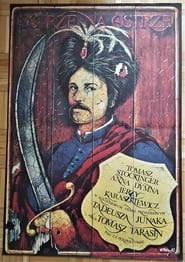
The action of the film takes place in the 17th century. Piotr Wolski returns to the country and is appointed juridic governor. A man tries to rule fairly and restore order. He soon falls in love with Konstancja, but his background causes problems.Robin Hood: The Rebellion
2018
star 5With his true love captured by the villainous Sheriff of Nottingham, the legendary Robin Hood and his crew of outlaws execute a daring rescue to save her.Ballade vom roten Mohn
1965
star 5Spain in the 1930s. The film tells of the fight of international troops against General Franco's army. It tells of the fate of three brigadists, the American Gary, the German Hans and the Englishman Joe, who are taken prisoner by Franco's army. Their attitude in this difficult situation is a living example of international solidarity and creates a memorial.The Canadiens, Forever
2009
star 5.7Neglected by his father, William, a star college hockey player, also suffered harassment from his coach and some teammates. By chance of a visit to Sainte-Justine hospital, the young man, whose morale and motivation are at its lowest, meets ten-year-old Daniel, awaiting a kidney transplant. Their passion for the Habs unites them instantly and William tries, by all means, to give him hope in the face of the disease.Winnie and Nelson: Portrait of a Marriage
0000
Explores the deep bond between Nelson and Winnie and their marriage in the struggle against apartheid. An intimate portrait of their connection from the early years through to the dismantling of apartheid and Mandela's historic presidency.Tu Hi Meri Zindagi
1965
Tu Hi Meri Zindagi
1965
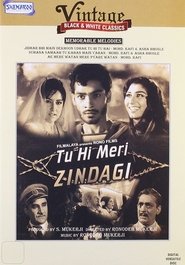
The struggle of the indigenous population of Goa against the Portuguese colonists. The plot of the film is based on real events. The film includes original footage depicting this war. It all begins with the Portuguese executing the main revolutionary, Arthur Antonio Gomes, in the city's central square. They destroy everyone who had the imprudence to join the resistance. But these actions by the Portuguese only angered the colony's population.Hanau: Germany in Winter
2022
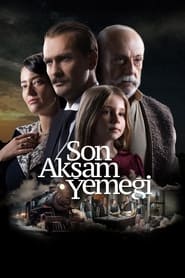
star 6.2During a racially motivated rampage in Hanau, Hesse, Tobias R. kills nine citizens on February 19, 2020, his mother and then himself. The words of his manifesto indicate severe psychological problems. This psychogram of a mass murderer shows how withdrawn Tobias R. radicalized himself through fake news and delusion for years before it came to a catastrophe.The Last Dinner
2023
The Last Dinner
2023
The movie takes place in the kitchen of Cankaya Mansion on Sunday night, October 28, 1923, a day before the proclamation of the establishment of the Republic of Turkey and formally marking the end of the Ottoman Empire.